


What is Facial Grimacing in Autism?
Facial grimacing in autism refers to repeated, often involuntary facial movements, such as nose scrunching, eye blinking, or unusual expressions, most commonly seen in individuals with autism spectrum disorder. These behaviors are usually linked to neurological or sensory processing differences rather than intentional actions. Often, they increase during moments of stress, excitement, or overstimulation. In the following article, we explain what facial grimacing in autism looks like, what causes it, and how evidence-based interventions, such as ABA therapy, can help manage it.
Common Triggers and Causes of Facial Grimacing in Autism
- Motor tics-sudden, repetitive movements that are difficult to control
- Sensory processing differences: responses to overwhelming or understimulating environments
- Emotional regulation challenges-difficulty expressing or managing strong emotions
- Stress or anxiety-increased behaviors during unfamiliar or demanding situations
- Excitement or overstimulation-heightened responses during highly engaging activities
With the right support, including ABA therapy, children can learn strategies to reduce facial grimacing and build more functional, adaptive behaviors. Clinical research supports the use of behavioral interventions to reduce repetitive behaviors and improve daily functioning in children with autism1.
Is it a Tic, Stimming, or a Sensory Response?
Facial grimacing can fall into several categories depending on the child and the context. There are cases where it is a motor tic. This means it’s a quick, repetitive, and involuntary movement. In other situations, it may be part of larger stimming behaviors, which are self-regulatory actions and are often used to manage a child’s sensory seeking needs or to reduce anxiety.
For example, just like autism hand flapping or autism finger flicking, a child’s facial grimacing may help them process overwhelming sensory input or express internal states they aren’t yet able to communicate verbally.
A sensory response is a reaction to sensory input, such as bright lights, loud sounds, or overwhelming environments. In this case, facial grimacing may help a child process or cope with excessive or insufficient sensory stimulation.
How Common is Facial Grimacing in Autism?
Among children on the autism spectrum, facial grimacing is relatively common. This is particularly true for those who experience autism anxiety or sensory processing differences. In these situations, it may appear alongside other repetitive behaviors or increase sharply during periods of emotional dysregulation.
What causes Facial Grimacing in Autism?
Sensory Overload and Stress Triggers
Often, feelings of overwhelm result in children with autism engaging in facial grimacing. From loud environments or bright lights to sudden changes in their schedule, these factors can trigger sensory-seeking behaviors or avoidance responses. It is in these moments that this type of behavior may occur, acting as a coping mechanism which can be directly connected to challenges with autism emotional regulation.
Motor Tics and Neurological Factors
A neurological issue causes motor tics and often occurs without conscious control. Examples of these types of tics include blinking, grimacing, and other facial movements.
Co-Occuring Conditions: ADHD, OCD, and Tourette Syndrome
Facial grimacing can also be linked to co-occuring conditions. For instance, often children with ADHD (attention deficit hyperactivity disorder) or OCD (obsessive compulsive disorder) may demonstrate a level of increased repetitive behaviors. What is required is a formal evaluation, including diagnostic testing for autism, which can help you as a parent choose the most suitable support.
How ABA Therapy Manages Facial Grimacing and Tics
Habit Reversal Training (HRT)
One of the most scientifically proven techniques for managing tics is Habit Reversal Training (HRT), which is often incorporated into ABA-based care. It’s this type of structured method that falls under the broader umbrella of applied behavior analysis interventions.
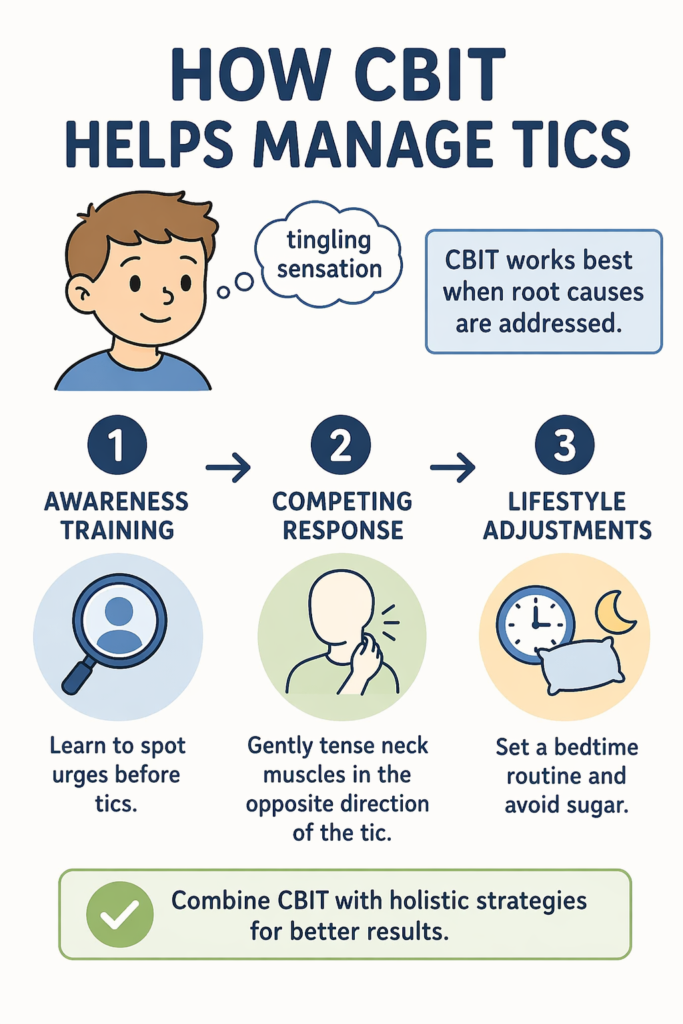
Comprehensive Behavioral Intervention for Tics (CBIT)
CBIT is an evidence-based therapy designed to help individuals reduce and manage tics, including facial grimacing. The following is a brief overview of how CBIT works.
If your child is experiencing facial grimacing or tics, Heartlinks ABA can help. Contact us today to learn about our individualized ABA programs.
Positive Reinforcement and Functional Alternatives
ABA therapy incorporates ABA positive reinforcement to encourage alternative behaviors. Rather than suppressing the tic directly, therapists teach the child replacement skills. For instance, if a child grimaces in frustration, a certified BCBA therapist may introduce functional communication training to help them express their needs more effectively.
Heartlinks ABA’s Personalized Approaches to Tic Management

With Heartlinks ABA, every child receives individualized care designed by a certified BCBA therapist. The treatment plans focus on identifying your child’s triggers and implementing targeted strategies.
Our therapists may incorporate a variety of ABA techniques and NET in ABA to support your child’s real-world skill development. Families are also supported through ABA strategies for parents to ensure consistency in their child’s home environment.
It’s this personalized approach, part of Heartlinks’ broader ABA programs for autism, that is designed to improve communication, emotional regulation, and independence. We help families see measurable progress in both behavior reduction and emotional regulation over time 2.
As a parent, Salua H. shared her experience with Heartlinks ABA:
“My experience went well. Shaindy was always super helpful and responded promptly. My RBT was very patient, assisting, and communicative….. Overall, a good experience :).”
If your child is experiencing facial grimacing or tics, Heartlinks ABA can help. Heartlinks has services available in multiple regions, including:
- ABA Charlotte NC
- ABA therapy New Jersey
- ABA therapy Atlanta, GA
- ABA therapy Indianapolis
- ABA therapy Baltimore, MD
Contact us today to learn about our individualized ABA programs.
Frequently Asked Questions
How do you stop autism tics?
Using interventions such as ABA therapy helps reduce the frequency and teach alternative behaviors through reinforcement.
Does autism cause facial tics?
No. Autism itself does not directly cause facial tics. But it’s the neurological differences that can make it more probable in children on the spectrum.
Is facial grimacing related to tics?
Yes, facial grimacing is one of the most common types of motor tics. But it’s important to note that it can also relate to sensory needs.
Are tics associated with autism?
Tics co-occur with autism, particularly alongside other conditions.
What can cause facial grimacing?
The most common causes of facial grimacing include sensory overload, anxiety, and communication challenges that are directly linked to autism communication.
How can families control facial grimacing?
Families can control facial grimacing through structured support, such as behavior-reduction ABA and teaching alternative behaviors.
Can facial grimacing be controlled with ABA therapy?
Yes! ABA therapy can help reduce facial grimacing by identifying its function and reinforcing more adaptive behaviors.
Facial grimacing is manageable with the right support. The Heartlinks ABA team is here to help – reach out today.
Resources
- Association for Science in Autism Treatment. “Applied Behavior Analysis (ABA).” ASAT, https://asatonline.org/for-parents/learn-more-about-specific-treatments/applied-behavior-analysis/.
- Behavior Analyst Certification Board. “About Behavior Analysis.” BACB. https://www.bacb.com/about-behavior-analysis/