


Autism can begin to show as early as 6-12 months, with clearer signs often emerging between 12-24 months. Autism Spectrum Disorder (ASD) is a neurodevelopmental condition that affects how a child communicates, interacts socially, and processes the world around them.
Early signs of autism may include:
- Limited or inconsistent eye contact
- Not responding to their name by 9–12 months
- Delayed babbling or speech development
- Limited use of gestures (pointing, waving, showing)
- Repetitive behaviors (hand flapping, lining up toys)
Age-Based Early Signs at a Glance
- 6–12 months: Reduced eye contact, fewer social smiles, limited response to voices
- 12–18 months: Delayed babbling, reduced gestures, difficulty with back-and-forth interaction
- 18–24 months: Few or no words, loss of previously learned skills, repetitive behaviors
It’s during the first year that many parents start to notice small developmental changes, whether that’s reduced eye contact, limited engagement, or delays in their child’s communication milestones. Being able to recognize these signs early is crucial. The sooner autism is identified, the earlier children can begin building essential communication, social, and daily living skills through evidence-based support such as ABA therapy.
When does Autism Start to Show? A Timeline by Age
It’s important to remember that autism doesn’t suddenly appear in your child; instead, it develops gradually. While every child is different, research and clinical experience indicate that the early signs typically emerge within the first two years of your child’s life. This is particularly true about children with nonverbal autism, which can affect eye contact, gestures, and social engagement.
Clinical guidance supports this timeline. The Centers for Disease Control and Prevention notes that early developmental differences, including social and communication delays, can be observed within the first year of life, with clearer signs often emerging by 18 to 24 months1.
6-9 months: The Earliest Signs
At this stage, differences may be subtle but equally important. Some babies may exhibit a single or a few of the following signs:
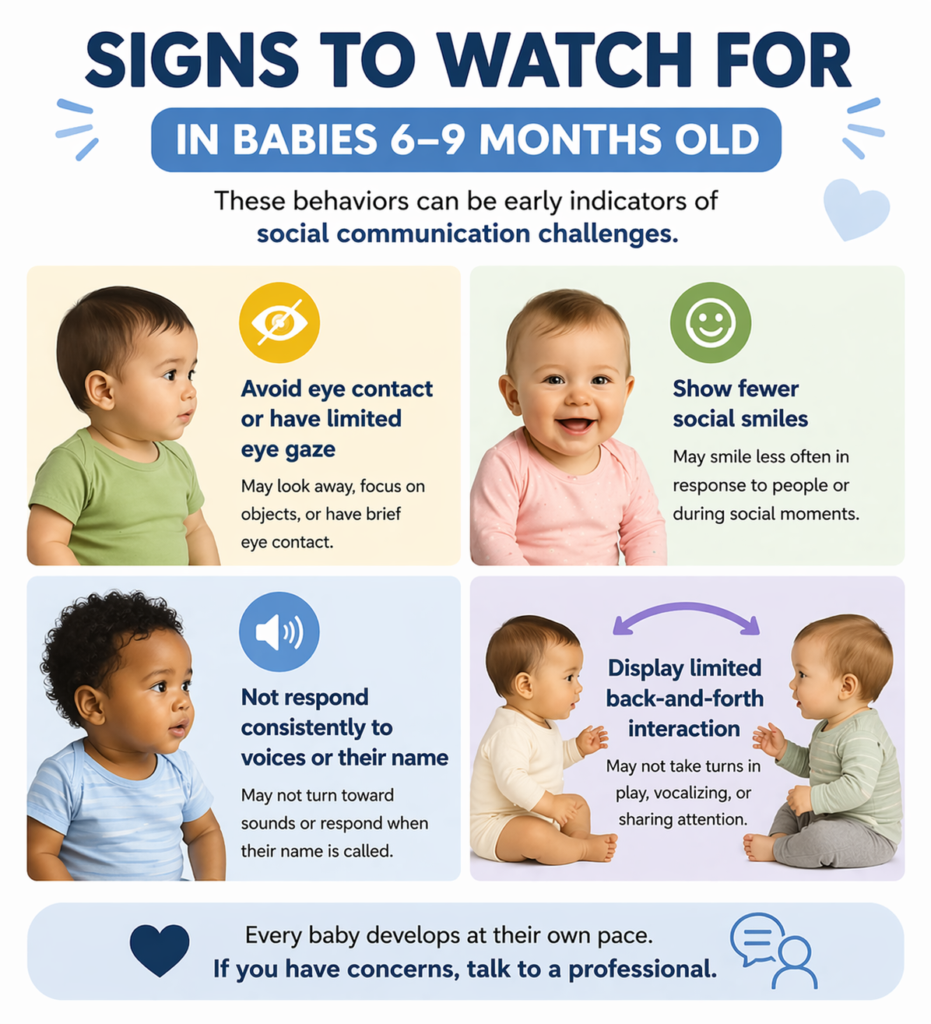
It’s these early cues that are often related to social engagement and attention.
12 months: When differences often become clearer
By the first year, developmental expectations become more defined. Typically, you will notice one of the following:
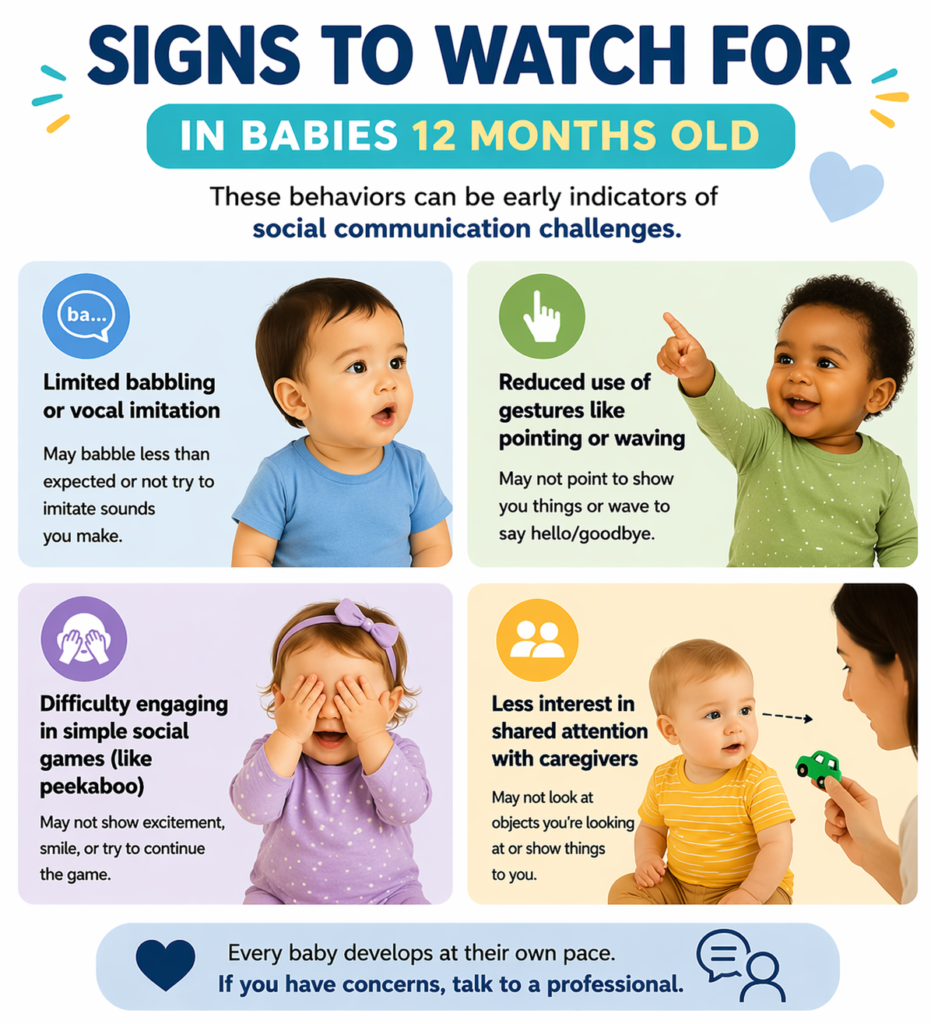
It’s at this point that communication delays and social differences are often more noticeable.
16-24 months: More Visible Signs and Regression
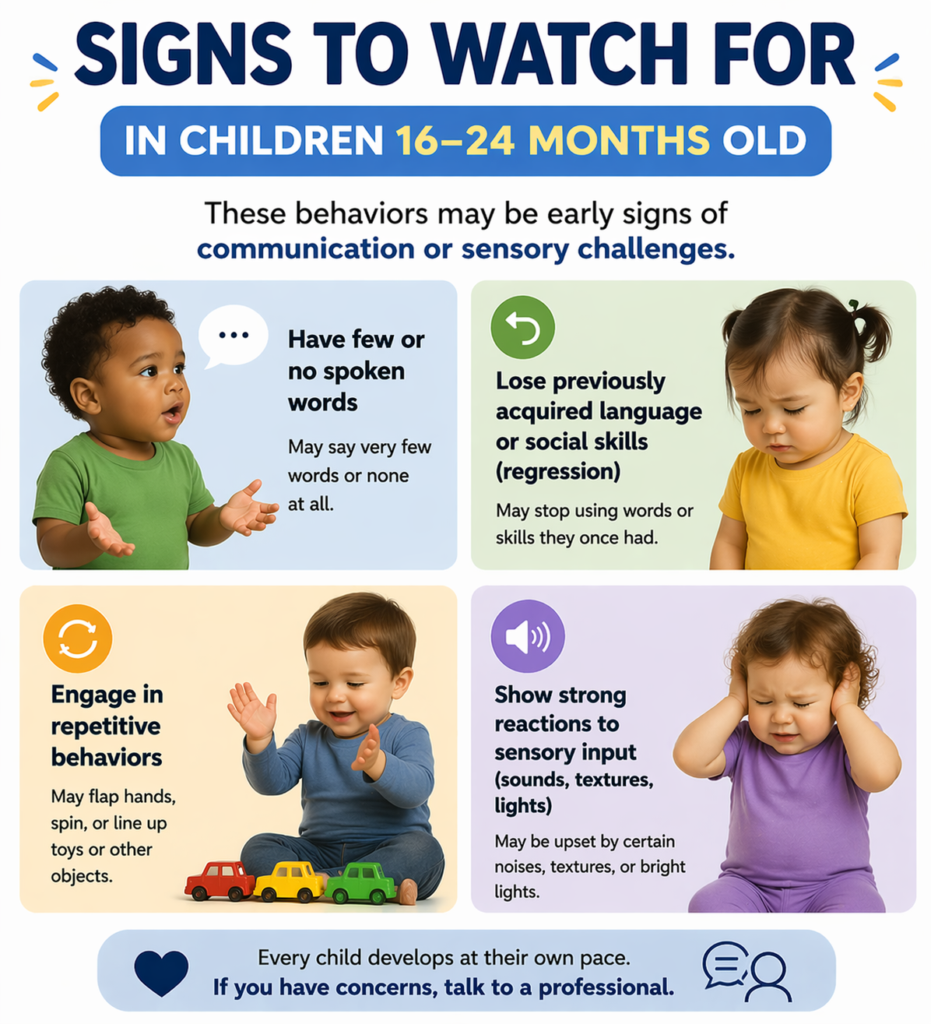
At this stage, families often begin searching for answers.
What are the most common early signs of autism in babies?
Often, parents notice early indicators, such as autistic baby hand movements, which can suggest differences in communication and social development. It’s these signs that typically fall into the following three main categories.
Communication Differences
Children may:
- Demonstrate delayed speech or limited verbal communication
- Have difficulty trying to imitate sounds or words
- Be unable to use gestures to communicate their needs
- Show limited response when spoken to
These early communication differences are usually some of the first noticeable signs.
Social and Emotional Differences
You might observe one or a few of the following:
- A limited interest in people or social interaction
- Reduced eye contact
- Difficulty engaging in back-and-forth play with other babies
- Demonstrated lack of joint attention or mutual enjoyment
These behaviors reflect the differences in how a child connects with others.
Repetitive Behaviors and Sensory Responses
Some children might display:
- Repetitive movements (i.e., rocking, spinning, and hand flapping)
- Intense focus on a specific object or routine
- Extremely strong reactions to sounds, textures, or lights
- A need for predictability and consistency
These patterns are often described as stimming behaviors and can vary tremendously from child to child.
Do you need a diagnosis before starting ABA therapy?

One of the most frequently asked questions we receive at Heartlinks is whether a child needs a formal diagnosis before beginning ABA therapy. The answer is: not always!
Yes, ABA therapy insurance coverage may require a formal diagnosis of autism, however early support, including early intervention ABA, can often begin based on your child’s developmental concerns alone. Sometimes waiting for a diagnosis of autism can delay crucial support. It’s important to seek therapy during that period of time when your child’s brain is most adaptable.
If you are noticing signs of delay, you must speak with a professional as soon as possible.
How ABA therapy Helps When Autism Starts to Show
Early intervention truly is one of the most powerful tools available to children with autism. ABA therapy is designed to meet children exactly where they are developmentally and help them build the essential skills to live independently, step by step.
Building Skills During the Brain’s Most Flexible Window
Children with any type of developmental delay are particularly responsive to learning during their early years, in part due to rapid brain development. According to the National Institute of Child Health and Human Development, early intervention can significantly improve developmental outcomes by leveraging the brain’s high plasticity during the first few years of life. 2
ABA therapy uses structured, evidence-based techniques to accomplish several tasks, including strengthening communication skills, improving social engagement, reducing challenging behaviors, and teaching functional, everyday skills. Starting early allows children to develop these skills more naturally.
What Early ABA Therapy Looks Like for Young Children
In the case of infants and toddlers, therapy often takes place through ABA therapy at home, using play-based and natural routines. These therapeutic sessions may include:
- Encouraging eye contact and joint attention
- Teaching simple communication (gestures, sounds, early words)
- Supporting transitions and routines
- Using positive reinforcement to build new behaviors
This approach helps children apply their skills in real-life situations.
How Heartlinks ABA Supports Early Intervention
When working with Heartlinks ABA, it’s important to remember that early intervention is tailored to each of our young clients’ needs. The first step is to receive a comprehensive assessment from a certified BCBA therapist. Then a personalized treatment plan is created to focus on your child’s progress and skill development.
At Heartlinks, we encourage families to be actively involved throughout the process, including learning ABA techniques to incorporate at home to help reinforce skills beyond therapy sessions. It’s this collaborative approach that ensures that children receive consistent, effective care across their daily environments.
Parents, such as Jennifer C., consistently speak to the impact of this approach:
“We had a truly positive experience with Heartlinks ABA therapy for my son. From the very beginning, the therapists showed patience, compassion, and a genuine commitment to helping him grow. What stood out the most was the consistency and encouragement they provided. Their dedication truly made a difference in our son’s life, and we are grateful for the progress he has made because of their care and support. They also worked so well with our family schedule throughout the week.
We highly recommend ABA therapy to any family looking for structured, individualized support for their child.”
In the event you’re noticing the initial signs and are looking for guidance on next steps or exploring early autism intervention, Heartlinks has services available in multiple regions, including:
- ABA Charlotte NC
- ABA therapy New Jersey
- ABA therapy Atlanta, GA
- ABA therapy Indianapolis
- ABA therapy Baltimore, MD
Early action matters. If you have questions about what you’re seeing in your child, the Heartlinks ABA team is ready to help. Reach out today.
Frequently Asked Questions About When Autism Starts to Show
What is the earliest age at which autism can be detected?
Some early signs of autism can be observed as early as 6 months, though most children are diagnosed between the ages of 18 and 24 months.
What is the 6-second rule for autism?
The “6-second rule” is not a clinical tool used for diagnostic testing for autism. Rather, it’s informally used to describe the period of time a child should typically respond to their name or a social cue. But it’s important to note that it should never be relied upon for diagnosis.
When is the best age to start ABA therapy?
Simply put: the earlier the better. Most children on the spectrum benefit tremendously from starting ABA therapy as soon as their developmental differences are identified, often by age 3.
Do I need a diagnosis to start ABA therapy?
This is not always the case. Yes, some providers will begin therapeutic services based on your developmental concerns. However, ABA therapy insurance coverage is usually only applicable when a formal diagnosis is received.
What are 5 common signs of autism?
The most common signs of autism include limited eye contact, delayed speech, reduced social interaction, repetitive and restrictive behaviors.
At what age is autism visible?
There is no simple answer. Autism can become visible at several different ages. But signs are most often noticeable between 12 and 24 months.
Contact Heartlinks ABA for more information on autism treatment services.
Resources
1. Centers for Disease Control and Prevention. “Early Signs of Autism Spectrum Disorder.” CDC, https://www.cdc.gov/ncbddd/autism/signs.html
2. National Institute of Child Health and Human Development. “Autism Spectrum Disorder (ASD): Condition Information.” NIH, https://www.nichd.nih.gov/health/topics/autism