


What is hyperfixation in autism? Hyperfixation is a common trait in children with Autism Spectrum Disorder (ASD), where a child becomes intensely focused on a specific topic, activity, or interest for extended periods of time. This is often what parents refer to as “autism fixation’ or “hyperfixation autism.”
Common Signs of Hyperfixation in Autistic Children
- Talking about the same topic repeatedly (i.e., trains, animals, favorite shows)
- Replaying the same scenes or activities over and over
- Strong emotional reactions when interrupted or redirected
- Difficulty shifting attention to new tasks or topics
- Deep knowledge or skill-building in one specific area of interest.
Why It Happens
Hyperfixation is linked to differences in attention regulation and reward processing. It may also overlap with traits of Attention-Deficit/Hyperactivity Disorder (ADHD).
Benefits vs. Challenges
Benefits:
- Deep learning and skill development
- Emotional comfort and regulation
Challenges:
- Difficulty with transitions
- Limited flexibility and social interaction
Can ABA therapy help with hyperfixation?
Yes. ABA therapy uses a child’s interests to teach communication, flexibility, and independence, helping them stay engaged while expanding their skills.
What Parents Can Do
- Engage with your child’s interests
- Set gentle limits
- Encourage small shifts in attention
Many parents notice this pattern early. With the right support, these strong interests can become a powerful tool for growth rather than a barrier.
What is hyperfixation in Autism?
Otherwise known as the phenomenon of extreme focus, hyperfixation is defined as an intense, sustained focus on a specific topic, activity, or object 1. In autistic children, this can look like a deep immersion that goes beyond typical curiosity or hobbies.
In many cases, hyperfixation can be directly linked to patterns such as autistic stimming, where repetitive behaviors or focused interests help a child regulate their emotions or sensory input. These focused interests are part of repetitive and restrictive behaviors, a core characteristic of autism as outlined by Autism Speaks 2.
How is it Different from a Special Interest?
If your child has a particular interest or deep passion, it brings them joy, fosters engagement with others, and offers tremendous learning opportunities. By comparison, hyperfixation takes it one step further, making it difficult for a child to shift their attention when required.
Is Hyperfixation the Same as Autism Fixation
Though the terms are often used interchangeably, there is a difference between them. Autism fixation traditionally refers to the observable behavior, while hyperfixation emphasizes the intensity and duration of focus.
Signs of Hyperfixation in Autistic Children
As a parent or caregiver, recognizing the signs of hyperfixation in autism can help you understand when an interest is healthy and when you may need to step in and support your child.
Children with hyperfixation may also demonstrate related traits, including sensory seeking behaviors or difficulties with autism emotional regulation, particularly when their focus is interrupted.
Common Autism Fixation Examples
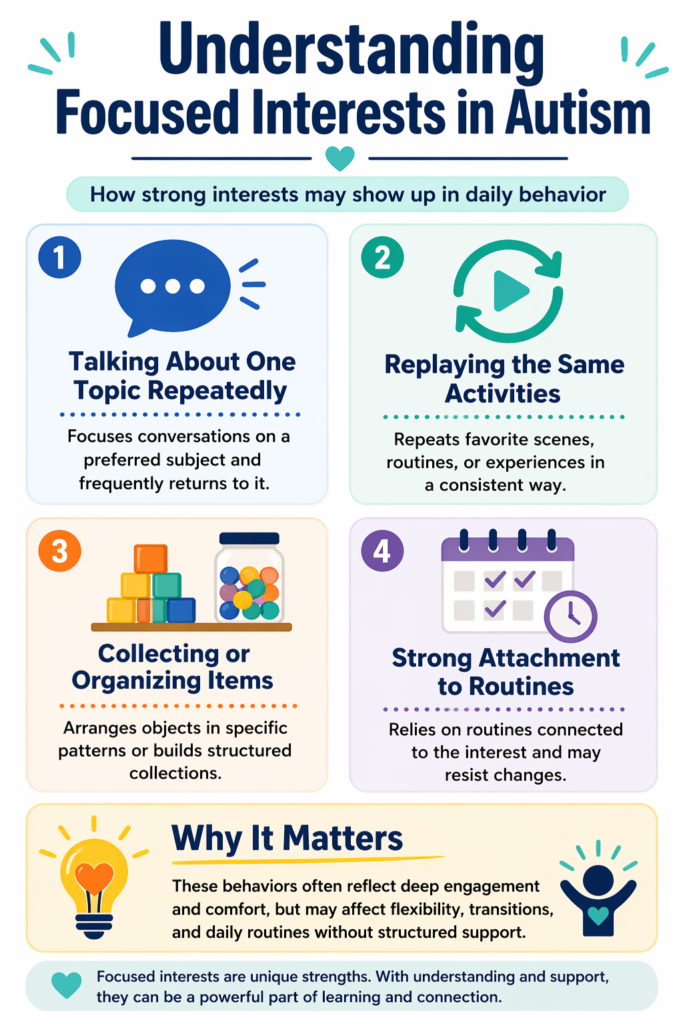
When a Child Fixates on a Person
Some children on the spectrum develop an intense focus on a specific person (e.g., a teacher, parent, or peer), seeking constant interaction or reassurance. While this can reflect connection, it may also limit a child’s independence.
When Deep Focus Becomes Disruptive
Hyperfixation may interfere in the following situations:
- When transitions cause distress
- Daily routines are delayed or avoided
- Social interactions become one-sided
- Learning opportunities are missed.
Benefits and Challenges of Hyperfixation
When fixation is a strength
An autistic child with hyperfixation can support:
- Deep learning and expertise
- Strong memory and attention to detail
- Motivation for skill-building
- Emotional comfort and regulation
When it disturbs daily life and relationships
Challenges may include:
- Difficulty or refusal to shift between tasks
- Limited social flexibility
- Increased frustration or anxiety
- Overlap with other traits, like when you’re comparing autism vs. ADHD, where both conditions can involve intense focus.
How ABA Therapy Builds Balance Around Hyperfixation

Developing and implementing effective support for your autistic child doesn’t mean removing their interests. Instead, it means using those interests as a bridge to growth. Through ABA therapy, clinicians can help children expand skills while maintaining what motivates them.
Using Special Interests as Learning Tools
Therapists incorporate a child’s preferred topics into:
- Communication practice
- Social interaction
- Academic learning
Teaching Transitions and Flexibility
Children on the spectrum can learn how to do the following:
- Shift between activities gradually
- Tolerate interruptions
- Develop routines that include both preferred and non-preferred tasks.
These strategies can often be applied in autism therapy at home, thereby helping families reinforce progress consistently.
How Heartlinks ABA Supports Children with Hyperfixation
At Heartlinks ABA, therapy plans are customized to reflect each child’s strengths, including high-functioning autism traits and sensory needs, if and when applicable. The focus of our work is always on building independence, communication, and adaptability without removing what makes each child unique.
Heartlinks ABA proudly serves families in multiple locations, including:
- ABA Charlotte NC
- ABA therapy New Jersey
- ABA therapy Atlanta, GA
- ABA therapy Indianapolis
- ABA therapy Baltimore, MD
If your child’s fixations are making their daily routines difficult to complete, contact Heartlinks ABA to help build balance.
Frequently Asked Questions About Hyperfixation
Is fixation different from hyperfixation?
Yes, it is! Fixation refers to a strong interest, while hyperfixation involves a more intense, prolonged focus that often interferes with a child’s ability to be emotionally and socially flexible.
Does autism cause hyperfixation?
No. Autism does not cause hyperfixation. However, intense interests are a common and recognized trait in people on the spectrum.
What is autism fixation on a person?
This refers to a strong emotional or behavioral focus on a specific individual, which may limit broader social engagement. If this feels or sounds familiar, you’re not alone. A personalized ABA therapy plan can help. Consider reaching out to learn how to support a more balanced social development.
What is the 6-second rule in autism?
The 6-second rule is a strategy used in ABA therapy to encourage a child to pause briefly before prompting. This allows for independent response.
What is Cassandra syndrome in autism?
Cassandra syndrome describes the emotional strain experienced by neurotypical partners in relationships with undiagnosed or unsupported people with autism or ADHD. Symptoms can range from severe anxiety to loneliness and depression. It’s not a medical diagnosis.
How to manage autism fixation?
It’s important to remember that the goal is not to eliminate autism fixation, but rather to build flexibility. This includes:
- Building structured routines
- Developing gradual transitions
- Using a child’s interests as motivation
- Reinforcing balanced engagement
If you’re noticing that fixation is starting to interfere with daily routines or social interactions, working with an ABA therapist can provide structured, personalized strategies to help your child build flexibility while still honoring their interests. Reach out to Heartlinks for more information.
Are hyperfixations more ADHD or autism?
Hyperfixations appear in both ADHD and autism. In autism, it is often more structured and tied to specific interests.
If you still have questions about your child’s behavior or need more guidance regarding hyperfixation and autism, contact Heartlinks, today.
Resources
- Attention Deficit Disorder Association. ADHD Hyperfixation: What It Is and How It Affects You. https://add.org/adhd-hyperfixation/
- Autism Speaks. Restricted and Repetitive Behaviors in Autism. https://www.autismspeaks.org/restricted-and-repetitive-behaviors