


Is everyone on the autism spectrum? No! While many people can relate to certain autistic traits, such as preferring routines, feeling socially uncomfortable at times, or becoming deeply interested in specific topics, autism spectrum disorder (ASD) is a clinically recognized neurodevelopmental condition with specific diagnostic criteria outlined in the Diagnostic and Statistical Manual of Mental Disorders (DSM-5)1. Research also shows that autistic traits can appear across the general population on a continuum, but only people who meet established clinical criteria receive an autism diagnosis.
The confusion often arises from the word ‘spectrum.’ This refers to a wide range of experiences, strengths, challenges, and support needs among autistic individuals, not the idea that everyone is “a little autistic.” Studies exploring the broader autism phenotype have found that some people may display isolated autistic-like traits without having autism itself. For example, someone may dislike social gatherings or strongly prefer routines without experiencing the persistent developmental differences required for an ASD diagnosis.
This distinction is important because having a few autistic traits is not the same as being autistic. Autism is diagnosed through a comprehensive evaluation that looks at social communication patterns, behaviors, sensory experiences, developmental history, and how these differences affect daily functioning over time. Understanding the difference between occasional traits and a clinical diagnosis can help families avoid misinformation and better recognize when a professional assessment may be appropriate.
In this guide, we’ll explain what the autism spectrum actually means, why the phrase “everyone is a little autistic” can be harmful, what research says about autistic traits, and what parents should know if they suspect their child may be autistic.
Is Everyone on the Autism Spectrum? The Short Answer
No. Not everyone is on the autism spectrum. While many people may relate to certain autistic characteristics or behaviors, autism spectrum disorder is a medical diagnosis based on a specific combination of developmental differences, behaviors, and support needs.
What “spectrum” actually means
The word spectrum refers to the wide range of ways autism can present itself among autistic individuals.
For example, one autistic child may have strong verbal skills yet have difficulty with sensory seeking, sensory regulation, and social interaction. By comparison, another may have limited spoken communication but excel in school. Conversely, some children may require substantial daily support, while others may live more independently yet still face significant challenges.
It’s for this reason that the term spectrum describes the diversity of experiences within autism as opposed to a sliding scale where everyone is a little autistic. Families whose children have just received a diagnosis of autism for the first time often learn quickly that no two autistic children look the same.
Why the “everyone is a little autistic” myth persists

The reason this myth persists is that many autistic traits are human traits. Most of us at one time or another have experienced social anxiety, sensory discomfort, hyperfocus, or difficulty with change. Because these experiences can often feel relatable, some people assume autism exists in small amounts within everyone.
Yet it’s important to remember that autism is not defined by isolated and individual traits alone. Rather, it’s defined by how these traits consistently affect a person’s autism communication, relationships, flexibility, sensory experiences, and everyday functioning over time.
In a lot of cases, the expression “everyone is a little autistic” is intended to build empathy and serve as some sort of link between people who can’t quite explain their symptoms. Instead, it can feel dismissive because it overlooks the very real challenges, support needs, and daily experiences that come with autism.
Understanding the difference between traits that are relatable and those associated with autism can help families make informed decisions about their child’s development. If you have questions about social communication, sensory behaviors, or developmental milestones, contact Heartlinks ABA to speak with our team.
What does it mean to be diagnosed with autism?
The DSM-5 criteria for autism spectrum disorder involve far more than displaying a few relatable behaviors or personality traits. To receive a formal diagnosis of autism, a comprehensive developmental evaluation must be conducted by qualified healthcare professionals, including a BCBA therapist when behavioral support services are recommended.
The DSM-5 criteria for autism spectrum disorder
According to the Diagnostic and Statistical Manual of Mental Disorders (DSM-5), autism spectrum disorder is characterized by ongoing differences in two core areas2:
- Social interaction and social communication
- Restricted or repetitive patterns of behavior, interests, or sensory experiences
These characteristics have to meet the following criteria:
- Be present early in development
- Affects daily functioning
- Be significant enough to require support
- Not be better explained by another condition
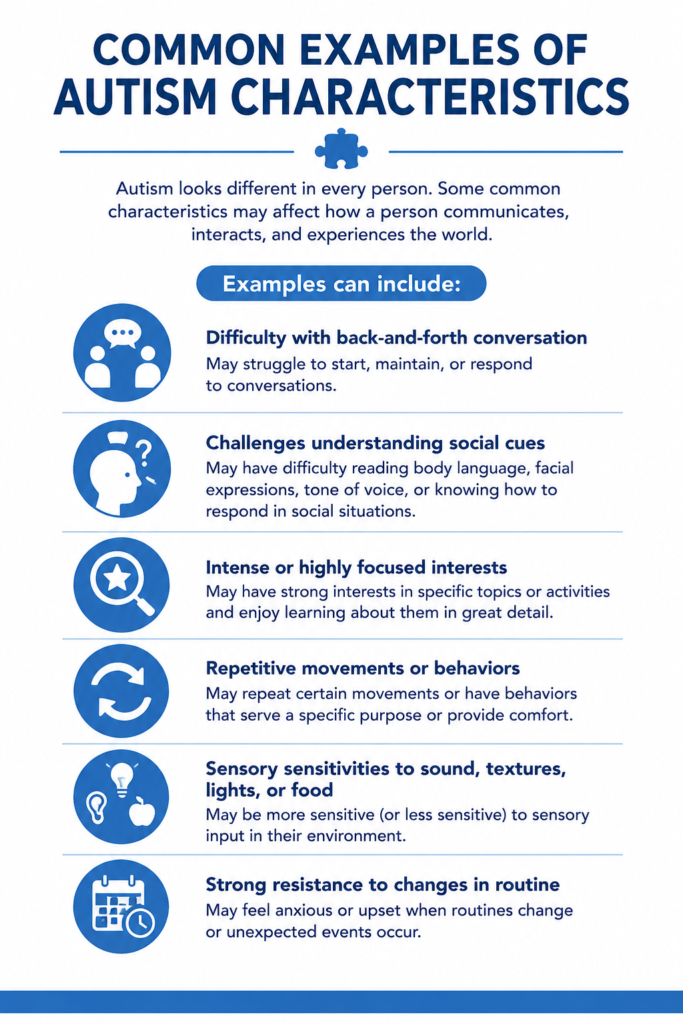
Research published through the National Institute of Mental Health also emphasizes that autism exists as a developmental condition that involves persistent patterns as opposed to occasional behaviors.3
Why sharing some autistic traits does not equal a diagnosis
There are lots of people who avoid loud environments or become intensely fixated on hobbies without being autistic. The difference lies in the overall developmental pattern, the severity, consistency, and functional impact of those traits.
For instance, many toddlers can become upset by transitions or prefer repetition. However, when these behaviors are persistent, or developmentally atypical and paired with communication or social differences, those might be strong indicators of something more significant, including early autism signs in toddlers, which may warrant a professional diagnosis of autism.
This distinction is important because autism isn’t diagnosed based on a checklist of isolated symptoms. Specially trained technicians must evaluate how these patterns of behavior appear across a variety of areas of your child’s development and daily life.
If you’re noticing developmental, communication, or sensory differences in your child and aren’t sure what they mean, Heartlinks ABA can help guide you through the next steps. Our team supports families through the diagnosis process and provides individualized ABA therapy tailored to each child’s unique needs.
Is Everyone Autistic to Some Degree?
The answer is a firm ‘no’! However, research shows that autistic traits can appear to varying degrees across the general population.
What research says about autistic traits in the general population
Often referred to as “broader autism phenotype,” this simply means that certain characteristics associated with autism, including social differences, attention to detail, or sensory sensitivity, can also appear in people who aren’t autistic 3. Multiple studies have indicated that autistic-like traits exist along a continuum in the general population. But having a few traits does not indicate someone meets the clinical threshold for autism spectrum disorder.
The difference between traits and a diagnosable condition
The distinguishing factor is functional impact.
Autism affects how a person handles communication, relationships, sensory seeking, flexibility, learning, and everyday life. It’s these differences that are ongoing and substantial enough to interfere with a child’s day-to-day functioning or require support accommodations.
Someone may identify with one or maybe two autistic characteristics without fitting the broader developmental profile that defines autism spectrum disorder.
It’s that distinction that is crucial because it helps preserve access to understanding, services, accommodations, and the appropriate interventions for autistic individuals and their families.
Each support can make a meaningful difference in a child’s communication, social development, and daily independence. If you suspect your child may be showing signs of autism, contact Heartlinks ABA to learn how our personalized ABA therapy programs can support your family.
What the Autism Spectrum Actually Looks Like
It bears repeating that autism does not look the same in every child or adult who’s received a diagnosis. The spectrum reflects differences in strengths, challenges, communication styles, and support needs.
Support Needs Vary-the spectrum is not a scale that ranges from “a little autistic” to “very autistic.”
One of the most substantial misconceptions about autism is that the spectrum works like a straight line that starts at one end with “mild” symptoms and then moves to another, which reads “severe symptoms.” In reality, autism is much more complex than that.
A child may have tremendous ease communicating but struggle with emotional regulation or friendships. Another child may require tremendous support with speech and daily routines but demonstrate unrivaled memory or academic skills. Some children benefit from ABA therapy for speech delay, while others may need support with sensory processing, transitions, or adaptive skills.
Support needs can also change over time depending on your child’s age, environment, development, and access to intervention services.
Progress on the autism spectrum can look different for every child, which is why individualized support and close collaboration between families and providers are so important throughout the intervention process. As the Torres family shared:
“We have been with Heartlinks for more than a year now. Our BCBA, BT, and case manager are all wonderful. Our son has reached many milestones, and we are so happy with his progress. When parents work closely with the team, you truly see growth positively!
Why is minimizing autism with the “everyone is on the spectrum” approach harmful?
Though the phrase is often intended to be kind, implying that everyone is autistic can unintentionally minimize the lived experiences of autistic individuals and their families.
For many parents, autism involves navigating evaluations, regular therapies, school accommodations, a range of sensory challenges, emotional regulation difficulties, and communication barriers. By suggesting that everyone is on the spectrum, this can overlook the very real struggles that autistic individuals face daily.
It can also discourage families from seeking a diagnosis of autism because it frames autism as something universal, as opposed to a legitimate developmental condition that may benefit from intervention and services.
If your child has been diagnosed-or you suspect they might be-what comes next?
Indeed, receiving a diagnosis of autism or suspecting that they might have developmental differences can feel extremely overwhelming at first. Many parents experience uncertainty, fear, or confusion about what they should do next.
Conversely, many families also find reassurance in working with a collaborative ABA team that communicates consistently and adapts support to their child’s needs. As one Heartlinks ABA parent, Salua H, shared:
“My experience went well. Shaindy was always super helpful and responded promptly. My RBT was very patient, assisting, and communicative. Overall, a good experience.”
The good news is that early support can make a tremendous difference. Services such as ABA therapy and early intervention ABA are designed to help children build communication, ABA therapy social skills, behavioral, and daily living skills in ways that can be customized to their unique strengths and needs.
What is most important is not to compare your child to any stereotypes or internet myths, but instead to seek supportive resources and ABA strategies for parents that help your child thrive.
We proudly serve families in multiple locations, including the following:
- ABA Charlotte NC
- ABA therapy New Jersey
- ABA therapy Atlanta, GA
- ABA therapy Indianapolis
- ABA therapy Baltimore, MD
If your child has received an autism diagnosis or you’re noticing developmental signs that are causing concern, contact Heartlinks ABA today.
Frequently Asked Questions
Is everyone on the autism spectrum?
No! While many people in the general public may share certain autistic traits, autism spectrum disorder is a clinical diagnosis involving ongoing developmental differences that significantly affect daily functioning.
Does everybody have a form of autism?
No. People can experience behaviors or personality traits that overlap with autism without meeting the criteria for autism spectrum disorder.
Can you be autistic and not know it?
Absolutely! Some individuals, particularly older children, teens, or adults, may go undiagnosed for years, especially if they learned to exhibit autism masking symptoms or require less ongoing support.
What’s the difference between autistic traits and autism?
Autistic traits are isolated characteristics that occasionally appear in anyone. A diagnosis of autism involves a much broader developmental pattern that regularly affects a child’s communication, sensory experiences, behavior and daily functioning.
Which billionaire has autism?
Some public figures, such as Tesla founder Elon Musk, have openly discussed being autistic. However, it’s important to note that a person’s medical diagnosis is personal medical information, and it’s vital not to speculate about individuals who’ve not publicly confirmed it themselves.
What are the 12 signs of autism in adults?
Common signs may include:
- Difficulty reading social cues
- Sensory sensitivities
- Strong preference for routines
- Intense interests
- Difficulty with small talk
- Social exhaustion
- Repetitive and restrictive behaviors
- Literal interpretation of language
- Autistic emotional regulation challenges
- Difficulty with transitions
- Autistic eye contact differences
- Preference for predictability
However, autism presents differently in every individual, and only a qualified professional can provide a diagnosis.
Autism looks different in every child and adult. If you have concerns about communication, behavior, sensory sensitivities, or developmental milestones, early guidance can make a meaningful difference. Contact Heartlinks ABA today to learn how our personalized ABA therapy services can support your family.
Resources
1. National Institute of Mental Health. (2024). Autism spectrum disorder. U.S. Department of Health and Human Services, National Institutes of Health. https://www.nimh.nih.gov/health/topics/autism-spectrum-disorders-asd
2. National Institute of Mental Health. (2024). Autism spectrum disorder. U.S. Department of Health and Human Services, National Institutes of Health. https://www.nimh.nih.gov/health/topics/autism-spectrum-disorders-asd
3. National Institute of Mental Health. (2024). Autism spectrum disorder. U.S. Department of Health and Human Services, National Institutes of Health. https://www.nimh.nih.gov/health/topics/autism-spectrum-disorders-asd