

The autistic brain isn’t damaged, broken, or any less capable than a neurotypical brain; it is simply wired differently. When comparing autistic vs. neurotypical brains, researchers have identified key variations in brain connectivity, information processing, and sensory processing differences. Understanding the similarities and differences between the two can help parents better understand their child’s experiences, strengths, and challenges. It can also explain why treatments such as ABA therapy, ABA programs for autism, and other applied behavior analysis interventions are designed to work with the way autistic brains process information as opposed to against it.
Every autistic person is unique. While scientists have identified common neurological patterns, it’s important to remember that no two autistic brains are exactly alike. Brain differences do not determine a person’s intelligence nor their quality of life.
How Does the Autistic Brain Differ from a Neurotypical Brain?
Research into autism brain differences suggests that autistic brains develop and organize information in a much different fashion than neurotypical ones1. It’s these differences that can influence communication, learning, sensory experiences, and daily functioning.
Brain Connectivity: More Short-Range, Fewer Long-Range Connections
One of the most studied differences between autistic and neurotypical brains involves connectivity. Researchers have found that autistic brains often have stronger local connections between nearby brain regions and weaker connections between more distant regions.
Thanks to this pattern, it becomes easier to focus deeply on specific details or areas of interest. At the same time, integrating information from multiple sources, including body language or social cues, may require more effort.
Synaptic Density and Sensory Processing Differences
Synapses are the connections that allow brain cells to communicate with one another. Some research indicates that autistic adults and children may have differences in synaptic development and pruning, which can, in turn, affect how information is processed.
It’s believed that these neurological differences may contribute to a heightened awareness of sounds, textures, lights, smells, and other sensory inputs. These sensory processing differences may explain why some autistic children engage in sensory seeking behaviors, experience loud noises more intensely, or frequently engage in hand flapping, finger flicking, or spinning as forms of self-regulation. Rather than automatically filtering out background information, the brain may process more sensory information at once.
Brain Symmetry, Cortical Structure, and Cognitive Processing
In some autistic individuals, researchers have also identified differences in brain symmetry and cortical organization. It’s thought that these structural differences may influence how the brain processes information, recognizes patterns, and responds to the environment.
Of equal importance, these differences should not be viewed as deficits or handicaps by any means. Instead, they should represent alternative ways of processing information that can present challenges and a person’s strengths.
How Does the Autistic Brain Process Information Differently Than a Neurotypical Brain?
When examining autistic vs. neurotypical processing, it can be incredibly helpful to examine how information is received, organized, and interpreted.
Why Autistic Brains Often Excel at Detail-Oriented and Pattern-Based Tasks
Traditionally, autistic children and adults tend to notice details that others may overlook. They may quickly note patterns, identify inconsistencies, discrepancies, or even develop an unparalleled level of expertise in specific topics of interest. It’s this attention to detail that can help support an autistic person’s interest in math, technology, music engineering, art, or even research.
How Social, Emotional, and Language Information is Processed Differently
Regardless of whether someone is neurotypical or autistic, social communication often requires the brain to process multiple streams of information simultaneously, including facial expressions, tone of voice, gestures, and spoken language.
Autistic children and adults may process these signals differently or prioritize information in a non-traditional way compared to neurotypical individuals. This doesn’t mean they lack empathy or social interaction skills. Instead, many autistic individuals develop their own styles of autism communication, and some children with nonverbal autism may communicate through gestures, AAC devices, or other forms of functional communication.
Understanding and adapting communication styles can make a meaningful difference for families. As one Heartlinks parent, Rivka W., shared:
“Heartlinks ABA has been fantastic. The therapists are knowledgeable, caring, and dedicated to helping children succeed. Communication has been excellent, and the support they provide to both children and families is outstanding.”
Sensory Processing Differences: Why Sounds, Lights and Textures Can Feel More Intense
The autism sensory brain often responds differently to sensory input. Everyday experiences that seem minor to one person may feel overwhelming to another.
For instance, an autistic child may find fluorescent lighting, certain clothing textures, and crowds extremely bothersome. By comparison, some individuals may seek additional sensory input through movement, touch, or repetitive behaviors. Some children may also demonstrate sensory seeking autism behaviors, including crashing into objects, spinning, or seeking additional movement and sensory input throughout the day. Understanding whether sensory or behavioral needs drive a behavior can help families identify effective supports.
If your child experiences sensory challenges that affect daily life, our team can help identify supportive strategies tailored to their needs. Contact Heartlinks ABA to learn more.
How do Autistic Brains Think Differently?
A lot of the time, parents question how autistic brains think differently. While every person learns in unique ways, researchers have identified several common cognitive patterns.
Localized vs. Distributed Processing Styles
Frequently, children on the spectrum process information from the bottom up. This means they focus on the details first, then look at the larger picture. By comparison, neurotypical individuals may more often process information from the top down, using the larger context to interpret details.
Neither approach is inherently better or worse. Rather, they both offer advantages depending on the situation at hand.
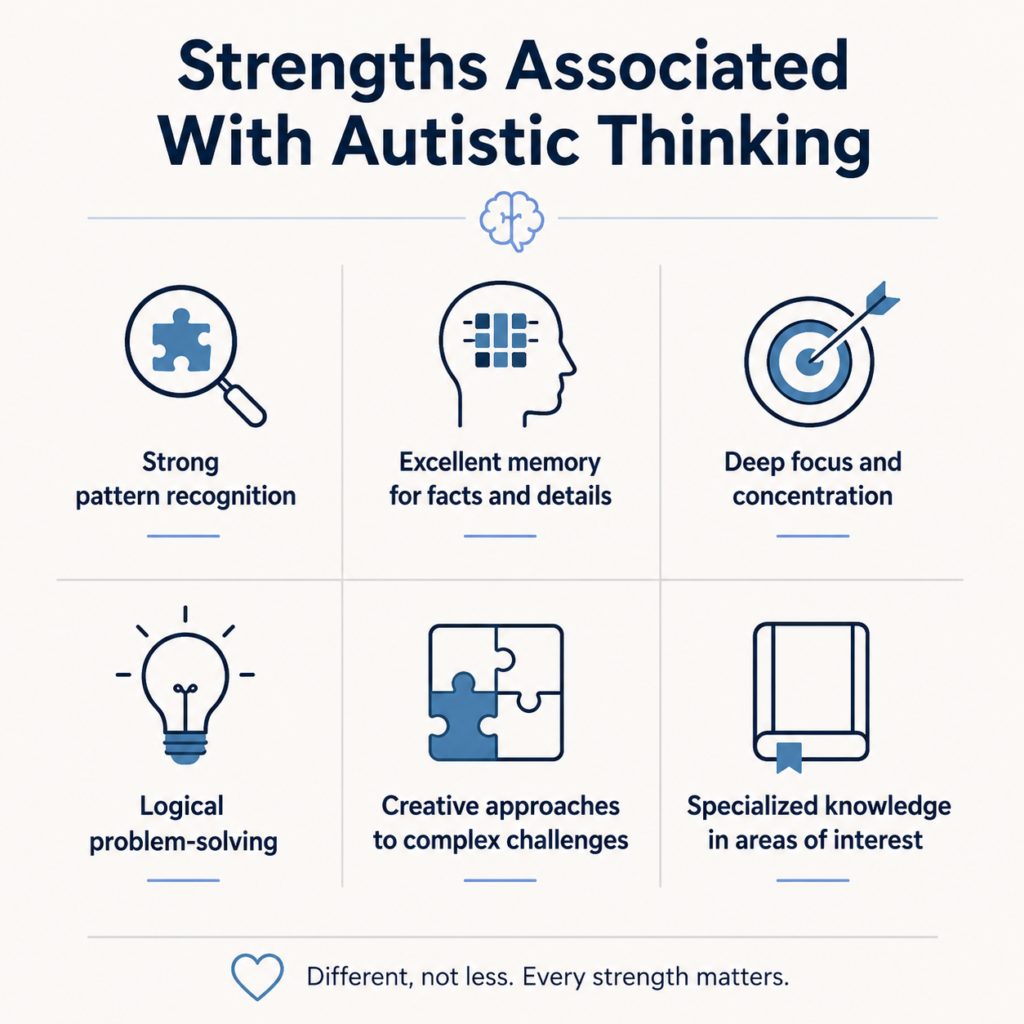
Strengths associated with autistic thinking
Autistic thinking styles are often associated with strengths including the following:
Every child has unique strengths. Talk with a Heartlinks ABA specialist about how therapy can build on your child’s natural abilities.
What this looks like in daily life: focus, routines, social energy
It’s these cognitive differences that can heavily influence a child’s daily experiences. Many autistic individuals prefer, and are much happier when, their routines are predictable and consistent, quite simply because this reduces cognitive demands. Others may become deeply engaged in a favorite interest for extended periods.
Social interactions can also require significant mental energy. For some individuals, challenges with autism anxiety, autism emotional regulation, or emotional dysregulation in autism may contribute to social fatigue and increased stress.
Autistic Brain vs. Neurotypical Brain: Key Differences at a Glance
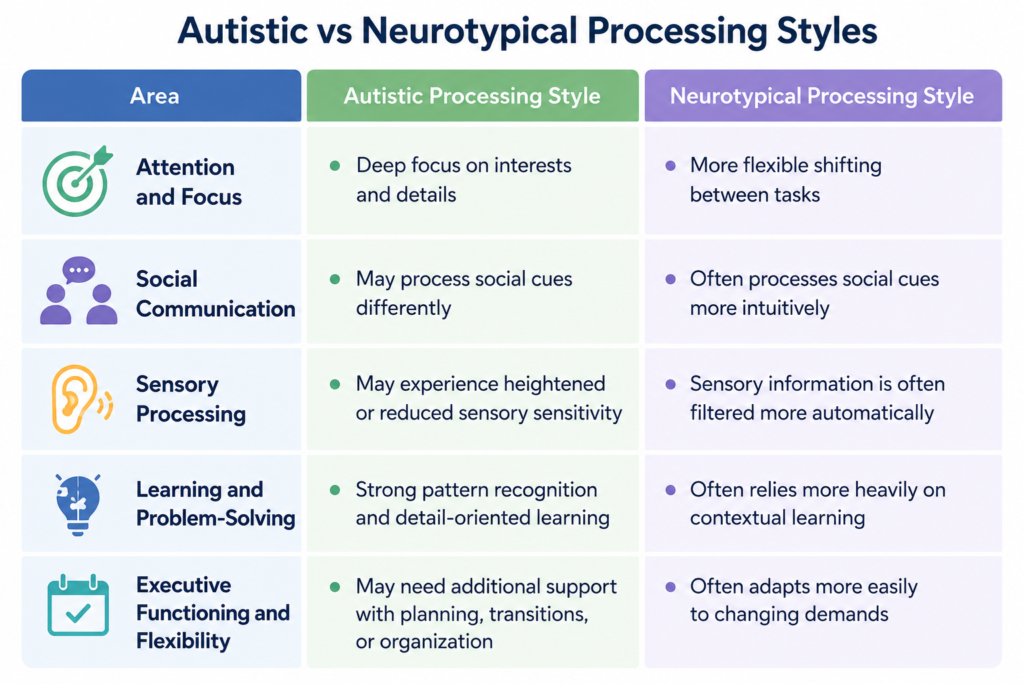
If you’re wondering how these differences affect your child’s everyday experiences? The image below provides a quick overview of autistic vs. neurotypical processing styles.
Attention and Focus
Autistic individuals may demonstrate intense concentration on preferred topics or activities. This can foster skill development and expertise while sometimes making transitions more difficult.
Social Communication
The differences in social communication often reflect distinct processing styles rather than a lack of desire for connection.
Sensory Processing
The comparison between the autistic and neurotypical brains is especially noticeable in sensory experiences. Sensory sensitivities may influence behavior, autistic emotional regulation, and participation in daily activities, and how children respond to sensory needs in different environments.
Learning and Problem-Solving
Many autistic learners excel when information is presented clearly, consistently, and in ways that align with their strengths.
Executive Functioning and Flexibility
Executive functioning skills include time management, organization, planning, and adapting to change. Some autistic children may benefit from additional support in these areas.
How Does ABA Therapy Work with the Autistic Brain?
Today’s ABA therapy uses evidence-based ABA techniques and Applied Behavior Analysis Strategies to support learning while respecting the way autistic brains process information.
Breaking Complex Social Tasks Into Learnable Steps
Social interactions involve many skills occurring simultaneously. ABA therapy is crucial for breaking down these larger tasks into smaller, more manageable components that can be practiced either individually or in combination over time. It’s through this approach that we can help reduce overwhelm while supporting meaningful skill development. Therapists may use task analysis ABA, modeling ABA, visual prompt ABA, other types of prompting in ABA, and ABA social stories to help children learn new skills one step at a time.
Using Positive Reinforcement to Build and Strengthen Neural Pathways
ABA positive reinforcement and reinforcement ABA strategies encourage learning by increasing the likelihood that helpful behaviors will occur again in the future. By coupling success with positive outcomes, children can build confidence while strengthening skills that support their autism communication development, independence, and social engagement.
Building Executive Function and Social Skills in Natural Environments
Effective ABA therapy focuses on helping children apply skills in everyday situations through social skills ABA therapy, functional communication training, and natural environment teaching (NET in ABA). Rather than learning skills in isolation, ABA therapy lets children practice them during play, family routines, community activities, and social interactions.
It’s this real-world practice that supports skill generalization and your child’s long-term success.
As one Heartlinks parent, Oladipo B., shared:
“We had a wonderful experience with Heartlinks ABA. Our son achieved all of the goals set for him, and the team maintained open communication throughout the process. Their staff was professional, caring, and focused on helping our child succeed. We highly recommend their services.”
The Autistic Brain and Heartlinks ABA
Understanding the differences between autistic and neurotypical brains can help parents better support their child’s strengths, challenges, and outlook on the world. Even though research has identified common neurological and sensory processing patterns, it’s important to remember that every autistic child is different. Recognizing these differences is the first step toward providing meaningful support that builds confidence, independence, and long-term success.
At Heartlinks ABA, our certified ABA therapist and BCBA therapist teams build individualized treatment plans that support how autistic brains learn and process information. They don’t conform to a one-size-fits-all approach.
Whether you’re looking for:
- ABA Charlotte NC
- ABA therapy New Jersey
- ABA therapy Atlanta GA
- ABA therapy Indiana
- ABA therapy in Baltimore, Maryland
Our team is here to help your child build skills while honing their individual strengths.
ABA therapy at Heartlinks is built around how your child’s brain actually works- not a one-size-fits-all approach. Contact us today to learn more.
Frequently Asked Questions About the Autistic Brain
What is the difference between an autistic brain and a neurotypical brain?
The primary difference between an autistic brain and a neurotypical brain lies in how information is processed. Years of research have highlighted differences in connectivity, sensory processing, interregional communication, and cognitive styles.
How do autistic brains think differently?
Most often, autistic brains process information in a highly detailed fashion with a focus on pattern-oriented ways.
How do autistic people deal with stress?
The way autistic people deal with stress can vary. Some manage stress through routines and sensory tools, while others focus on special interests or use structured coping strategies.
What is the 6-second rule in autism?
The 6-second rule refers to allowing additional processing time before repeating instructions or expecting an answer to a question.
What trillionaire has Asperger’s?
Tesla and SpaceX owner Elon Musk has publicly stated that he has Asperger’s syndrome. This is a diagnosis previously used before falling under the umbrella of autism.
Resources
- Ha, S., Sohn, I.-J., Kim, N., Sim, H. J., & Cheon, K.-A. (2015). Characteristics of brains in autism spectrum disorder: Structure, function and connectivity across the lifespan. Experimental Neurobiology, 24(4), 273–284. https://doi.org/10.5607/en.2015.24.4.273