


When parents receive an initial diagnosis of autism for their child, one of the first questions they ask is about the types of ASD. How will it affect their child’s development? Today, trained clinicians no longer diagnose separate categories of autism like they once did. However, understanding how the different types of ASD have been historically defined, and how current support can be adapted to each kind, can bring clarity and reassurance.
Autism is best understood as a spectrum. Simply put, this means that children can have very different challenges, strengths, and support needs depending on where they are on the spectrum, as opposed to focusing on labels, the current diagnostic practices emphasize individualized support and addressing the functional needs across the types of ASD.
Why There Aren’t Spectrum “Types” of Autism Anymore
Autism as a Spectrum
Typically, a diagnosis affects a person’s autism communication, social interaction, behavior, and sensory processing in various ways. Some children may only need minimal support in their daily lives, while others may require ongoing assistance across a variety of areas. It’s this vast variation that allows clinicians to refer to autism as a spectrum rather than a single condition.
How Diagnostic Language Has Changed
Up until 2013, diagnosticians used several distinct diagnoses to describe the different presentations of autism. Since that time, thanks to updates to diagnostic standards, these differences were unified under one diagnosis: Autism Spectrum Disorder (ASD). It’s this shift that’s helped reduce confusion and improve consistency in diagnosis and subsequent access to services.
DSM-5 Levels of Autism Explained
Rather than separate diagnoses, medical clinicians now distinguish between the various types of autism using support levels to describe how much assistance a child needs in daily life. These are often referred to as the DSM-5 autism levels and are part of a broader framework for understanding the levels of autism support. These distinctions help guide treatment planning, including ABA therapy approaches.
Level 1 Autism (Requiring Support)
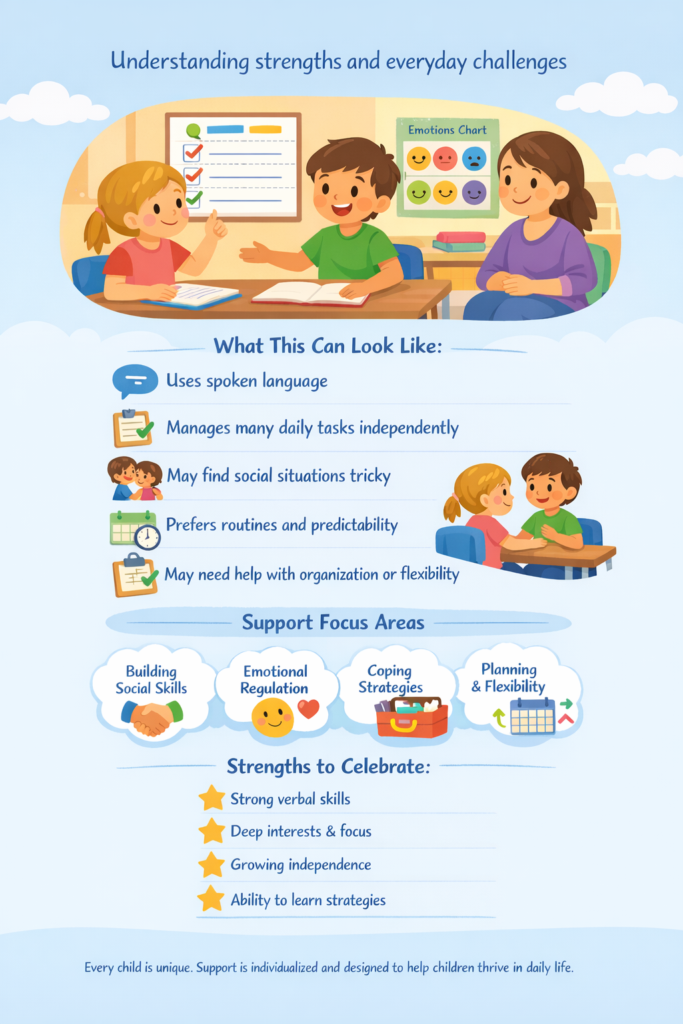
Level 2 Autism (Requiring Substantial Support)
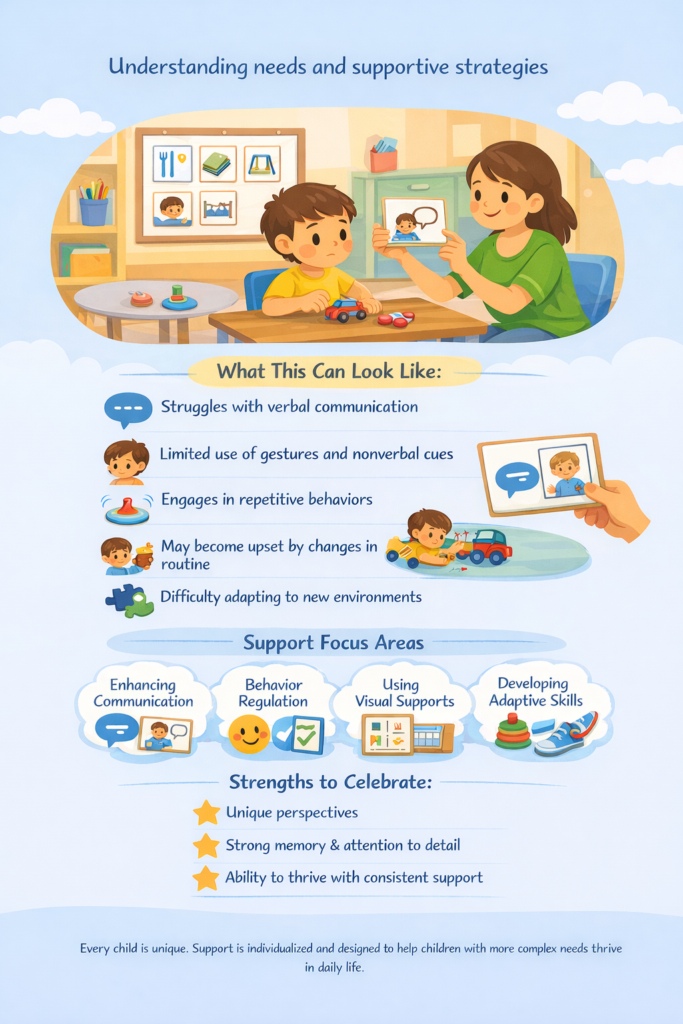
Level 3 Autism (Requiring Very Substantial Support)
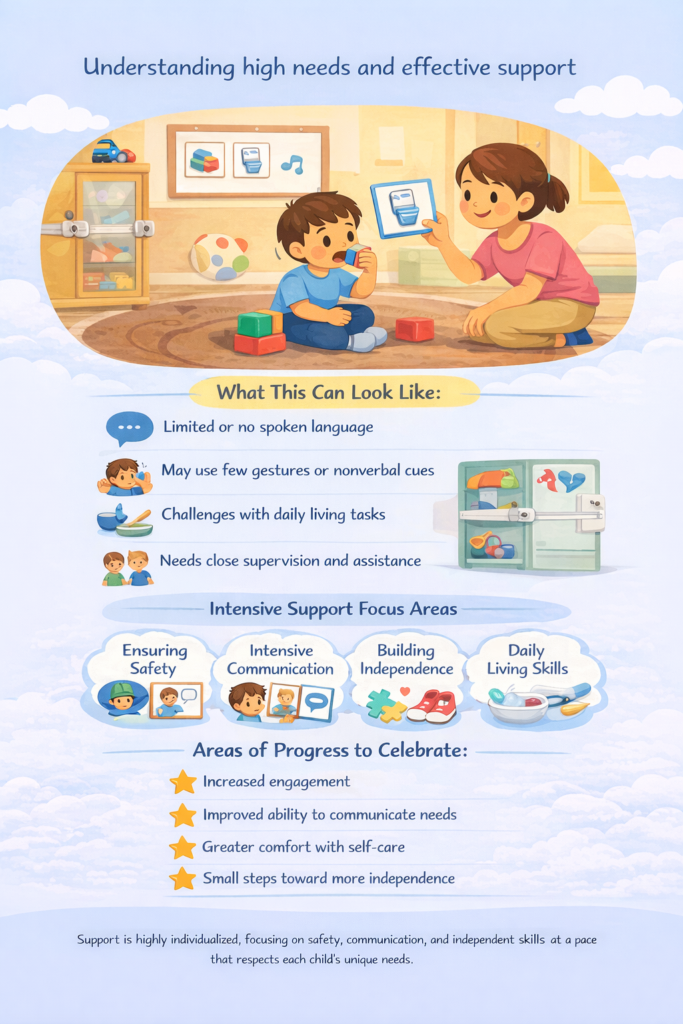
Former Autism Diagnoses You May Still Hear
Asperger’s Syndrome
This term, Asperger’s syndrome was once used to describe children and adults with strong verbal skills and either average or above-average intelligence who had difficulty primarily with social communication. This condition is now included within the ASD spectrum, and usually aligns with autism Level 1 needs and commonly recognized high-functioning autism traits.
PDD-NOS
Pervasive Development Disorder-Not Otherwise Specified was an umbrella diagnosis that was often used when a child demonstrated some autistic traits but did not meet the full criteria for another category. Today, these children fall into the category of autism spectrum disorder.
Childhood Disintegrative Disorder
Childhood Disintegrative Disorder is a much rarer diagnosis that describes children who experience significant developmental regression, usually after early typical development. This diagnosis now falls under the ASD umbrella.
How Support Needs Can Differ Across the Spectrum
Communication Differences
While some children on the spectrum communicate verbally with relative ease, others must rely on alternative communication methods, such as picture systems or devices. At Heartlinks ABA, our support is tailored to help each of our young clients express their needs and safely connect with others.
Sensory Processing and Regulation
Autism spectrum disorder sensory sensitivities can range from light and sound to textures or movement. Developing individualized autism regulation strategies and behavior reduction aba can help children regulate their sensory input and, in turn, reduce their stress.
Daily Living and Independence
Skills like dressing, eating, hygiene, and transitioning between activities develop at varying rates. That’s why support plans are needed to help children on the spectrum build independence step by step.
Why “Levels” Don’t Define a Child’s Potential

Strength-Based Perspectives
A child’s intelligence, personality, or even long-term potential is not defined by the level of support they need. In fact, many children on the spectrum demonstrate unique strengths in problem-solving, memory, creativity, or focus, yet require a high level of daily support.
Growth Over Time With Support
Thanks to consistent, individualized intervention, autistic children have the capacity to gain new skills and lower the level of support they need daily. But as parents and caregivers, it’s essential to remember autism is a lifelong diagnosis, and your child’s development is dynamic.
To learn more about how Heartlinks ABA can support your child, contact us for a consultation.
How ABA Therapy Supports Different ASD Levels
Individualized Treatment Planning
Applied Behavior Analysis (ABA) therapy is designed around the individual child, using evidence-based ABA techniques rather than the official diagnosis. Your child’s goals are based on their assessed strengths, challenges, and your family’s priorities.
Adapting Goals Over Time
As children grow and their skills develop, so do their ABA therapy treatment goals. Support plans can and are regularly adjusted using proven ABA strategies to reflect progress and your child’s growing developmental needs.
Partnering With Families
Family involvement is crucial to the success of effective ABA therapy. Programs are typically overseen by a BCBA therapist who emphasizes collaboration with families to reinforce strategies consistently across daily routines.
At Heartlinks ABA, therapy programs are tailored to meet your autistic child wherever they are on the spectrum, with compassion and strong evidence-based care.
Heartlinks ABA: Helping you find the proper support for your child with ASD
It usually begins with an autism diagnosis, but then it often moves into understanding the different types of ASD and how an organization like Heartlinks ABA can help you. The more parents and caregivers know about the current diagnostic labels, the better able they’ll be to help them and move beyond the label. It’s important to remember that every child’s journey is unique, and progress will look different depending on the diagnosis and patient.
If you’re exploring individualized support for your child, take a moment to connect with Hearltinks ABA to discuss how our personalized ABA therapy can help your child develop the skills and confidence needed to become an independent individual over time.
With services available across multiple regions, including ABA Charlotte NC, ABA therapy Lakewood NJ, ABA therapy Indianapolis, and ABA therapy Atlanta GA, Heartlinks supports families with consistent, high-quality care wherever they are.
Types of ASD FAQs
- What are the types of ASD?
Unlike previous years, where autism was divided into separate types, that’s no longer the case. Today, all diagnoses fall under the Autism Spectrum Disorder umbrella, and as such, they’re provided with varying levels of support.
- Are Asperger’s and autism the same?
In the past, Asperger’s syndrome was considered a separate condition, but now it is categorized as part of ASD.
- What do autism levels mean?
Autism levels describe how much support a child on the spectrum requires in their daily life. It has absolutely nothing to do with a child’s abilities or future potential.
- Can autism levels change over time?
Absolutely! With appropriate support, children may eventually require less intensive or more regular assistance as they develop new skills.
- Does insurance cover ABA therapy for different levels of autism?
In many cases, insurance does cover ABA therapy across all levels of the autism spectrum. Still, the details of full coverage vary by state and your family’s specific plan, including eligibility under insurance and ABA therapy.