


It’s the most wonderful time of the year, the holiday season. But with all the sights and sounds, it can also be overwhelming, particularly for children on the autism spectrum who naturally struggle with sensory overload, routine changes, and social expectations. That’s where noncontingent reinforcement can be one of the most effective ABA strategies for preventing attention-seeking behaviors during the holidays before they get out of control. In fact, when used consistently, non-contingent reinforcement ABA can help families create a season of calm, emotional safety, and predictability.
The following guide explains in detail what noncontingent reinforcement is, how it works, why it’s so effective during the holidays, and how parents can learn to start using it at home.
Understanding Noncontingent Reinforcement ABA
What is noncontingent reinforcement in ABA Therapy?
Simply put, noncontingent reinforcement (NCR) means providing your child with something they value, such as attention or praise, a short break, or sensory input on a predictable schedule, rather than in response to a specific behavior.
This approach aligns with the principles of ABA positive reinforcement, which emphasize providing meaningful, motivating interactions that support emotional and behavioral success.
With NCR, parents proactively reinforce at regular intervals to reduce the child’s desire to seek attention in disruptive ways, rather than waiting for a behavior to happen.
This differs from contingent reinforcement ABA, in which rewards are given after a child completes a desired behavior.
Why is noncontingent reinforcement different from traditional methods?
Traditional strategies often take the approach of waiting for the misbehavior or less desirable behavior and then responding. By comparison, noncontingent reinforcement ABA uses a more proactive approach; it prevents frustration and attention-seeking behaviors before they even surface.
By offering predictable moments of connection, NCR ABA reduces a child’s internal need, which often fuels the yelling, interrupting, or clinging during the chaotic holiday season. It’s this consistency that helps autistic children feel secure, supported, and less dependent on disruptive behaviors to meet their needs.
Why noncontingent reinforcement works
It Meets the Child’s Needs Before Behavior Escalates
Attention-seeking behaviors tend to occur due to an unmet connection, sensory relief, a break, or reassurance.
With noncontingent reinforcement, the child receives those supports early and consistently, lowering their frustration and anxiety level and providing early access to autism regulation strategies.
It Builds Predictability and Trust
All children do best when they know what to expect. That’s why a regular schedule of short, positive attention helps them feel secure even when holiday plans tend to shift. This type of regularity mirrors the consistency that’s found in many structured applied behavior analysis strategies.
It Encourages Emotional Regulation
Parents can automatically shift from reacting to undesirable behavior to preventing overwhelm. In turn, children respond with calmer bodies, steadier emotions, and fewer meltdowns.
It Strengthens the Parent-Child Relationship
Noncontingent reinforcement illustrates to children they’ll be seen and heard even during the most chaotic time of the year-the holidays. This creates warmth, connection, and confidence.
Every child deserves a calm, joyful home during the holidays. Learn how our BCBA therapists can help your family learn and apply these strategies.
Why Attention-Seeking Behaviors Escalate During the Holidays

Attention-seeking behavior often increases dramatically around the holidays due to changes in stimulation and structure, something parents frequently learn during ABA therapy.
Common Triggers for Attention-Seeking
If children struggle with sensory-seeking behaviors, they may exhibit undesirable behaviors when their routines are disrupted, when they’re placed in new environments with unfamiliar people, or when they’re in loud gatherings.
Examples include meltdowns during gift opening, interrupting adult conversations, clinginess, or trouble transitioning between activities.
How ABA Therapy Helps Parents Cope
In the world of ABA, “acting out’ is considered a means of communication. A BCBA therapist can help families understand that the behavior they’re witnessing is often a request for support, not merely open defiance.
Here’s where noncontingent reinforcement ABA becomes particularly effective: it meets the child’s need for connection or attention before the situation escalates to ‘overwhelming’.
Parent Testimonial: Parents frequently share how much of a difference consistent support and guidance make during the often overwhelming holiday season. One parent, Cashmere E., shares: “Heartlinks ABA was a miracle for me and my son! They always came through and have always been very professional, especially Ms. Abigail! I highly recommend them!!” This kind of feedback reflects how compassionate, personalized ABA strategies, such as noncontingent reinforcement, help families feel more confident and supported during the holidays.
Real-Life Scenario: Managing Holiday Chaos with Noncontingent Reinforcement ABA
Families often focus on improving communication about autism during the holiday season to support smooth interactions.
Example 1-The Family Gathering
Typically, during a busy and boisterous family party, many children yell or interrupt each other to get their parents’ attention.
NCR strategy:
Offer short, regular check-ins with your child, such as a smile, brief eye contact, a high-five, or praise, every few minutes
Result
Consistent, noncontingent reinforcement reduces the need for shouting and enables children to stay grounded and connected.
Example 2-Stress-Free Holiday Shopping with Noncontingent Reinforcement ABA
Holiday shopping involves going into stores that are loud, crowded, and bright, which often easily overwhelms autistic children. Frequently, this scenario can trigger challenges addressed in behavior reduction ABA.
Example 3-Quiet Moments at Home
After a full day of stimulation, autistic children often crash emotionally in the evening and may tremendously benefit from tried and true calming techniques for autism.
NCR strategy:
Incorporate praise, quiet play, or soothing sensory activities before bedtime
Result:
Predictable comfort supports regulation and peaceful evenings.
How Noncontingent Reinforcement Reduces Attention-Seeking During the Holidays
At Heartlinks, our parents often turn to the structured routines and helpful ABA techniques that we teach to manage the transitions and prevent escalation.
The Science Behind NCR ABA
Research indicates that when reinforcement is scheduled rather than earned, a child’s internal need to seek attention decreases. As a result, this creates a stability that’s similar to behavioral momentum, in which consistent positive interactions help children remain steady in high-stress environments.
Blending Noncontingent and Contingent Reinforcement
Noncontingent and contingent reinforcement can work well together. Many families also invest in play-based approaches, such as PRT-ABA, to strengthen skill development.
For example:
- NCR: scheduled praise for calm presence during a family game
- Contingent reinforcement: extra reward when your child uses a communicative phrase such as “Can I have a turn?”
Used together, they build a child’s sense of calm and teach valuable skills.
Implementing Noncontingent Reinforcement ABA at Home
For even greater success, parents will often combine NCR with additional home-based ABA strategies
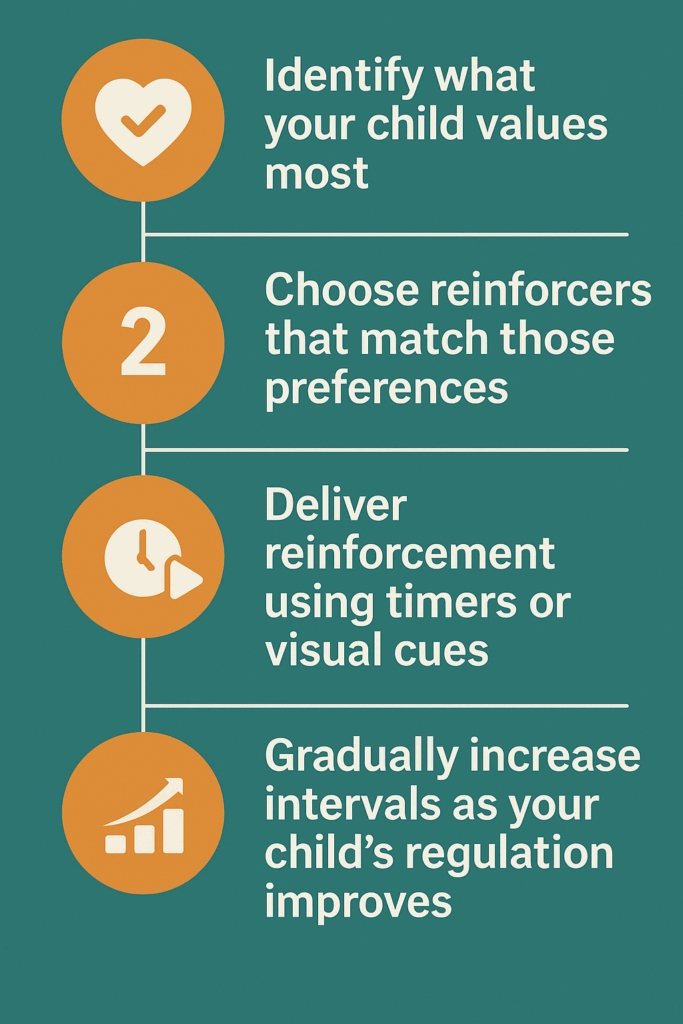
Simple Steps to Apply Noncontingent Reinforcement without Overwhelm
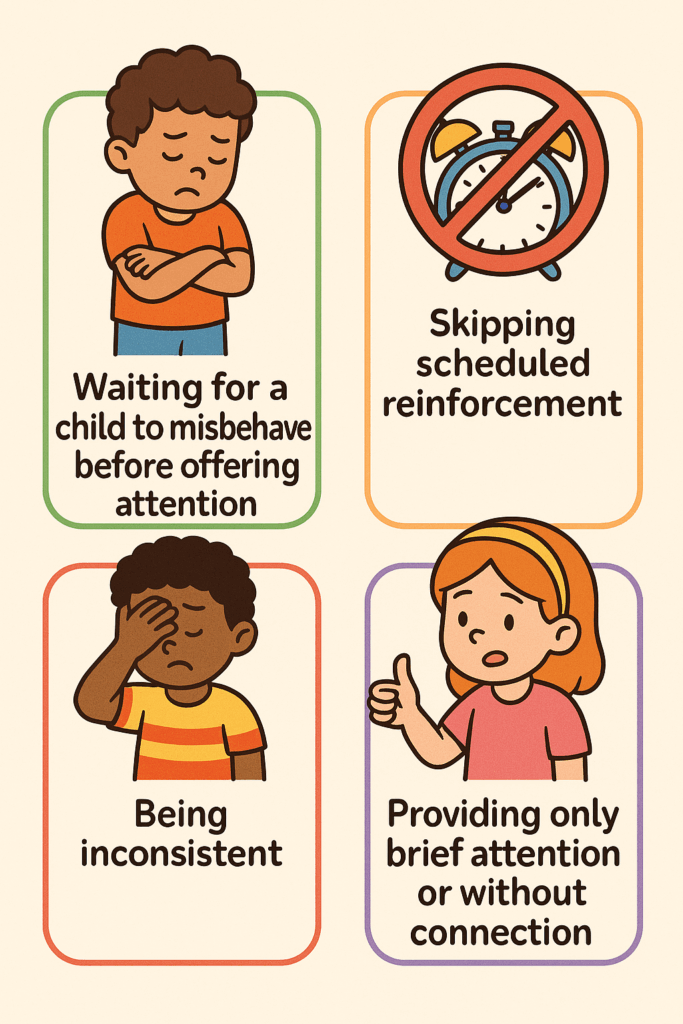
Avoid Common Noncontingent Reinforcement Mistakes
Many parents also learn or seek out information from a variety of sources, such as ABA therapy for speech delay, to improve communication during scheduled reinforcement.
Feeling overwhelmed trying to maintain calm and connection during the holidays?
Partnering with ABA professionals for guidance
Incorporating professional support is often a key part of larger ABA programs for autism that help families navigate challenging behaviors. Yes, parents can begin using noncontingent reinforcement at home. A trained ABA professional has the skill set to ensure the strategy is tailored to the child’s needs, communication style, and strengths.
BCBAs are also available to help families understand why the attention-seeking behavior occurs and how NCR can work in conjunction with other evidence-based interventions. It’s this level of expertise that is particularly valuable during the holidays, when changes in routine, sensory overload, and tremendous emotional demands can make behaviors more unpredictable.
All of the above-mentioned ABA professionals can also support parents by translating data into actionable insights. Thanks to ongoing observation and coaching, they’re able to help families adjust reinforcement intervals, select meaningful reinforcers, and strengthen communication skills that work well with NCR.
How Noncontingent Reinforcement Fits into ABA Therapy
Firstly, a BCBA evaluates behavior patterns and then creates reinforcement schedules based on the following:
- Sensory needs
The therapist determines whether the child is seeking or avoiding sensory input and selects reinforcers, whether that’s movement, deep pressure, or quiet activities, that match those specific needs.
- Attention patterns
The BCBA must determine how often the child is seeking that connection and, in turn, structure NCR intervals to proactively meet that need before behaviors escalate.
- Triggers
By analyzing and understanding what events or demands increase stress (i.e., changes in routine, waiting, transitions, crowded environments), the therapist uses NCR to prevent overwhelm.
- Daily routines
From morning routines and mealtimes to car rides and bedtimes, NCR is naturally woven into everyday moments, providing predictable support throughout the day.
It’s the consistency across home and therapy environments that allows children to generalize calm, regulated behavior regardless of where they are. When NCR is used consistently with professional oversight, families remark on smoother transitions, fewer meltdowns, and, in general, a more peaceful holiday season.
How Heartlinks ABA Supports Families
Heartlinks ABA is proud to provide personalised support that helps families confidently use noncontingent reinforcement at home. Many families who receive in-home ABA therapy most often use NCR strategies daily to reduce stress, promote emotional stability, and create calmer routines, particularly during the chaotic holiday season. Our team of BCBAs and RBTs partners closely with parents to model techniques, adjust reinforcement schedules, and build plans that fit each child’s unique needs.
Heartlinks ABA is proud to support families in multiple states, including:
If you’re ready to bring more peace and joy into your holiday season, then take a moment to discover how noncontingent reinforcement ABA can help your autistic child thrive at home and beyond. Schedule your consultation with Heartlinks ABA today.
Noncontingent Reinforcement FAQs
- What is noncontingent reinforcement ABA, and how does it help manage attention-seeking behavior?
It reinforces a predictable schedule, reducing the motivation for children to seek attention through disruptive behaviors.
- What are some examples of noncontingent reinforcement ABA strategies used in ABA therapy sessions?
From scheduled praise and sensory breaks, to check-ins, access to fidgets, or calm activities delivered regardless of behavior. Together, these strategies often work hand in hand with social skills therapy.
- How does ABA therapy distinguish between contingent and noncontingent reinforcement?
The difference between contingent and noncontingent reinforcement is that the former is earned after a desired behavior, while the latter is scheduled proactively.
- What is an example of providing noncontingent attention in ABA therapy?
An example might be offering a minute of connection, whether it’s conversation, praise, or eye contact, every few minutes during a session.
- Does noncontingent reinforcement, ABA, ever increase target behavior?
If implemented correctly, it generally reduces challenging behaviors.
- When do ABA therapists use noncontingent reinforcement as part of a behavior intervention plan?
It’s used when the data indicate that behaviors are maintained by attention, access to items, or escape.
- How can noncontingent reinforcement help create a calmer, happier holiday season?
Proactive reinforcement stabilizes emotions, reduces overwhelm, and can help children navigate celebrations more confidently.
- Does insurance cover noncontingent reinforcement and ABA therapy in general?
The majority of plans that offer ABA therapy covered by insurance also include coverage for behavior plans that involve noncontingent reinforcement.