


Christmas is a magical season, full of lights, sounds, scents, and activities unlike any other time of the year. However, if you have a child on the spectrum, it can also be one of the most overwhelming times of the year. From bright lights and crowded gatherings to schedule disruptions and noisy celebrations, all of this can intensify your child’s feelings of stress and overload. That’s why preparing early and incorporating evidence-based strategies such as ABA therapy are crucial to creating a Christmas that feels predictable, calm, and truly enjoyable for your child.
The following guide is designed to help parents understand how autism and Christmas can work well together, providing practical ABA strategies, preparation tools, and sensory-friendly ideas to help your family celebrate with confidence and ease. For families working toward autism friendly holidays, minor adjustments like these can make the entire season feel more manageable.
A Parent’s Perspective
Many families come to Heartlinks and find comfort knowing they’re not alone on this journey. One parent, Douminique B.M., recently shared:
“The staff at Heartlinks is awesome. The team at my home is easy to work with, and they go above and beyond to accommodate me and my kids. I absolutely recommend them to anyone looking for ABA therapy.”
It’s this level of support that can make all the difference during the holiday season, particularly when routines shift and children need predictable and compassionate support.
Sensory-Friendly Autism Christmas Preparation Tips
One of the most effective ways to support your child during the holidays is to start preparing early. Often, autistic children fare better in predictable environments and are less anxious when routines are changed without warning. Many of these same strategies are helpful for families navigating broader autism holidays in 2025 planning as well.
Use visual previews and social stories.
By incorporating visual structure, you can help your child anticipate what the holiday season will look like for them. You can use the following:
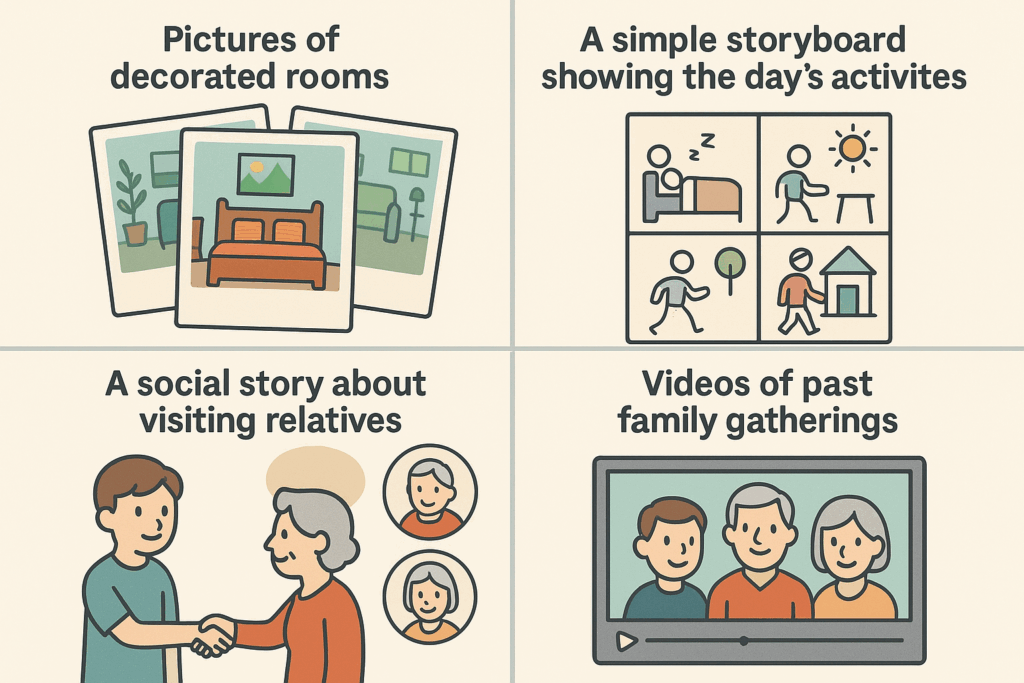
If your child often exhibits sensory-seeking behaviors, take a moment to speak with their therapist about alternatives such as extra movement breaks, deep-pressure activities, or calming tools woven into their holiday routine.
Additionally, children who have difficulty with expressive or receptive language can usually benefit from structured support, visual aids, and regular practice to strengthen their autism communication skills during holiday events.
Introduce Decorations Gradually
Rather than decorating all at once, why not try a more gradual approach:
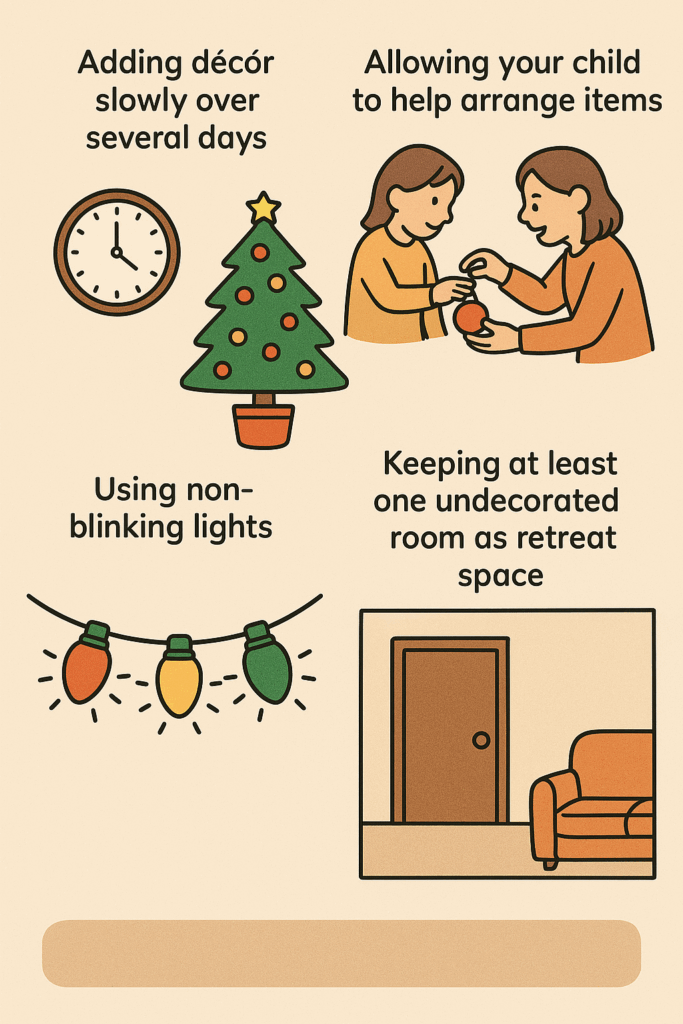
But utilizing an incremental approach, you’re better able to support your child’s emotional regulation, particularly for children with high-functioning autism traits or additional forms of Christmas-related anxiety.
Practice Holiday Expectations
Predictability helps many autistic children feel calmer and confident during the holiday season. By practicing simple holiday routines in advance, such as:
- Greeting relatives
- Opening gifts
- Asking for breaks or timeouts
- Waiting during meals
This will make the real event feel much easier. In addition, incorporating structured ABA strategies or techniques at home can support their communication, skills, adaptability, and coping during Christmas gatherings.
If your child tends to exhibit stress responses, such as autism hand flapping or autism spinning, providing them with opportunities to preview new environments or rehearse upcoming activities can lessen sensory overload and help them stay calm and regulated.
Heartlinks ABA specializes in helping families build predictable, child-centered routines that make holidays more enjoyable. Contact us today to schedule your ABA therapy consultation and to learn how individualized ABA therapy can help your child feel calmer and more confident at Christmas.
Managing Autism and Christmas: Keeping Schedules Consistent
For a lot of autistic children, routine is the foundation of their emotional safety. Despite the holiday excitement, the disruptions that this time of year brings, including travel, late-night or irregular meals, can make anxiety challenges and behavior more intense.
Maintain core routines
Whenever possible, remain consistent with the following:
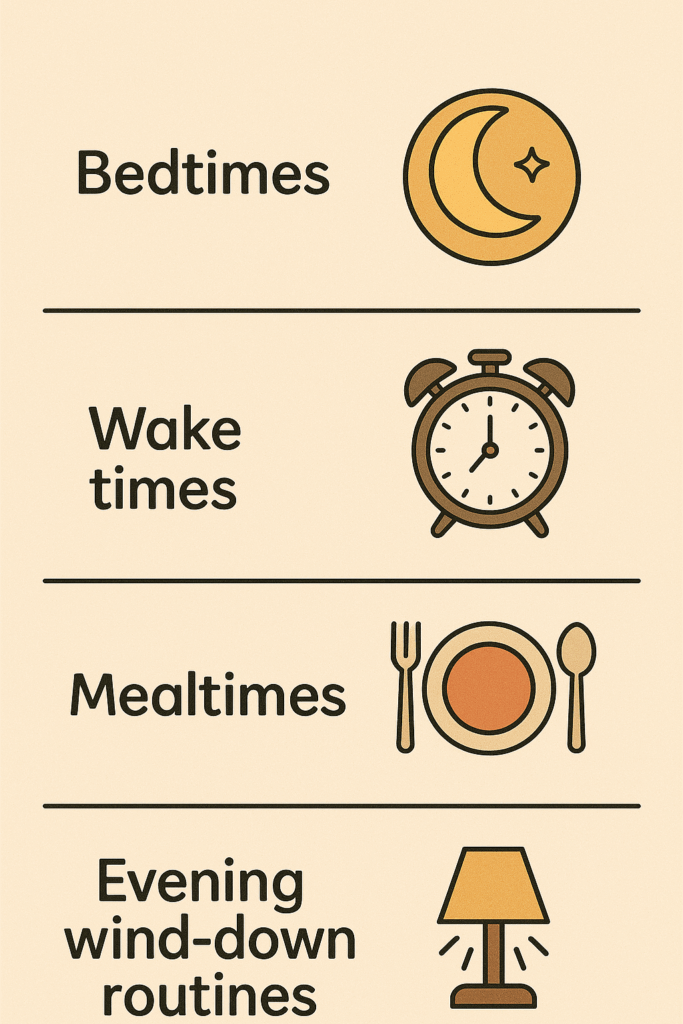
Maintaining a consistent structure will support smoother transitions and reduce meltdowns during autism and Christmas events.
Use a holiday visual schedule
Creating a holiday visual schedule can be particularly helpful during Christmas, when routines tend to change more than usual. Establishing a precise, predictable sequence of events can help your child understand what to expect and reduce the anxiety that often comes with transitions or surprises. Whether you decide to use pictures or icons, or even just a simple written list, whatever format your child responds to best, include it!
Sample visual schedule
Breaking the day into smaller, more manageable portions will make the holiday feel more structured and less overwhelming. If your child thrives from highly organized learning or requires extra clarity around expectations, you can take this even further. At Heartlinks, we’ve seen some families use visual prompt ABA to guide their child through each step, while others prefer breaking activities into smaller actions using task analysis ABA. These methods give children a clearer understanding of what’s expected of them, when it’s due, and how long each part of the day will last. Together, this will reduce the stress and help support a much smoother transition throughout Christmas events.
Support Transitions with ABA therapy tools
Supporting transitions is one of the easiest ways to help your autistic child stay regulated and calm during the holidays. With the quick shifts that are often common at Christmas, including leaving the house, visiting relatives, or opening gifts, these transitions that many adults take in stride can frequently feel overwhelming for children on the spectrum. Using ABA strategies can remove some of the stress of these moments and provide your child with the structure they need.
You can try the following suggested strategies:
- First/then boards to show what’s happening now and what comes next
- Countdown timers to help your child prepare for upcoming changes
- Simple verbal cues delivered calmly and consistently
- Gentle modeling of expected behaviors, including walking to the car or greeting someone new.
Incorporating these supports makes transitions more concrete and far less overwhelming. This is particularly true during the busy, unpredictable holiday season. For parents unfamiliar with these methods, ABA therapy can provide step-by-step guidance on establishing smooth, predictable transitions that reduce your child’s stress and improve your child’s overall holiday experience.
Social Strategies for Autism During Christmas Family Gatherings
Social gatherings during the holidays can be overwhelming, from noise and crowded rooms to the unpredictability of conversations and the heightened emotions, social participation at this time of year can be difficult for autistic kids.

Prepare Family Members
Take a moment to share simple reminders with relatives about your child’s communication style, sensory needs, and preferred greeting. This is particularly helpful for children who struggle with nonverbal autism or autism finger flicking, any kind of behavior that’s an expression of anxiety around unfamiliar people.
Practice Scripts and Social Stories
Developing a script for your child can help them know what to say and when to say it. The script could be for several different social situations, including the following:
- Greeting relatives
- Opening gifts
- Trying new foods
- Requesting breaks
Role-playing these situations helps to develop your child’s confidence. If they require more support, social skills therapy can help with holiday-related communication.
Set Expectations Gently
Before embarking on any social excursion, explain beforehand what will happen and how long you’re planning to stay. Let your child know they can always step outside or take a break together whenever they want. Modeling coping behaviors such as “I’m going to take a deep breath” can reinforce their sense of emotional regulation.
Children who are dealing with autism anxiety may also benefit tremendously from structured relaxation routines and calming techniques for autism that can be used before or during social gatherings.
Managing Sensory Overload with Autism and Christmas
The holiday season brings a mixture of flashing lights, festive music, strong scents, and unfamiliar textures, all of which can be sensory triggers that can easily overwhelm anyone, especially individuals sensitive to autism, loud noises, and other forms of sensory input.
is often full of sensory overload for people both on and off the autism spectrum. From flashing lights and loud festive music to strong scents and unfamiliar textures, these are all triggers for sensory overload.
Create a sensory toolkit
Pack items like:
- Noise-canceling headphones
- Sunglasses
- Fidgets
- Weighted items
- Preferred snacks
Children with sensory-seeking autism may require movement or some form of sensory input before a gathering.
Set up a quiet retreat area
This can be any of the following:
- A spare bedroom
- A quiet corner with soft lighting
- A tent or canopy space
- A beanbag or weighted blanket
If you’re visiting relatives or guests, take a moment beforehand to ask whether they have a designated space or a calm room.
Watch for early signs of overload
Behavioral cues may include:
- Pacing
- Covering ears
- Increased stimming
- Irritability
- Withdrawing
- Hand flapping
- Finger flicking
Families navigating autistic defiance or holiday-related shutdowns can lean on autism regulation strategies to help reduce overwhelm.
Create a Calmer Holiday Season with Heartlinks ABA
Heartlinks ABA has extensive experience helping families across the country navigate autism Christmas-related challenges, providing evidence-based, compassionate support. Regardless of whether you need help with sensory planning, communication skills, social challenges, or emotional regulation, our team of qualified specialists is here to help.
Heartlinks proudly supports families across multiple regions, providing consistent, dependable support wherever you and your family are. In addition to our central locations, families can also access services through ABA Charlotte, NC; ABA therapy Lakewood, NJ; ABA therapy Indianapolis; and ABA therapy Atlanta, GA.
FAQs about Autism and Christmas
- How do you do Christmas with an autistic child?
Start planning early, keep routines consistent, and use sensory supports. Additionally, structured tools from ABA therapy can make the holidays more predictable.
- What strategies help manage meltdowns during autism and Christmas gatherings?
Take advantage of tools such as visual schedules, sensory kits, calm spaces, and ABA positive reinforcement strategies to support your child’s regulation.
- Which sensory tools can help prevent overload at Christmas events?
There is a variety to choose from, including noise-cancelling headphones, weighted items, fidgets, and sunglasses to help reduce autism Christmas overwhelm.
- How do I prepare my child for the changes in routine?
Try incorporating first/then boards, countdown timers, and applied behavior analysis strategies to support transitions.
- How can ABA therapy help with Christmas challenges?
A BCBA therapist can develop customized plans for behavior, sensory processing, and communication support to help create smoother holiday experiences.
- When should I start ABA therapy to prepare for Christmas?
The earlier the better because early intervention builds long-term skills. For location-based support, consider in-home ABA therapy.