


ABA (Applied Behavior Analysis) and CBT (Cognitive Behavioral Therapy) are both evidence-based therapies, but they work differently. ABA focuses on reinforcing observable behaviors and skills and is primarily used for autism spectrum disorder. By comparison, CBT focuses on identifying and reshaping unhelpful thought patterns and the associated habits and is widely used to treat anxiety, depression, and other mental health conditions.
What is ABA Therapy?
ABA therapy, or Applied Behavior Analysis, teaches skills and reduces harmful or unhelpful behaviors through repetition and reinforcement. Typically, a Board Certified Behavior Analyst (BCBA) writes the treatment plan. Then it’s trained technicians who run sessions with the client, usually one-on-one. The Centers for Disease Control describes ABA as a leading behavioral treatment for autism, one that encourages helpful behaviors, discourages unhelpful ones, and tracks progress along the way1.
ABA breaks large goals into smaller, more manageable tasks, such as talking or getting dressed independently. Therapists track progress by watching behavior and recording data. That’s the main difference from talk therapy: ABA cares about what someone does, not what they’re thinking or feeling about it.
Core principles of Applied Behavior Analysis
ABA relies on a few basic ideas:
- Positive reinforcement. Good behaviors get rewarded so they happen more often.
- Data tracking. Therapists record what’s working and adjust the plan as needed.
- Individual goals. Every plan is built around that person’s specific needs.
- Practice in real life. Skills learned in sessions are practiced at home, school, or out in the community.
Who is ABA typically used for?
Most often, ABA is used for autism, particularly with young kids who are starting therapy for the first time. ABA therapy helps develop skills such as talking, socializing, and performing everyday tasks like getting dressed. It can also limit behaviors that impede or threaten a child’s safety.
ABA therapy at Heartlinks is built around how your child’s brain actually works and is not a one-size-fits-all approach. Contact us today to learn more.
What is CBT?
CBT is a talk therapy. It examines how a person’s thoughts, feelings, and actions connect. As opposed to starting with a person’s behavior, CBT starts with what someone’s thinking. The American Psychological Association describes CBT as a process where the client and therapist work together to unearth unhelpful or detrimental thoughts and behaviors and work on changing them2.
CBT sessions often feel like a normal conversation. The therapist helps the client notice certain thoughts, check if they’re actually true, and then try new ways to handle the person’s stress or fear.
Who is CBT typically used for?
Most often, CBT is used for people suffering from anxiety, depression, OCD, PTSD, and similar conditions. It works best when someone can talk through and reflect on their own thoughts, which is part of why it’s not usually the go-to for core autism symptoms. It can still help autistic people with anxiety or emotional regulation when it’s adapted to fit them.
Check your ABA insurance coverage to see what’s included in your plan.

Can ABA and CBT be used together?
Yes. For some people, especially those with autism plus something like anxiety, ABA and CBT can work well side by side. ABA covers skill-building and behavior. CBT, adapted for the person, helps with anxiety or rigid thinking.
What Integrated Treatment Looks Like in Practice
Typically, a BCBA and a therapist work in tandem rather than on their own. For example, let’s say a child is building communication skills through ABA. That same child might also see a therapist for CBT, adjusted to their age, for anxiety around new situations. These aren’t combined into a single session. Instead, they occur separately, each provider doing their part.
Keeping The Two Approaches Aligned
ABA and CBT work differently; that’s why providers need to stay in touch. A good team shares notes, uses the same language with the family, and makes sure neither approach undoes the other.
Talk with a BCBA about your child’s treatment plan – get started today.
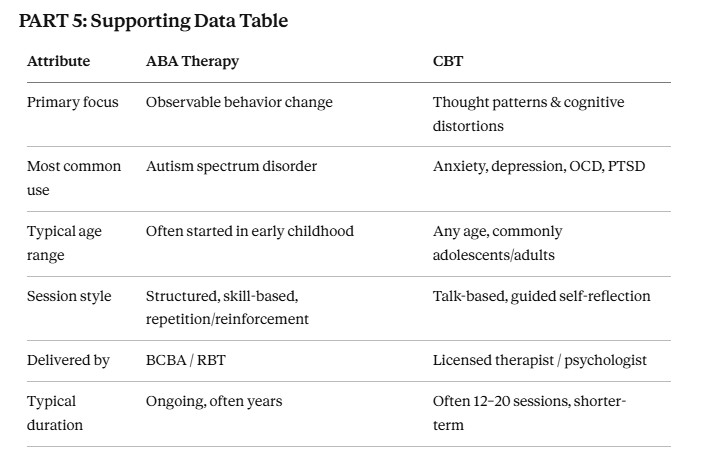
Key Differences: ABA vs. CBT at a Glance
Methodology and session structure
ABA sessions tend to follow a set routine. Each session targets, reinforces, and measures specific behaviors. CBT has a general plan too, but sessions can shift depending on what the client brings up that day.
Goals and measured outcomes
ABA is designed to track specific things, whether it’s a new skill learned or a reduction in a certain behavior, backed by data over time. By comparison, CBT can track things like symptom relief and how the person says they’re feeling, in addition to what the BCBA therapist notices.
How to Choose the Right Therapy for Your Situation
Ultimately, it comes down to what’s needed most. For a child with autism who needs to learn the basics, including talking or daily tasks such as dressing themselves, early intervention ABA is usually where to start. IIfanxiety, depression, or another mental health issue becomes the main concern, and the person can undergo talk therapy, CBT is often a better fit. For someone who is facing both autism and a mental health condition, utilizing both might be the best fit.
Curious about other options? Take a look at ABA alternatives.
Not sure where to start? Schedule a consultation to discuss your options.
Frequently Asked Questions About ABA Therapy vs. CBT
My child was just diagnosed with autism. Should we start with ABA or CBT?
The majority of kids with this diagnosis begin their therapy journey with ABA since it builds core skills, including talking and daily living, early on.
Is ABA covered by insurance the same way CBT is?
Both are usually covered. However, the details, including a required diagnosis or session limits, vary by plan and state.
What therapy is best for anxiety, ABA or CBT?
CBT is usually the first recommended choice for anxiety since it deals with the thoughts causing it directly.
Can adults do ABA therapy, or is it only for children?
ABA therapy is primarily known to be used within early childhood. But adults can benefit from it too. This is particularly true when the need to learn daily living skills, communication, or job-related skills.
How do I know if ABA or CBT isn’t working?
Indicators that ABA or CBT isn’t working include stalled progress, increased distress during sessions, or goals that no longer fit. If the ABA therapy is no longer working, talk to your BCBA or therapist. Taking time to adjust the plan is normal for both.
Resources
- Centers for Disease Control and Prevention. (2024, July 18). Treatment and intervention for autism spectrum disorder. https://www.cdc.gov/autism/treatment/index.html
- American Psychological Association. (2017, July 31). What is cognitive behavioral therapy? https://www.apa.org/ptsd-guideline/patients-and-families/cognitive-behavioral