


Sensory seeking behavior or challenges with emotional regulation are often the most common physical symptoms in autistic children. However, there’s another physical symptom that, according to medical research, can affect over 50% of autistic individuals: hypermobility.
If you’re a parent of a child on the spectrum and are unfamiliar with the term hypermobility, you’re not alone. The symptoms of this condition include unusually flexible joints, frequent clumsiness, complaints of pain, and constant fatigue.
In some cases, hypermobility exists on its own and causes minimal long-term concerns. In others, it may be associated with Ehlers-Danlos Syndrome (EDS), a group of hypermobility spectrum disorders that affect the body’s collagen and its role in supporting joints, skin, and other tissues.
Understanding hypermobility vs. EDS can help families determine whether what they’re witnessing is part of a child’s normal development or requires medical follow-up and more coordinated support. Read on to learn more.
What Hypermobility Means in Children
Joint Flexibility and Typical Development
If you’ve ever heard your child’s BCBA therapist or doctor mention hypermobility but have been unsure as to its meaning, it’s time to clear that up. Hypermobility refers to joints that move beyond the expected or ‘normal’ range. Often, children, particularly younger ones, are naturally flexible. But as they grow and mature, hypermobility may decrease over time without causing long-term issues.
When Hypermobility is Benign
Typically, benign joint hypermobility causes no pain and presents no functional limitations. Growing up, you probably had a friend who was highly flexible, able to contort their body into many different positions without injury, fatigue, or obvious challenges. It’s this form of hypermobility that does not indicate a connective tissue disorder.
Common Signs Parents Notice
From “W-sitting” and loose posture to delayed motor coordination and/or extreme fatigue during physical activity, these are all signs of hypermobility. With autistic children, these signs may also be in combination with unique sensory processing differences; this mix is often referred to as hypermobility autism.
What is Ehlers-Danlos Syndrome
Connective Tissue and Collagen Disorders
Ehlers-Danlos Syndrome is a group of 13 heritable connective tissue disorders that affect the body’s collagen, a protein essential for joint stability, skin integrity, and overall tissue strength. EDS is a medical condition that requires a clinical diagnosis.
Common Types of EDS in Children
Though there are over 13 different types of EDS, hypermobile EDS is the most commonly discussed of these disorders in children. Other types of EDS may involve fragile skin, delayed wound healing, or cardiovascular concerns.
Why Diagnosis Requires a Medical Evaluation
Diagnosis of EDS involves a thorough medical assessment given the involvement of multiple body systems. That’s why understanding Ehlers Danlos Syndrome vs. hypermobility is crucial, because joint flexibility alone is not sufficient to confirm the presence of EDS or rule out other underlying conditions..
Hypermobility vs EDS: Key Differences and Overlap
At Heartlinks, many of our families engaged in aba programs for autism often have difficulty differentiating between hypermobility and EDS because the symptoms can look so similar on the surface. For many families, understanding Ehlers Danlos Syndrome vs. hypermobility can be challenging, especially when symptoms overlap, and a child already has complex sensory or developmental needs.
Symptoms that Overlap
EDS and hypermobility often present with joint pain, fatigue, coordination difficulties, and sensory challenges. It’s these overlaps that can be particularly noticeable in autistic children and may coexist with traits associated with high-functioning autism symptoms.
Signs that Suggest Further Evaluation
The red flags that suggest your child undergo further medical evaluation include chronic pain, frequent joint dislocations, delayed motor milestones, significant fatigue, or a family history of connective tissue disorders. It’s in cases like these that comparing and contrasting hypermobility vs EDS with a trained medical professional is crucial.
Why Hypermobility Alone is Not EDS
Many children meet the criteria for hypermobility spectrum disorder or the larger encompassing hypermobility spectrum disorders without having EDS. It’s these diagnoses that recognize a child’s functional challenges without implying a genetic connective tissue disease like EDS.
The Link Between Hypermobility, EDS, and Autism

Sensory Processing and Proprioception
Proprioception is your body’s sense of its own position, movement, and force. It’s often called the sixth sense, and it’s crucial for body awareness, balance, and coordinated movement. By sending signals from your body’s muscles and joints to the brain, this plays a vital role in sensory processing, helping to regulate responses to other stimuli and enabling actions like sports or reading.
In autistic children with joint hypermobility, reduced proprioceptive input can affect the body’s awareness and capacity for self-regulation. In turn, this can affect their balance, posture, and autistic emotional regulation.
Motor Coordination and Fatigue
Everyday movements require much more effort when you have loose joints. In turn, this leads to fatigue and motor planning challenges. It’s these physical demands that can impact your child’s participation in play, daily recess, or physical education.
Anxiety, Regulation, and Daily Functioning
It goes without saying that if you’re not feeling well, due to physical discomfort and unpredictability, your anxiety levels will rise. Using autism regulation strategies can help your child manage both physical and sensory stressors without implying that hypermobility causes autism.
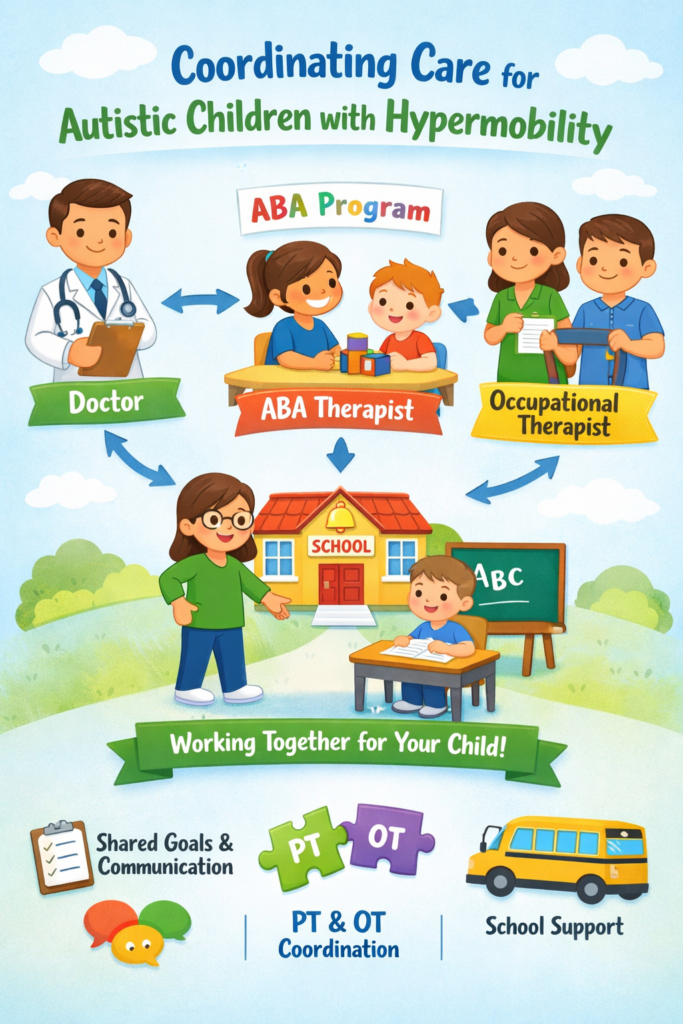
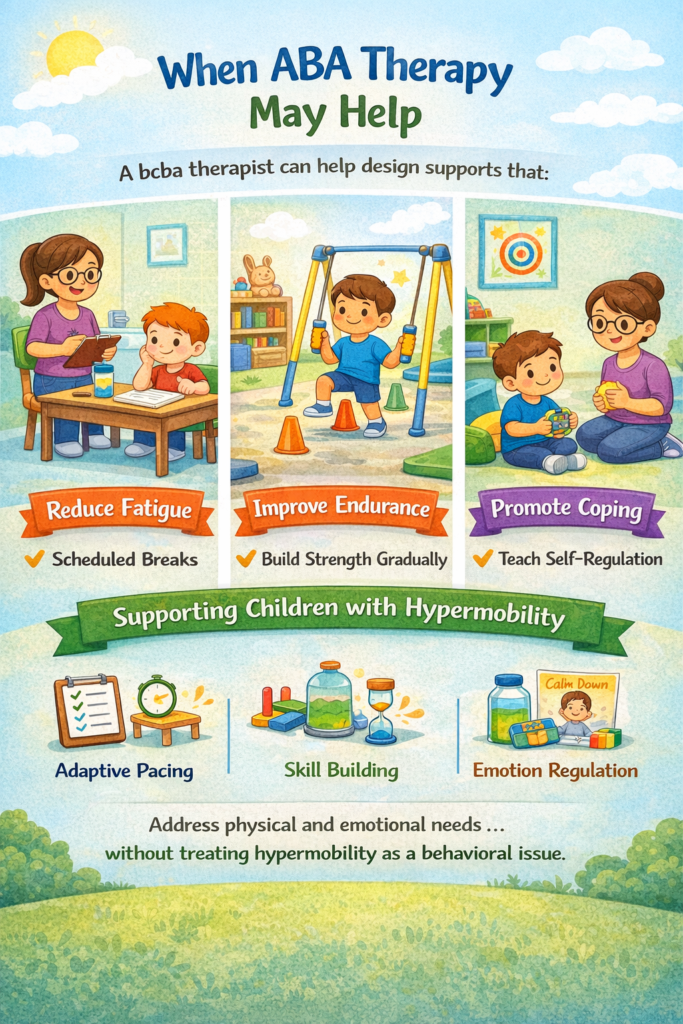
For some families, the support that ABA therapy provides can help their children develop the necessary coping strategies, adjust activity demands, and develop routines that lower their stress level without treating their hypermobility as a behavioral concern.
What Parents Should Do if They’re Concerned
When to Talk to a Pediatrician or Specialist
If your child’s joint flexibility is coupled with pain, frequent injuries, or even regular fatigue, then as parents, you should discuss your concerns with your pediatrician. It may be that your pediatrician will recommend a referral to a genetics, rheumatology, or orthopedic specialist. For families who are already receiving in-home ABA therapy, these conversations
The Role of a Physical Therapist and Occupational Therapist
The emphasis of physical therapy is on improving joint stability, muscle strength, and overall movement efficiency. Together, these can help reduce your child’s pain and fatigue, and their risk of injury if they have hypermobility.
By comparison, occupational therapy for autism fosters motor planning, coordination, and endurance while also addressing how physical differences can affect your child’s daily routines, including dressing, playing, writing, or participating in school activities.
In combination, PT and OT can help children on the spectrum build both functional strength and self-confidence, enabling them to engage more comfortably in everyday activities without placing additional pressure on their bodies.
Curious to learn how ABA therapy fits into a broader care plan? Our team at Heartlinks coordinates with family therapy support alongside medical and allied care. Learn more about ABA therapy at Heartlinks.
How ABA Therapy Teams Can Support Autistic Children with Hypermobility
Coordinating Care Across Providers
Supporting Daily Routines and Independence

When ABA Therapy Might Help
Supporting Your Child Moving Forward
If you’re dealing with a child who is exhibiting physical, sensory, or developmental concerns, help is available. Learning the difference between hypermobility and EDS will empower you, as a parent, to find the right level of support and therapy.
With locations in the following areas:
Heartlinks has the experience, depth of knowledge, and locations to serve you and your child’s needs best. Reach out today to schedule your consultation with Heartlinks.
Common Hypermobility vs EDS FAQs
- Is hypermobility the same as Ehlers-Danlos syndrome?
No. Hypermobility describes joint flexibility, while EDS is a connective tissue disorder that must be medically diagnosed.
- Can a child be hypermobile without having EDS?
Absolutely! Many children can be hypermobile without ever developing EDS or other long-term complications.
- Is hypermobility common in autistic children?
Yes, it is. Research indicates that hypermobility is associated with autism in autistic children, but this does not mean all hypermobile children have EDS.
- When should parents seek medical evaluation?
If hypermobility causes pain, injuries, or interferes with daily life, medical evaluation is recommended.