


It’s about more than picky eating: food aversion in autism is often motivated and controlled by forces more complex than simply not liking a food. Whether it’s autism spectrum disorder sensory sensitivities, anxiety, or rigid routines, the result is that your child feels overwhelmed or unsafe around certain foods.
Food aversion autism becomes a serious concern when it begins to limit diet variety or causes significant distress at every meal, leaving families often feeling stuck between making things worse and providing the necessary nutrition for their child.
Yet with structured and compassionate support, ABA therapy can help children on the spectrum gradually develop a sense of comfort, tolerance, and confidence around food.
Causes of Picky Eating and Food Aversion in Autism
Why, how, and when? These are just some of the questions we at Heartlinks ABA receive when concerned parents discuss their child’s autism and food aversion. The answers are rarely straightforward; instead, they are multi-layered and include some of the following.
Sensory Differences with Taste, Texture, Smell, and Temperature
Often, children on the spectrum experience heightened sensory input, meaning certain textures, temperatures, colors, or smells make them feel physically uncomfortable or distressed, contributing to their food aversion. Additionally, children who engage in sensory seeking behaviors may seek out or avoid certain textures, temperatures, or flavors, which directly affect their eating patterns.
Routine, Predictability, and Rigidity Around Meals
Given children on the spectrum’s strong preference for sameness and routine, the motivation or curiosity to try new foods can be severely limited or almost non-existent. When routines change or unfamiliar foods make an appearance, autistic anxiety can quickly increase.
Anxiety, Past Negative Experiences, and Medical Discomfort
Long-term avoidance of certain foods can be exacerbated if a child chokes, gags, experiences reflux, or undergoes forceful feeding. It’s these types of memories that often reinforce food refusal over time.
Common Triggers that Make Food Aversion Worse for Autistic Children
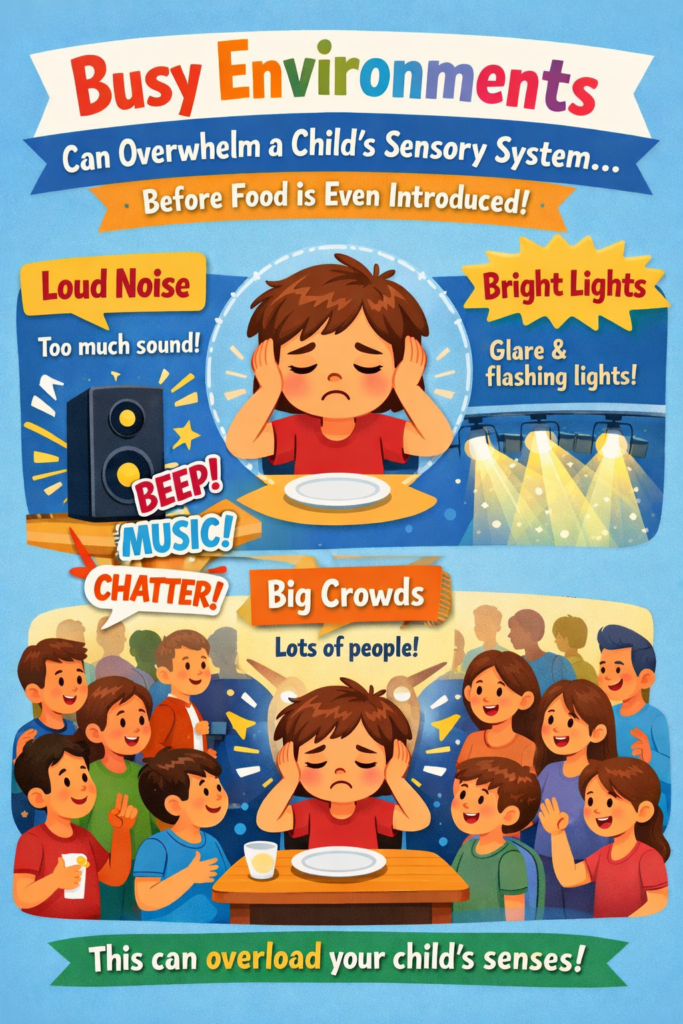
Overstimulation at Mealtime (Noise, Lighting, Crowds)
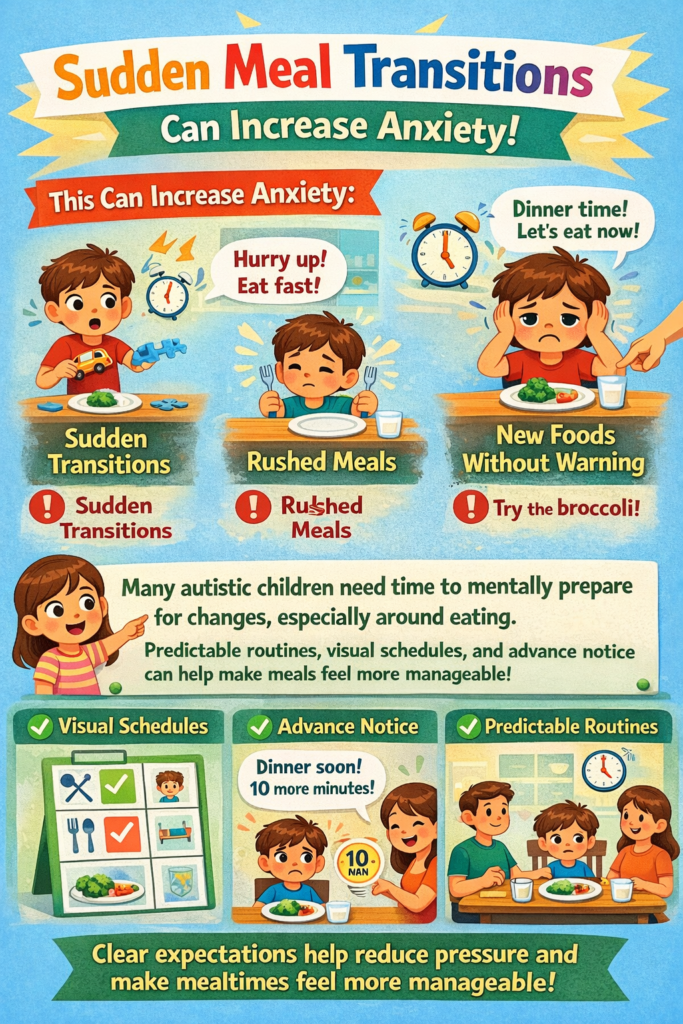
Transitions, Time Pressure, and Unexpected Foods
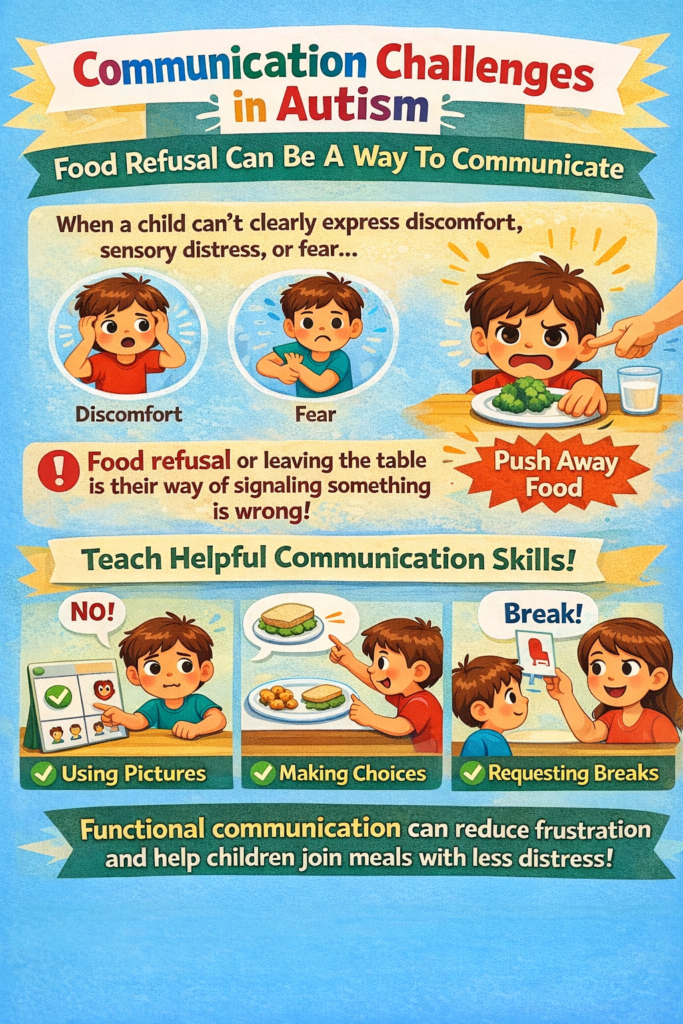
Communication Challenges and Frustration with Expectations
When Picky Eating Becomes Food Aversion in Autistic Children
There may come a time when your child’s selective eating crosses into autism and food aversion, where the stress, avoidance, and rigidity of their day-to-day life begin to dominate meals.
Signs it’s More Than Preference
A few of the red flags that may indicate that your child’s preference has become a food aversion autism, include a complete refusal of entire food groups, gagging at either the sight or smell, and extreme emotional reactions to certain foods.
How Food Aversion Can Impact Nutrition, Growth, and Family Stress
Ongoing food aversion can affect a child’s nutrition, growth, and the daily functioning of a family. Limiting the variety and quantity of foods your child consumes can increase the risk of nutritional gaps over time, affecting their growth, energy levels, and overall health, notably when entire food groups are omitted.
Apart from the physical impact of this, ongoing mealtime struggles can often place tremendous stress on families, thereby turning meals into regular sources of anxiety, conflict, and long-term exhaustion. Yes, parents may feel pressure to accommodate their child’s food avoidance, but that doesn’t stop them from worrying about their child’s well-being, which often strains family relationships and routines.
When ARFID Might Be Part of the Picture
ARFID (avoidant/restrictive food intake disorder) frequently overlaps with autism in part because of their shared autism spectrum disorder sensory sensitivities, anxiety, and rigid routines. ARFID involves ongoing food restriction that’s not motivated by body image concerns but more about sensory sensitivity and fear of adverse consequences or a general lack of interest in eating. If ARFID is suspected, coordinated care to treat your child is the only solution. This often involves a collaborative approach among ABA providers, such as your child’s BCBA therapist, medical professionals, and nutrition specialists, to address both the behavioral and physical components of eating effectively and safely.
ABA Strategies that Help with Food Aversion in Autism

ABA therapy uses structured, evidence-based approaches to address food aversion in ways that feel not only achievable for children but also something parents can participate in. It’s these ABA strategies for autism that focus on reducing a child’s anxiety, increasing their tolerance to a specific food, and building their eating skills gradually, without pressure, power struggles, or force.
Gradual Exposure and Desensitization
ABA therapy for autism uses regularly scheduled structured food exposure to help children on the spectrum develop a tolerance for a specific item safely. Also included in this approach is food chaining, which involves introducing new foods that are similar in taste, texture, or appearance to foods the child already enjoys.
Positive Reinforcement and Motivation
By incorporating positive reinforcement ABA into a child’s regular therapy, this encourages their effort and engagement without forcing them to take bites of food.
Shaping: Building Tolerance in Small Steps
ABA shaping can help address food aversion by systematically reinforcing incremental steps toward eating new foods, rather than demanding that the child immediately consume them. This approach can help reduce a child’s anxiety and build confidence by breaking down what seems like an overwhelming process of trying new foods into a manageable and non-threatening process.
How ABA Therapy Supports Eating Skills for Autistic Children at Home
Creating Predictable, Low-Pressure Mealtime Routines
Whether it’s visual schedules or consistent meal times, creating predictability around what an autistic child eats reduces their anxiety and helps them feel more secure. For children with communication challenges in autism, predictable routines can reduce the need to guess expectations or verbally advocate in stressful moments, thereby making meals safer and more manageable.
Reducing Power Struggles without Avoiding Progress
Unlike control or force, ABA emphasizes cooperation and skill-building. Rather than turning mealtime into a battleground, therapists focus on reducing the overall pressure while still maintaining the momentum needed to progress. By reinforcing small steps like sitting at the table, tolerating new foods, or calmly engaging with your child during a meal, you give your child the opportunity to build confidence without feeling coerced. This peace-like approach helps foster trust with your child, reduce emotional escalation, and allow progress to happen at a pace that feels safe and attainable.
How In-Home ABA Therapy Helps Families Stay Consistent
In-home ABA therapy for autism is designed to work directly within authentic mealtime routines, addressing the unique challenges families face daily. For example, Heartlinks ABA provides parents with hands-on coaching and practical guidance regarding ABA therapy at home for autism, thereby ensuring strategies are applied consistently between sessions. It’s this type of continuity that helps children on the spectrum generalize learned skills and behaviors much more effectively. Additionally, it gives families the confidence needed to support progress outside of regular therapy hours.
Working with Occupational Therapy and Other Supports
Collaborating with Occupational Therapy for Sensory Needs
Occupational therapy for ASD is a vital element in helping to manage and support children on the spectrum who experience sensory sensitivities. The primary goal of this time of therapy is to enhance a child’s capacity to navigate and integrate sensory information effectively. Drawing on a holistic, play-based approach, occupational therapy for food aversion in autism focuses on the underlying causes of the dislike, whether sensory, behavioral, or motor factors, such as aversions to smells or tastes.
When Feeding Therapy or Medical Input is Needed
As a general rule, when a child’s eating difficulties go beyond the often everyday picky eating and threaten their safety, growth, and development, that’s when medical input is recommended. Some of the most common signs include regular gagging, vomiting, choking, poor weight gain, or an absolute refusal to consume certain food groups.
How Heartlinks Can Help with Food Aversion Autism
If your once-picky eater has developed a full-blown food aversion, then it’s time to seek help. With locations in ABA Charlotte, NC; ABA therapy Lakewood, NJ; ABA therapy Indianapolis; and ABA therapy Atlanta, GA, Heartlinks is uniquely positioned to help your child and the rest of your family with food aversion in autism.
The solution and path forward will not be easy, but in working with our experienced team of professionals, relief and a solution will be found. Take a moment to contact Heartlinks to schedule your child’s consultation.
Food Aversion Autism FAQs
- Can ABA therapy help with picky eating in autistic children?
Absolutely. ABA therapy can target the motivators behind this type of eating, including avoidance, autistic anxiety, and learning patterns.
- Is food aversion the same as ARFID in autism?
Not always. ARFID often requires a medical diagnosis and additional support.
- What ABA strategies work best for food aversion?
There are several different therapies, including gradual exposure, reinforcement, shaping, and predictable routines. The aforementioned are some of the most effective and commonly used.
- When should parents seek professional help for food aversion in autism?
If your child’s eating difficulties affect their development, nutritional needs, mental health, or family life, ABA in-home therapy for autism is one of the most effective ways to utilize professional help for food aversion.