

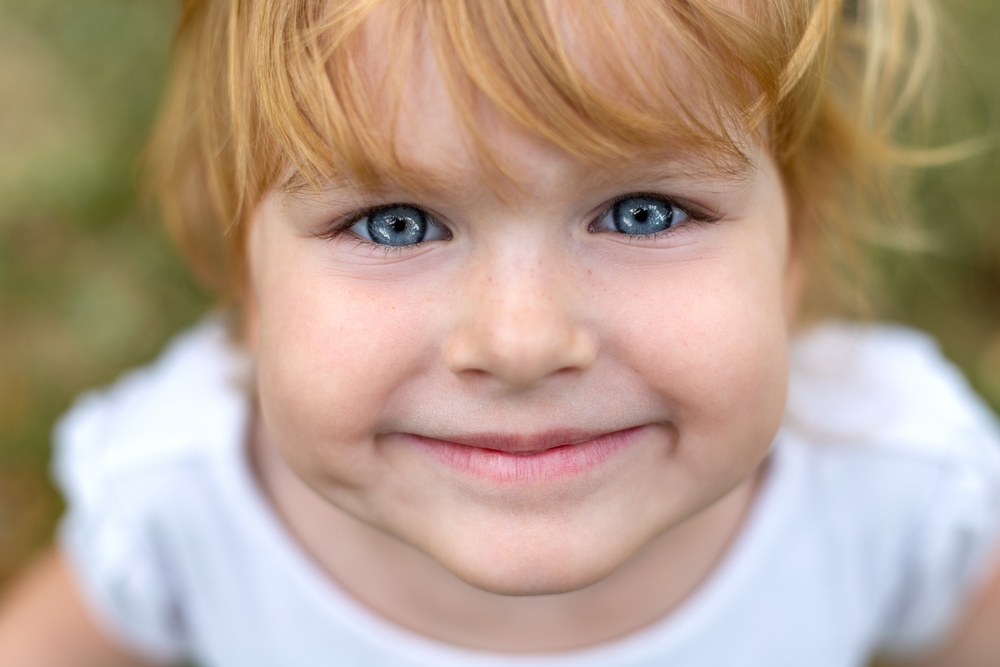
Many parents looking for answers about autism often wonder whether there are recognizable physical or facial features of the condition. Unlike autism vs. Down syndrome, where the latter has distinct physical traits, the former does not have such distinguishing features.
Autism spectrum disorder (ASD) is a neurodevelopmental condition that primarily affects a person’s communication, social interaction, and behavior. With autism being a spectrum condition, children can possess a wide range of strengths, challenges, and characteristics, but the majority do not share any distinct physical features.
A family’s first exposure to autism education begins when they start researching early developmental signs or seeking therapy recommendations after an autism diagnosis. Developmental monitoring programs, such as the CDC’s early identification initiatives, emphasize that autism is recognized through patterns of behavior and communication rather than physical appearance1.
The key is to understand what existing research says about facial traits in autism, as well as how autism can affect facial expressions and communication.
What are autistic facial features?
The idea of “autistic facial features” has often come from research examining the subtle physical differences in groups of children on the spectrum. However, this research does not mean that autism can be identified by simply looking at someone.
In fact, most autistic individuals do not have recognizable or consistent facial features that distinguish them from others. It’s important to remember that autism is diagnosed based on developmental patterns and behavior, and not physical traits alone.
Physical Traits Associated with Genetic Conditions Linked to Autism
Some genetic conditions associated with autism may involve physical or facial characteristics. Some of these physical characteristics include:
- Unusual posture or gait (walk)
- Sensory processing difficulties, including sensory seeking behavior (i.e., spinning, or other kinds of stimming)
- Repetitive body movements or stereotyped behaviors (finger flicking, hand flapping)
- Abnormal muscle tone or weaknesses
If you’ve noticed these signs in your child, our ABA therapy team can provide a personalized developmental assessment and support plan.
Research using advanced facial imaging technology has identified subtle patterns in facial structure among some children on the spectrum, including minor variations in facial width or spacing between features. However, these patterns are extremely subtle and vary widely across individuals.2
It’s important to note that these findings are only statistical observations within research groups; they are not characteristics that can be visually identified in everyday situations.
Why Most Autistic People Have No Distinct Facial Appearance
Autism is a neurodevelopmental disorder that affects how the brain processes information and engages in social communication, rather than how the body develops physically. Because of this, autistic children and adults can and often do look like everybody else. Differences in development are typically seen in areas such as:
- Autism communication skills
- Social interaction
- Sensory processing
- Behavior and routines
It’s for these reasons that autism is diagnosed through developmental evaluation and behavioral assessments, as opposed to physical traits.
Every child develops differently. Learn how ABA therapy can help your child build communication and social skills at their own pace.
What Research Says About Facial Differences in Autism
Some researchers have explored whether these subtle patterns in facial structure occur more frequently in children with autism. Scientists have improved their understanding of an autistic child’s brain development, but they are not used as diagnostic tools.
What 3D Imaging Studies Have Found
A small number of studies using 3D facial imaging have identified slight variations in facial measurements among children with autism. These differences may include slight variations in:
- Midface structure
- Facial width
- Spacing between facial features
Why do these findings not apply to individual diagnoses?
Certainly, these findings can be valuable for research, but on their own, they cannot diagnose autism in individuals.
The differences identified in these types of studies are typically:
- Extremely subtle
- Measurable only using specialized technology
- Inconsistent across different groups of children.
For these reasons, clinicians rely on developmental history, communication patterns, and observations of a child’s behavior during the initial evaluation, often as part of diagnostic testing for autism.
Struggling to connect with your child’s expressions or emotions? Talk with a BCBA therapist to develop strategies that enhance emotional understanding and interaction.
Facial Expressions vs. Facial Structure in Autism
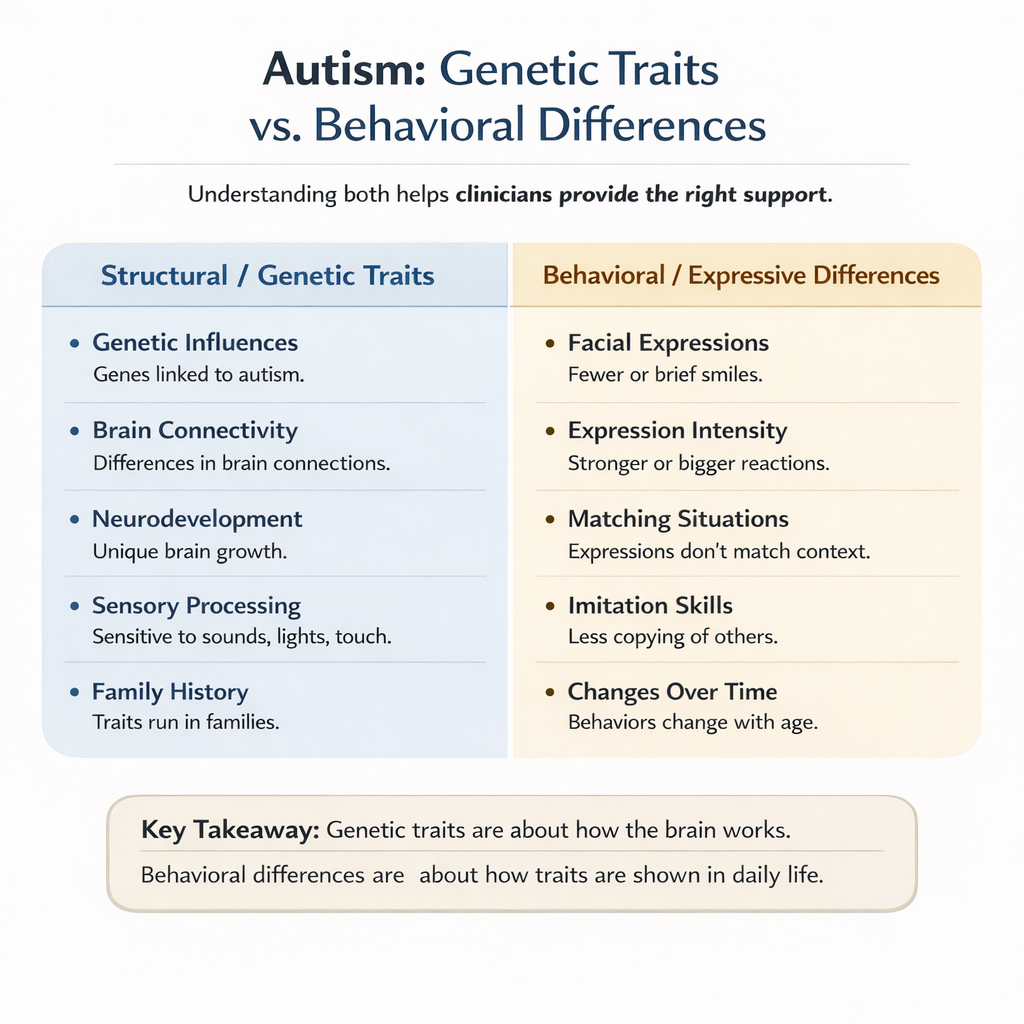
How Autism Affects Facial Expressions
Research on facial dynamics suggests that autistic children may use facial expressions differently during conversations or social interactions.3 For instance, they may:
- Demonstrate fewer facial expressions during conversation
- Have trouble or be uncertain about interpreting others’ expressions, especially in cases of nonverbal autism
- Display emotions differently than expected in social situations
What is Autism Flat Affect?
The “flat affect” refers to reduced outward emotional expression. Some autistic children may appear to show fewer facial expressions even when they’re experiencing very intense emotions.
This does not mean the person doesn’t feel emotions. Rather, it simply reflects differences in how emotions are expressed externally and autistic emotional regulation.
Facial Stimming in Autism
Just as autistic children engage in autistic stimming or self-stimulatory behavior with their bodies, they can also be found doing the same thing with their faces. These behaviors help regulate sensory input, excitement, or strong emotions.
Facial Stimming may include behaviors such as:
- Repeated facial movements
- Blinking or eye movements
- Exaggerated expressions
Often, parents observe these behaviors when exploring examples of autistic stimming examples to understand sensory regulation in autism better.
What do Autistic People Look Like? Addressing Common Questions
Often at Heartlinks, we’re asked by parents and caregivers: What do autistic people look like?
The simple answer is that autistic people do not have a single identifiable physical characteristic. As mentioned, autism affects communication, behavior, and social interaction rather than physical features.
With autism being a spectrum condition, every child presents a range of different symptoms. In certain cases, some children may show early signs related to behavior or communication abilities. At the same time, others may develop differently in social environments.
Understanding a child’s developmental profile is typically the first step toward identifying the most appropriate support strategies.
Ready to take the next step? Get started with ABA therapy to create a customized support plan for your child.
Can you tell if someone is autistic by looking at them?
No, you cannot tell if someone is autistic by looking at them. Autism cannot be identified based on physical appearance. A diagnosis requires a comprehensive developmental evaluation conducted by trained professionals who assess communication, behavior, and developmental history.
Why autism looks different in every child
With each autistic child comes a unique combination of strengths, developmental patterns, and challenges. For instance, some children may experience:
- speech or language delays (often supported through ABA therapy for speech delay)
- sensory sensitivities
- difficulty with social interaction
- repetitive behaviors or stimming behaviors
How ABA Therapy Supports Children with Autism
Evidence-based interventions such as ABA therapy play a crucial role in helping children with autism build skills and independence. One of the most widely used approaches is ABA therapy social skills development. This, among all ABA strategies, focuses on helping children develop communication, social interaction, and daily living skills.
How Heartlinks Supports Children with Autism
At Heartlinks, our ABA therapy programs have been created with your child in mind. They’re designed to support each child’s individual developmental journey. Thanks to our experienced clinicians, including every dedicated BCBA therapist, we work closely with families to create a customized treatment plan that emphasizes meaningful progress in areas needing improvement while helping other areas flourish.
Families often highlight the dedication and support they receive from the Heartlinks team. As parent Dora Polack shares:
“Heartlinks ABA is wonderful! Management, BCBs, and therapists are all great! Know that they will work very hard for the well-being of your children. Thank you for all you guys do!”
Testimonials like this reflect the collaborative approach Heartlinks takes with families, ensuring that children receive consistent, individualized support that promotes long-term growth and independence.
Families can access Heartlinks’ services in multiple regions of the country, including ABA therapy in Charlotte, NC; ABA therapy in New Jersey; and ABA therapy in Atlanta, GA.
If you’ve just received an autism diagnosis or you’re exploring different therapy options for your child, you can get started with ABA therapy by contacting Heartlinks.
Frequently Asked Questions About Autistic Facial Features
Does autism cause distinct facial features?
No! Autism is not distinguishable by unique facial features. Yes, some studies explore structural differences, but these are not considered medically reliable for a diagnosis.
Can you identify autism by appearance?
Absolutely not! You cannot identify autism by appearance alone.
What do autistic people look like?
Children and adults on the spectrum do not have a specific “look” or appearance. They can vary widely in physical appearance.
What is autism flat effect?
The ‘flat effect’ refers to autistic individuals who often lack facial expressions or emotional display.
What does facial stimming look like?
Facial stimming can include a wide variety of repetitive facial movements, such as blinking, grimacing, or tensing facial muscles.
Are facial differences in autism linked to genetics?
Some research suggests minor variations or differences in an autistic person’s facial structure could be linked to the genetic factors associated with autism. But these are very subtle differences and can’t be used for a clinical diagnosis.
Join hundreds of families who’ve found support through Heartlinks. Contact us today to start your child’s ABA therapy journey.
Resources
- Centers for Disease Control and Prevention. Learn the Signs. Act Early. https://www.cdc.gov/act-early/index.html
- Aldridge K, George ID, Cole KK, Austin JR, Takahashi TN, Duan Y, Miles JH. Facial phenotypes in subgroups of prepubertal boys with autism spectrum disorders are correlated with clinical phenotypes. Molecular Autism. 2011;2(1):15. https://pubmed.ncbi.nlm.nih.gov/21999758/
- Babu, P. R. K., et al. (2021). Exploring the complexity of facial dynamics in autism spectrum disorder. National Institutes of Health. https://pmc.ncbi.nlm.nih.gov/articles/PMC10231874/