


It’s only natural for a child to cry when they’re feeling overwhelmed, misunderstood, or are struggling to express themselves. However, for children on the spectrum who face specific difficulties regarding emotional regulation, autism communication, and social skills training, crying can be more prevalent. To the uninitiated parent, this type of behavior may seem unprovoked. But by understanding the unique characteristics and tendencies of autism, and how ABA therapy supports skill development, parents can gain the necessary knowledge as to why their child is crying, particularly when emotional expression overlaps with patterns like sensory seeking.

Why Crying is Common in Autism
Crying as Communication
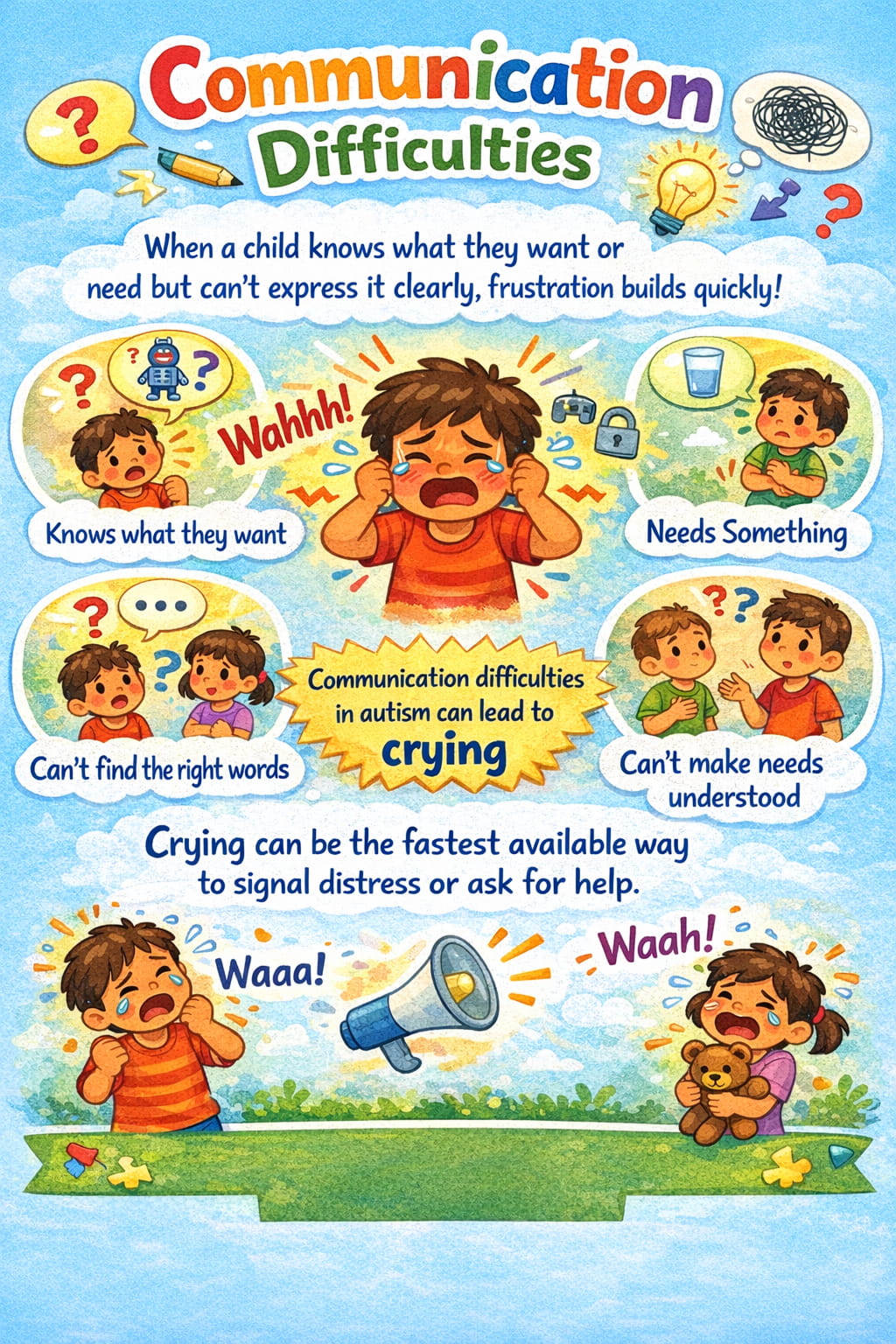
For autistic children, crying is often used as a way of communication when words, signs, or other communication tools are not accessible or cannot be used for a variety of reasons. Autism communication difficulties can make it challenging for a child to clearly express wants, needs, or emotions in the moment, particularly true for children with nonverbal autism or emerging language skills. An autistic child may cry to express their frustration, confusion, and fear or an unmet need. Viewing the crying as information rather than misbehavior can be extremely helpful. It allows you, as the parent or caregiver, to see this behavior as a signal that something in your child’s environment is unmanageable.
Emotional Intensity and Regulation Challenges
Time and again, research has shown that many autistic children experience emotions much more intensely than others and have difficulty regulating them in the moment. As such, crying often becomes a child on the spectrum’s way of releasing the overwhelm and stress; this is particularly true when their emotional skills are still developing. This is directly tied to autism emotional regulation challenges and doesn’t necessarily indicate that your child is choosing to overreact.
Why Crying Isn’t Bad Behavior
Yes. Crying is a natural human response. Yet, for a child on the autism spectrum, crying often reflects a lack of social skills as opposed to a behavior pattern. By reframing autism and crying, parents can respond to it with empathy while still supporting their child’s growth and independence, often through supportive strategies such as redirection ABA that guide their behavior without punishment.
Common Causes and Triggers of Crying in Autism
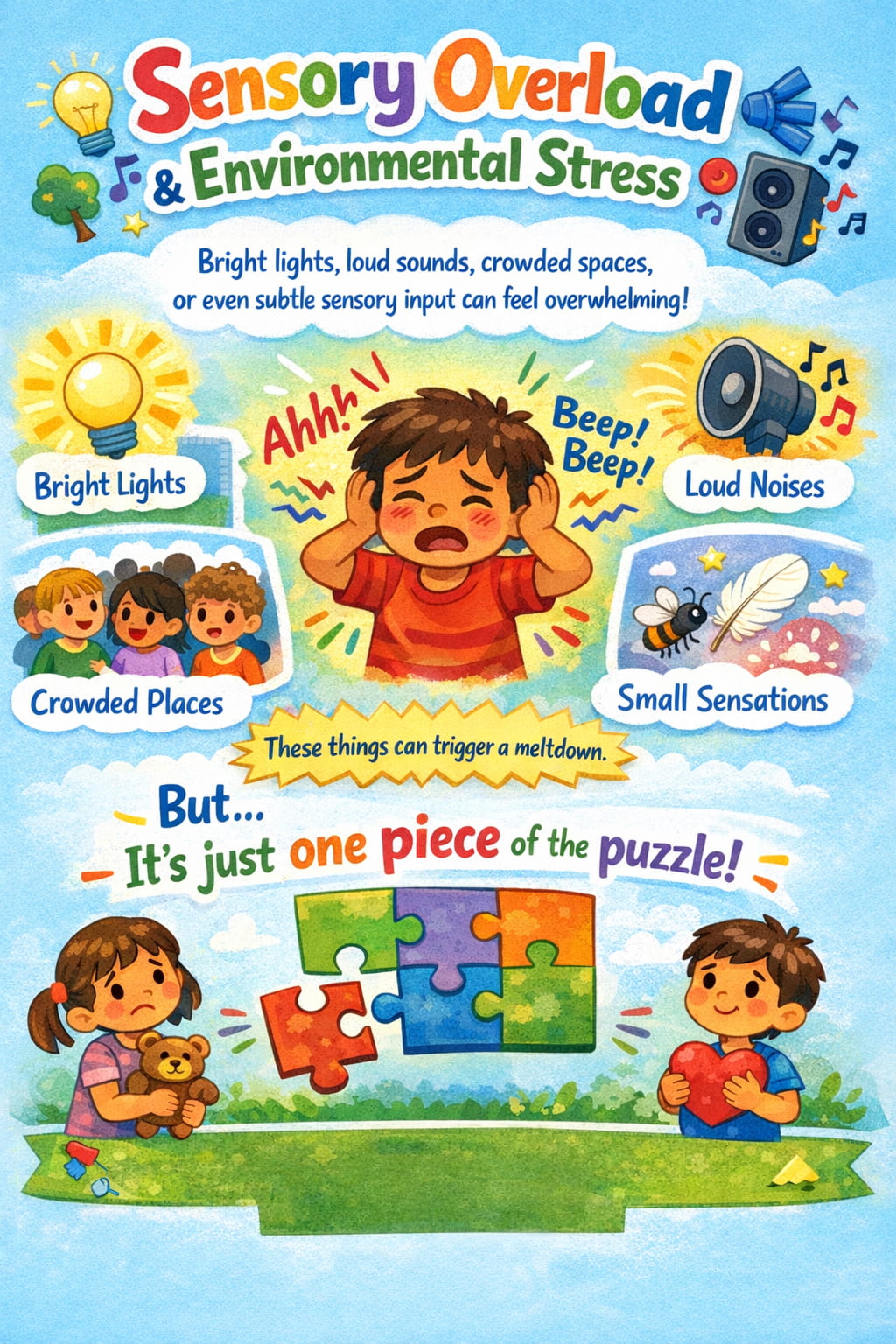
Sensory Overload and Environmental Stress
Communication Difficulties and Frustration
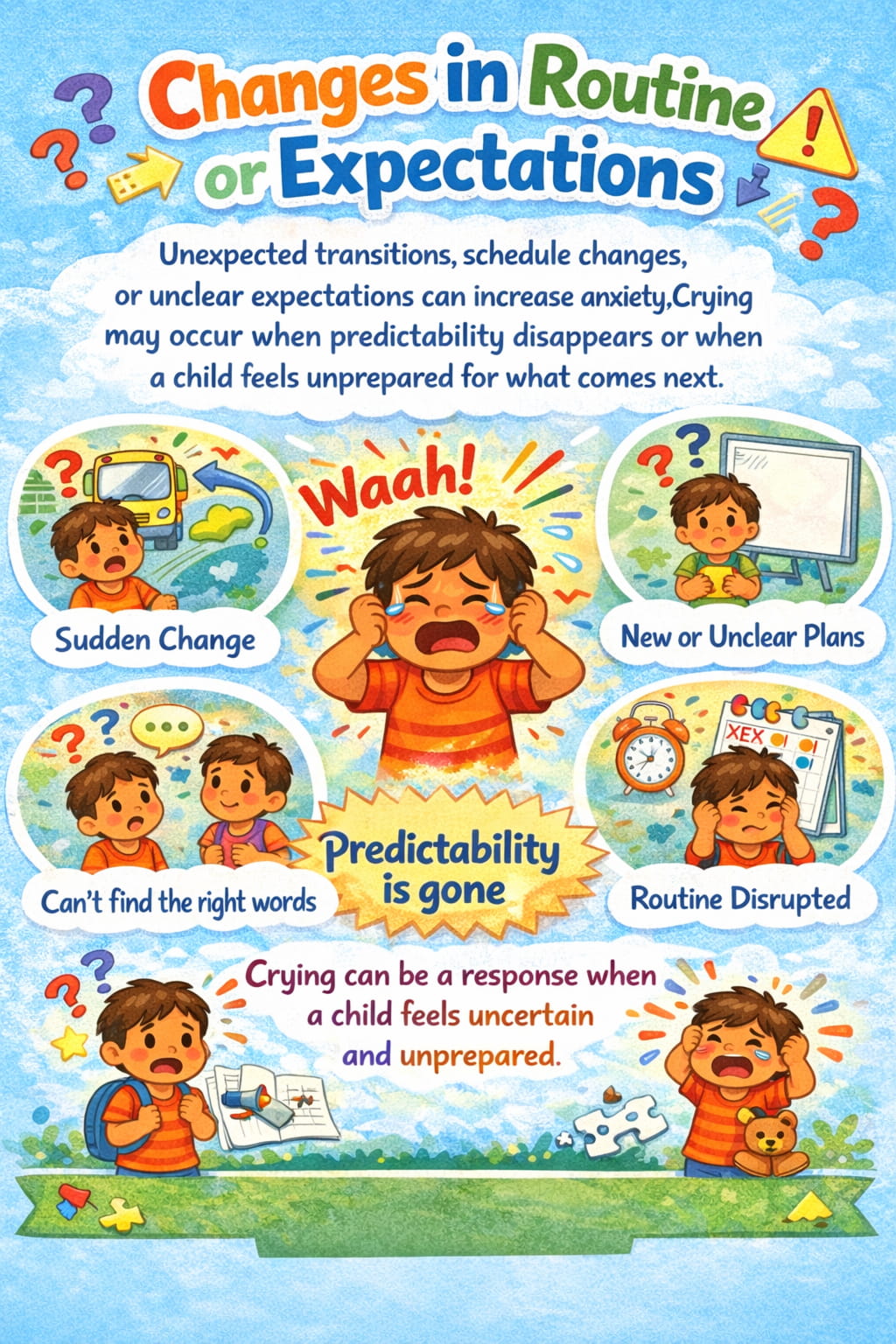
Changes in Routine or Expectations
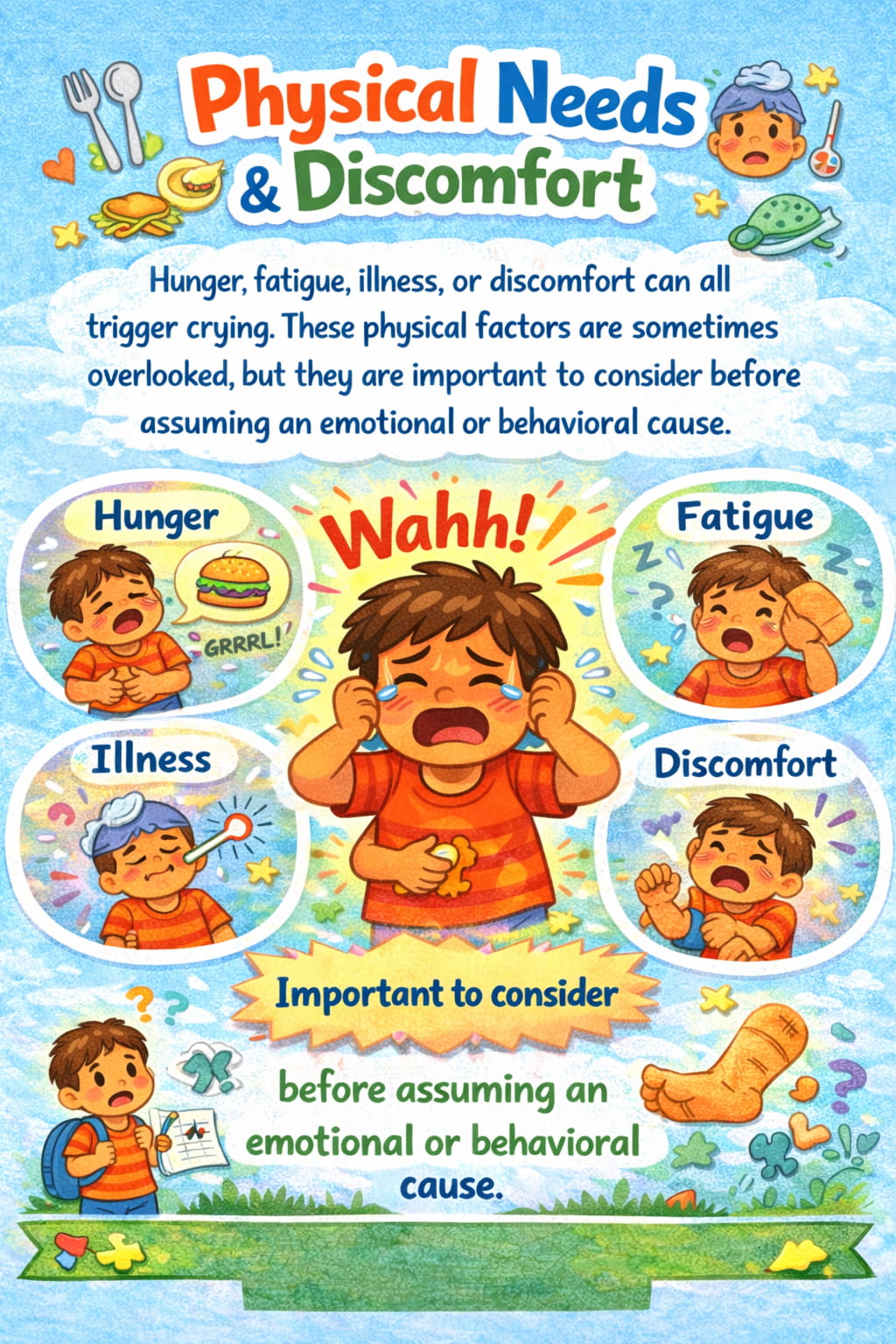
Physical Needs and Discomfort
Crying vs. Tantrums vs. Meltdowns in Autism
Key Differences Parents Should Know
Crying: It is often a communicative response to distress, unmet needs, or frustration.
Tantrums: Usually, this type of behavior is goal-directed and influenced by several outcomes, such as when a child can regulate their emotions but is testing boundaries.
Meltdowns: These responses are usually a result of extreme overwhelm, in which the child momentarily loses the ability to regulate or respond to the demands made on them by adults, such as parents.
Why Understanding the Difference Matters
Because the motivations or goals of the above-mentioned behaviors differ, parents and caregivers must understand these differences. For example, using tantrum-fixing tactics such as ignoring your child’s behavior during a meltdown might worsen the situation and prevent them from learning coping skills. Supporting strategies as opposed to punishing is crucial, particularly when crying or meltdowns stem from regulation challenges rather than autistic defiance, which aligns with how operant behavior ABA explains the relationship between behavior, environment, and outcomes.
How ABA Therapy Helps Autistic Children Communicate Distress
Functional Behavior Assessment (FBA)
At Heartlinks, we use ABA therapy from the start to understand why your child cries. Using a thorough assessment, a certified BCBA therapist can identify patterns, triggers, and the function of your child’s behavior, whether it’s to avoid a demand, ask for help, or express overwhelm.
Teaching Communication Skills
Rather than suppressing crying, ABA therapy focuses on teaching our young client alternative ways to communicate the same message, such as Functional Communication Training (FCT). FCT is critical in helping children on the spectrum learn clear, functional ways to communicate their needs using spoken words, gestures, picture systems, or communication devices, ensuring that crying is no longer the primary way to be understood.
Supporting Emotional Regulation
ABA programs often incorporate strategies that can help children recognize and label their feelings. There are a variety of tools to do so, including an autistic feelings chart and ABA social stories, all designed to help children on the spectrum practice their coping skills and recover from their distress more effectively. These supports directly address autism emotional regulation while validating the child’s emotions and helping them understand what their body and feelings are communicating.
Proactive Strategies
By adjusting routines and expectations and incorporating ABA techniques, this helps children recognize their feelings, use coping strategies, and recover from whatever is bothering them. These supports directly address autism related emotional regulation while not disregarding their experience.
How Parents Can Support an Autistic Child Crying at Home
Identifying Patterns and Triggers
After your child is calm, take a moment to understand why they cried. Was it sensory overload autism, a transition difficulty, or an unmet need? Over time, noticing patterns, including specific times of day, activities, or expectations, can help you as a parent anticipate challenges and respond proactively rather than feeling caught off guard in the moment.
Creating Predictable Routines
Consistent routines with clear expectations for the child and parent always help reduce anxiety. Using visual schedules and other tools, such as advanced warnings for transitions, can help your child feel like daily life is more manageable.
Respond Calmly and Consistently
Undoubtedly, it’s upsetting to see your child crying at home, but often a calm, adult response can help them feel safe during these moments of distress. In addition, responding consistently can build trust and make it easier for your child to learn and incorporate new skills over time.
Autism and Crying: How Heartlinks ABA Can Help
Autism and crying are deeply connected through communication, unmet needs, and emotion. As a parent, it’s essential to understand that for your child, crying isn’t a problem that needs to be fixed; it’s a signal that needs to be understood. When adults pause to look beyond the tears, they uncover valuable insights into what their child is experiencing and what support they may be missing in that moment.
With locations in the following areas: ABA therapy Charlotte, NC; ABA therapy Lakewood, NJ; ABA therapy Indianapolis; and ABA therapy in Atlanta, GA, Heartlinks can offer the proper understanding and support so that your child can learn safer, clearer ways to express their distress.
With locations in the following areas: ABA therapy Charlotte, NC; ABA therapy Lakewood, NJ; ABA therapy Indianapolis; and ABA therapy in Atlanta, GA, Heartlinks can offer the proper understanding and support so that your child can learn safer, clearer ways to express their distress.
Using our ABA programs for autism, we can help your child learn to build these skills over time, all while preventing the suppression of their feelings or the dismissal of their experience. For families, it’s this type of change that can bring greater confidence, reduce stress, and create a more meaningful connection. At Heartlinks, support is not about eliminating emotion, but rather about helping your child feel understood, empowered, and safe as they learn and grow.
Schedule a consultation with Heartlinks ABA to learn how our personalized ABA programs can help your child develop clearer, safer ways to express themselves while, at the same time, honoring their emotions every step of the way.
Autism and Crying FAQs
1. Is crying a behavior in ABA?
Crying is sometimes considered a behavior. In those cases, it is viewed as a means of communicating a function or a need. In ABA, when a child cries, the emphasis is on understanding and teaching alternatives to crying, rather than labeling it as bad behavior.
2. Why does my autistic child cry so easily?
Crying is often the quickest way for an autistic child to express their distress. It’s important to remember that most kids on the spectrum experience extremely intense emotions, possess limited communication tools, and often have difficulty regulating their feelings.
3. Can ABA therapy help with autism and crying?
Absolutely! ABA therapy can help by highlighting the triggers of your child’s crying, then teaching them autism emotional regulation or the communication skills needed to handle their feelings, so that crying is no longer their only option.
4. When should parents seek professional help when it comes to autism and crying?
When your child’s crying is frequent, noticeably escalating, or interfering with daily life, that’s when parents should seek professional help. If you have questions or concerns about autism and crying, contact Heartlinks ABA today to speak with a care team member and explore supportive, individualized ABA options for your child.