

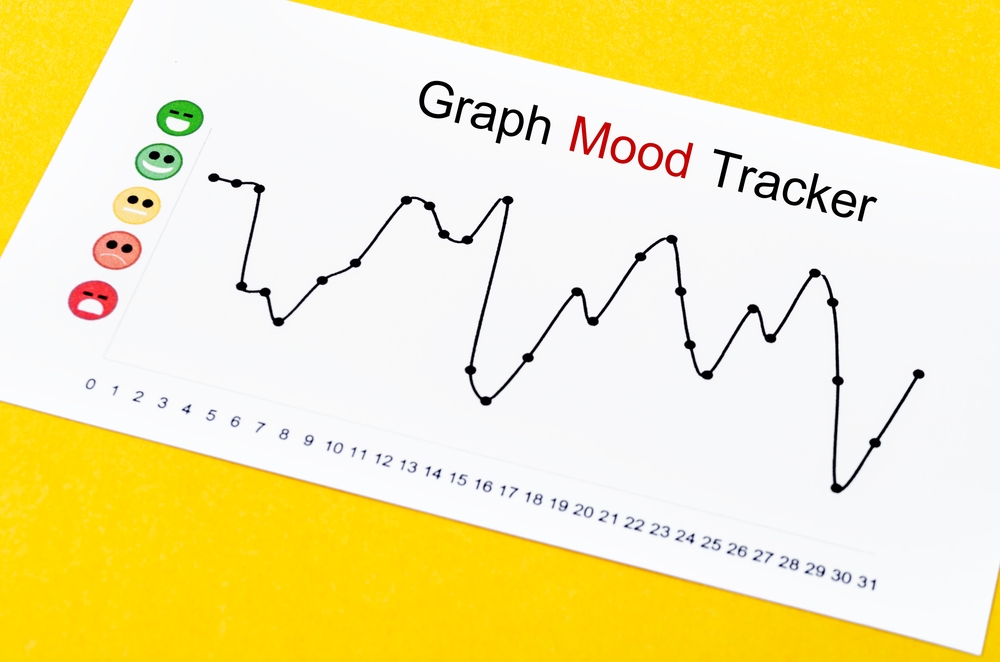
Autism spectrum disorder (ASD) is a lifelong condition that begins in early childhood. It shapes how a person communicates, connects with others, and takes in the world through their senses. Bipolar disorder is a mood disorder with episodes of mania and depression that usually start in the teen years or adulthood. They are separate conditions, but they can happen together.
What is Autism Spectrum Disorder?
Autism is a difference in how the brain grows and processes information. Doctors call this a neurodevelopmental condition. To be clear, it’s not an illness that comes and goes. It’s a constant lifelong way of experiencing the world.
The Centers for Disease Control and Prevention reports that about 1 in 31 (3.2.%) 8-year-olds in the U.S. has been diagnosed with autism1.
Core Traits and Onset
Autism shows up in two primary areas, and both begin in a person’s early childhood.
- Autism affects communication and social interaction. Often this means less back-and-forth conversation, less eye contact, trouble reading tone of voice or facial expressions, or difficulty making friends.
- Repeated patterns and strong preferences. These can include needing routine, becoming deeply absorbed in favorite topics, repeating movements or phrases, and having sensory processing differences, which means reacting sometimes more and other times less than others to sounds, light, textures, or touch.
These traits start early, even when nobody notices them until later. Often they become obvious when a child’s school or social environment becomes harder to manage.
Many autistic people often experience big emotional reactions that take a long time to settle. Clinicians call this emotional dysregulation in autism, and of all a person’s autistic traits, it’s the one most often mistaken for a mood disorder.
How Autism is Typically Diagnosed
There is no blood test or brain scan that can diagnose autism. It requires a full evaluation, usually done by a developmental pediatrician, child psychologist, psychiatrist, or neurologist. That evaluation typically includes:
- An in-depth look at how your child has and is developing, starting in infancy
- Direct observation plus standard assessment tools.
- Reports from parents, caregivers, and teachers
- A check for other conditions such as ADHD, anxiety, or intellectual disability.
A child’s early history can and does carry a lot of weight, so it’s important to expect questions about what your child was like as a toddler and preschooler. Our guide to diagnostic testing for autism walks through the process if you’re just getting started.
Suspecting autism but unsure of the next step? Our team can help you understand your options and connect you with appropriate resources. Talk with our team today.
What is Bipolar Disorder?
Bipolar disorder is a mood disorder. Sufferers experience episodes where mood, energy, and behavior can shift dramatically away from how a person normally feels and acts. Between these episodes, most people feel like themselves again.
According to the National Institute of Mental Health, 2.8% of U.S. adults have bipolar disorder, and 4.4% will be diagnosed with it at some point in their lives 2. Typically, it begins around age 25, though it can start earlier in the teen years.
Manic Depressive Episode Patterns
A manic or hypomanic episode shows up as an unusually high, excited, or irritable mood, along with a dramatic increase in energy that can last several days. A person experiencing an episode may sleep three hours and wake up feeling completely refreshed, talk fast, jump between ideas, feel almost superhuman, become easily distracted, or make choices that seem completely out of character.
By comparison, depressive episodes work in the other direction. Low mood or loss of interest can settle in for usually two weeks or longer. A person’s sleep or appetite may change. It becomes difficult to concentrate and things that used to matter stop mattering.
What defines this condition is the change itself. There has to be a noticeable, dramatic shift from how the person normally acts and reacts to how they’re acting now.
How Bipolar Disorder Is Typically Diagnosed
A psychiatrist, psychologist, or other qualified mental health professional is the professional who’s qualified to diagnose you or your child using criteria from the American Psychiatric Association’s DSM-5 3. There’s no scan or lab test for it. Instead, the diagnosis rests on a careful history that usually covers the following points:
- Mood changes tracked over months, not days
- How long episodes last, how intense they get, how often they return
- Whether a medical condition, medication, or substance could explain what’s happening.
- Input and feedback from family members and close friends, because often someone in the middle of a manic episode can’t see the changes in themselves.
It’s this last point which often catches families off guard. That’s because mania doesn’t always feel like a problem from the inside. It can feel like being productive, or clear-headed, or free of whatever was weighing the person down. The people around them who interact with them regularly are usually the first to notice.
Diagnosing children and teens is still harder. Mood swings are ordinary in adolescence, and several other conditions can produce similar behavior, so a thorough clinician takes their time before officially diagnosing a young person with bipolar disorder.
Key Differences: Autism vs. Bipolar at a Glance
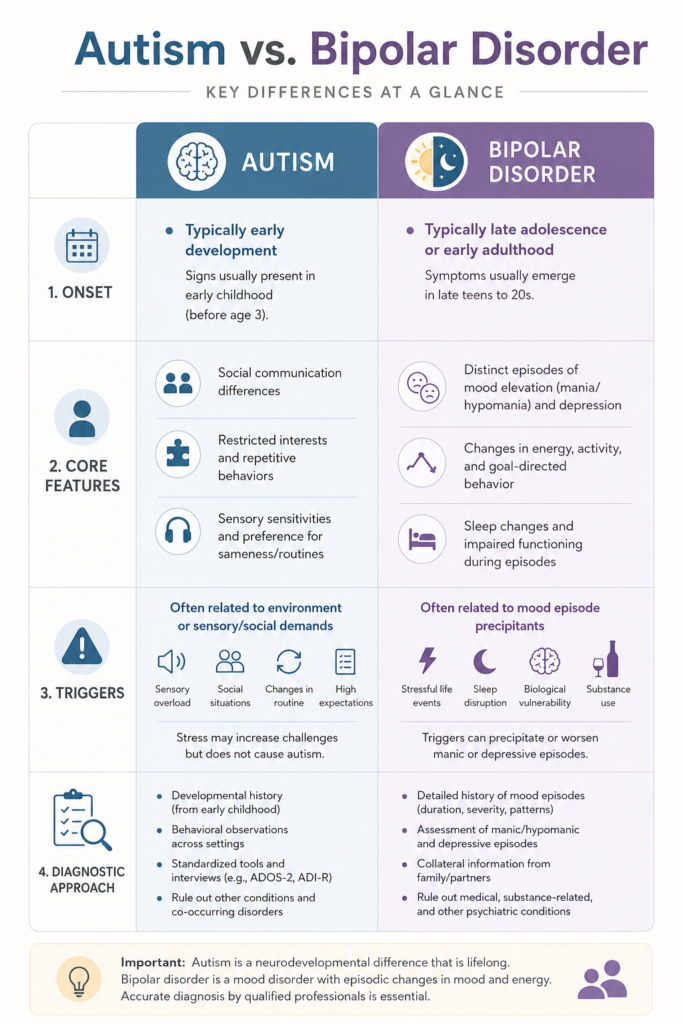
Onset and course (lifelong vs. episodic)
One of the biggest differences between autism and bipolar disorder is how they develop over time.
Autism is a lifelong neurodevelopmental condition. While skills can improve with therapy, experience, and support, the underlying traits remain relatively consistent. For example, a child who struggles with transitions at age four may still find unexpected changes very difficult as a teenager, even if they’ve learned effective coping strategies.
In contrast, bipolar disorder is characterized by distinct mood episodes. Many families can identify a noticeable shift in behavior or mood that wasn’t present before. They may recall that changes began after a particular period, such as during adolescence, or following a major life event, or sometimes with an obvious trigger. Between episodes, the person’s mood and behavior may return to normal or at least closer to their baseline.
Baseline Traits vs. Mood Cycling
Being intensely focused on a favorite subject or hobby is not the same as mania. For many autistic people, an intense focus is a natural and enduring part of how they engage with the world. Those interests may evolve; however, the pattern of deep, sustained engagement will almost always remain consistent.
By comparison, a manic episode differs in that multiple changes often occur simultaneously. The person’s mood becomes unusually elevated or irritable, their energy levels increase significantly, the need for sleep decreases dramatically, their thoughts begin to race, and their ability to make decisions often becomes impulsive or impaired. These changes can often persist for days or even longer and reflect a clear departure from that person’s usual behavior.
The intensity of the person’s behavior alone doesn’t distinguish autism from bipolar disorder. Instead, the more important question is whether the behavior reflects a long-standing pattern or a significant new change from the person’s usual baseline.
Overlap and Comorbidity
Shared Behavioral Features
Autism and bipolar disorder can sometimes look surprisingly similar, particularly when viewed from the outside. It’s this overlap that is one of the reasons the two conditions are so often confused.
Some behaviors that can appear in both include a few of the following:
- Sleep difficulties, although the underlying causes are often very different
- Irritability or emotional outbursts that can be mistaken for mood swings
- High energy levels or impulsive behavior that can resemble mania
- Social withdrawal, which may be the result of sensory overload, burnout, depression, or a mood episode.
- Rapid, repetitive, or unusually frequent speech.
The picture can become even more muddied when autistic anxiety is also present, which is common in autistic individuals. Additionally, many autistic people find it challenging to identify or express their emotions. Rather than saying that they feel overwhelmed, anxious, or hopeless, they become unusually quiet, withdraw from conversations, or communicate less than usual. Because these behaviors can have many possible causes, a careful assessment is essential.
Rates of Co-Occurrence
Yes. Autism and bipolar disorder can occur together.
Research suggests that the rate of co-occuring bipolar disorder can vary depending on the age and population being studied.
- A meta-analysis of autistic adults found bipolar disorder affects approximately 7.5% of individuals 4.
- A meta-analysis spanning children and adults found around 5% 5
- Population-based research focusing on autistic children and adolescents generally finds rates closer to 2%, rising to 4.8% among adolescents 6.
Even the lower estimates are higher than those seen in the general population. Because bipolar most often develops during the late teens or early adulthood, changes in mood and behavior during this stage of life deserve careful consideration as opposed to being automatically attributed to autism alone.
Because autism and bipolar disorder can share certain traits, an accurate evaluation is essential for finding the right support and treatment path. Speak with a Heartlinks ABA support specialist today.
How to Tell the Difference Between Bipolar Disorder and Autism
Duration and Triggers
One of the clearest distinctions is how long the symptoms last.
Traditionally, autistic meltdowns and shutdowns are short-lived. They may last from a few minutes to several hours and usually resolve once the person has had time to recover and regulate. Bipolar mood episodes last much longer, often lasting for days or even weeks, regardless of changes in the person’s environment.
The triggers can also provide invaluable information. Autistic distress is most often linked to a specific event such as an unexpected change in routine, sensory overload, or frustration when expectations aren’t met. Once the trigger is removed or the person has recovered, the distress generally subsides.
In comparison, mood episodes are different. They may develop without an obvious external cause and continue even when the environment remains calm and supportive. Asking what triggered the behavior and if it resolved after the situation changed can often help differentiate an autistic response from a mood episode.
Cognitive and Emotional Symptoms
Looking at the bigger picture can help identify whether behaviors are more consistent with autism or bipolar disorder.
- Self-perception: During a manic episode, the person may develop unrealistic beliefs about their abilities, importance, or accomplishments. It’s these beliefs that represent a noticeable change from their usual thinking rather than a lifelong personal trait.
- Sleep: An autistic child who has difficulty sleeping is usually exhausted the following day. During a period of mania, someone may sleep only a few hours yet still feel unusually energetic and fully rested.
- Consistency across settings: Autism related traits are often present across different environments, whether at home, school, or with extended family. Bipolar mood episodes affect the person’s mood and behavior across all settings until the episode ends.
- Developmental history: One of the strongest indicators occurs when the behaviors first appear. Autism emotional regulation challenges that have been present since early childhood are more consistent with autism. A sudden change that develops later in childhood, adolescence, or adulthood may indicate a mood disorder and warrant further evaluation.
When to Seek a Professional Evaluation
It may be time to consider seeking a professional assessment if you notice any of the following:
- Differences in how a young child communicates, plays, or interacts with others
- A significant change from your child’s usual behavior that lasts several days or longer
- A dramatic reduction in sleep without feeling tired the next day
- New impulsive, risky, or out-of-character behavior in an autistic teenager or adult
- Persistent sadness, withdrawal, or loss of interest lasting two weeks or more.
- An existing diagnosis of autism followed by new symptoms that don’t fit the person’s typical pattern.
Your pediatrician or family doctor is a good place to start. They have the capacity to perform an initial evaluation and can refer you to the appropriate specialists if and when needed. As a parent or loved one of the patient, bringing detailed observations, including sleep logs, behavior notes, or even school reports, can be extremely helpful. Clinicians often rely on this information to develop timelines to determine whether they’re seeing lifelong autistic traits or the onset of a mood disorder. While you wait, early intervention ABA, therapy recommendations after an autism diagnosis, and ABA strategies for parents are worth reading about.
It’s also important to understand the role of different professionals. An ABA therapy provider support individuals by building communication, daily living, social, and emotional regulation skills, but they’re not able to diagnose autism or bipolar disorder. A qualified medical and mental health professional should always perform diagnosis, medication management, and treatment of mood disorders.
If your child has been diagnosed with autism or you’re exploring whether ABA therapy is the right next step, our team is here to answer your questions and help you navigate the process.
If your child has an autism diagnosis or you’re exploring whether ABA therapy may be appropriate, our team is here to guide you through the next steps. Schedule a consultation.
Frequently asked questions about autism vs. bipolar disorder.
Can a person be diagnosed with both autism and bipolar disorder?
Yes. Though it’s relatively uncommon, a person can have both autism spectrum disorder (ASD) and bipolar disorder. Because the two conditions share some overlapping traits, a comprehensive evaluation by a qualified professional is needed.
How can you tell if a mood swing is autism-related or a bipolar episode?
Autism-related emotional reactions are usually triggered by factors such as sensory overload, changes in routine, or communication challenges. Usually they resolve once the situation has been rectified. By comparison, bipolar episodes last much longer, often days or weeks, and involve persistent changes in mood, energy, sleep, and behavior that often cannot be linked to a trigger.
Is autism ever misdiagnosed as bipolar disorder?
Yes. Intense emotions, impulsivity, sleep difficulties, and social differences can sometimes lead to confusion between the two conditions, particularly if developmental history is not fully considered.
What treatment approaches address both conditions together?
When someone has both autism and bipolar disorder, treatment usually combines behavioral supports with medical care. ABA therapy, ABA alternatives and ABA therapy at home can help develop communication, emotional regulation,n and daily living skills. In contrast, psychiatrists and other medical professionals manage bipolar disorder using medication and psychotherapy when appropriate.
Does bipolar disorder look different in autistic people vs. neurotypical people?
It can. Bipolar symptoms in autistic individuals may be more difficult to recognize because mood changes can overlap with existing autistic traits or present differently, such as increased agitation, changes in routines, or noticeable behavioral shifts.
Resources
1. Centers for Disease Control and Prevention. (2025, May 27). Data and statistics on autism spectrum disorder. https://www.cdc.gov/autism/data-research/index.html
2. National Institute of Mental Health. (n.d.). Bipolar disorder. U.S. Department of Health and Human Services. Retrieved July 29, 2026, from https://www.nimh.nih.gov/health/statistics/bipolar-disorder
3. American Psychiatric Association. (2022). Diagnostic and statistical manual of mental disorders (5th ed., text rev.). https://doi.org/10.1176/appi.books.9780890425787
4.Varcin, K. J., Herniman, S. E., Lin, A., Chen, Y., Perry, Y., Pugh, C., Chisholm, K., Whitehouse, A. J. O., & Wood, S. J. (2022). Occurrence of psychosis and bipolar disorder in adults with autism: A systematic review and meta-analysis. Neuroscience & Biobehavioral Reviews, 134, 104543. https://doi.org/10.1016/j.neubiorev.2022.104543
4. Lai, M.-C., Kassee, C., Besney, R., Bonato, S., Hull, L., Mandy, W., Szatmari, P., & Ameis, S. H. (2019). Prevalence of co-occurring mental health diagnoses in the autism population: A systematic review and meta-analysis. The Lancet Psychiatry, 6(10), 819–829. https://doi.org/10.1016/S2215-0366(19)30289-5
5. Mutluer, T., Aslan Genç, H., Özcan Morey, A., Yapici Eser, H., Ertinmaz, B., Can, M., & Munir, K. (2022). Population-based psychiatric comorbidity in children and adolescents with autism spectrum disorder: A meta-analysis. Frontiers in Psychiatry, 13, 856208. https://doi.org/10.3389/fpsyt.2022.856208