


Often, parents of autistic children are searching for a better understanding or explanation of their child’s behavior. Why do meltdowns happen? Why does one small change trigger a larger reaction? Why does the same behavior appear again and again? This is where the ABC in ABA can help answer those questions by breaking behavior down into more minor, observable, understandable, and, most importantly, changeable elements.
In Applied Behavior Analysis (ABA), the ABC model (Antecedent-Behavior-Consequence) illustrates what happened right before a behavior, what the behavior looked like, and what happened immediately after. Recognizing these patterns can help parents feel more confident and capable in supporting their child’s development by responding thoughtfully.
Many families who are already familiar with ABA therapy find the ABC model particularly helpful, and parents often share how meaningful the support has been, as Antonio Surry did: “Yes, Heartlinks has been a blessing to my son. They have helped him to progress in school and at home. He has always been a happy kid, but now he is succeeding in school, learning more productively in class.”
The following guide explains the ABC in ABA in straightforward terms, how ABC ABA Therapy helps autistic children, and how parents can begin using ABC thinking at home.
What the ABC in ABA Model Means
The ABC in ABA model is one of the primary tools behavior analysts use to understand why behaviors occur, rather than simply what happened. It’s also referred to as the antecedent-behavior-consequence model.
In the following sections, we break down exactly what each part means and what it might look like to an autistic child.
What antecedent, behavior, and consequence does each represent?
The antecedent-behavior-consequence chain is designed to be simple:
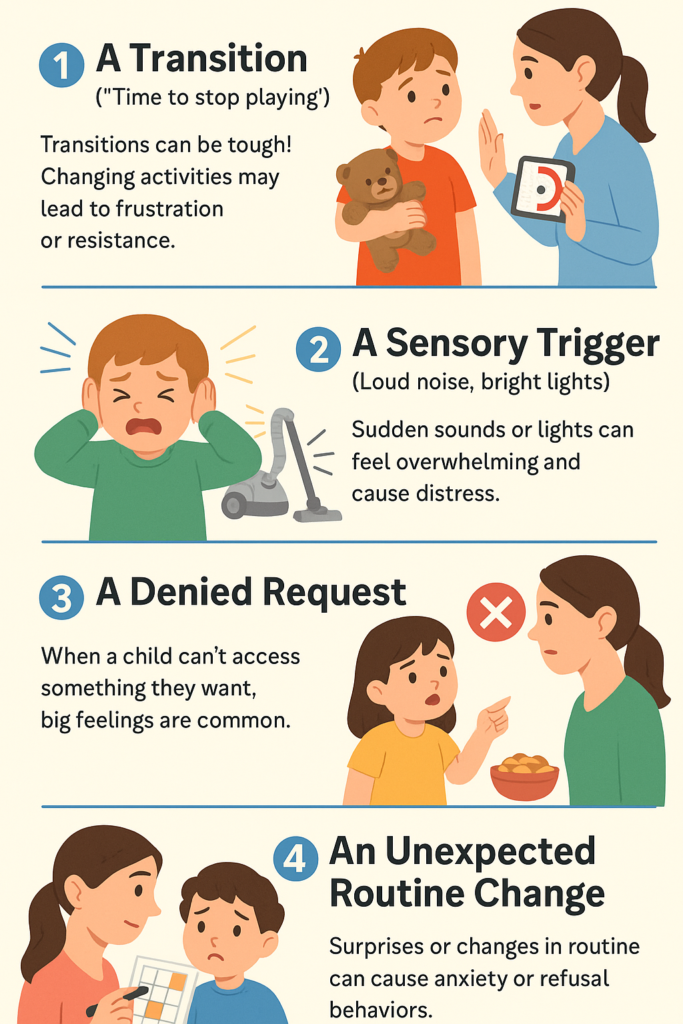
Antecedent: What happened right before the behavior?
Examples:
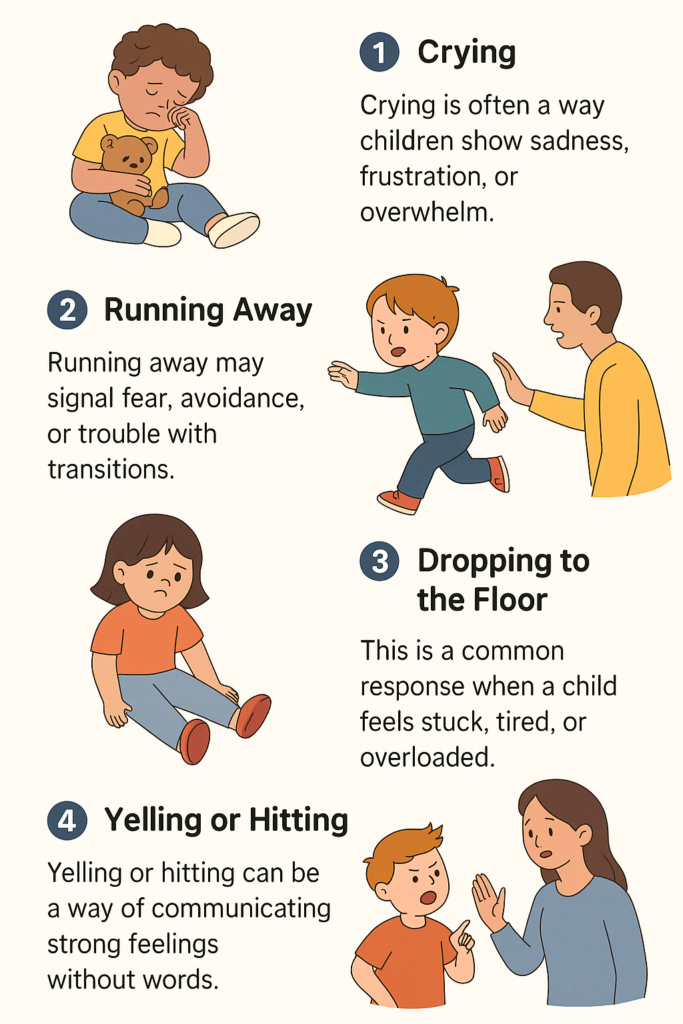
Behavior: What did the child do that we are observing?
Examples
Consequence: What happened immediately after the behavior
Examples:
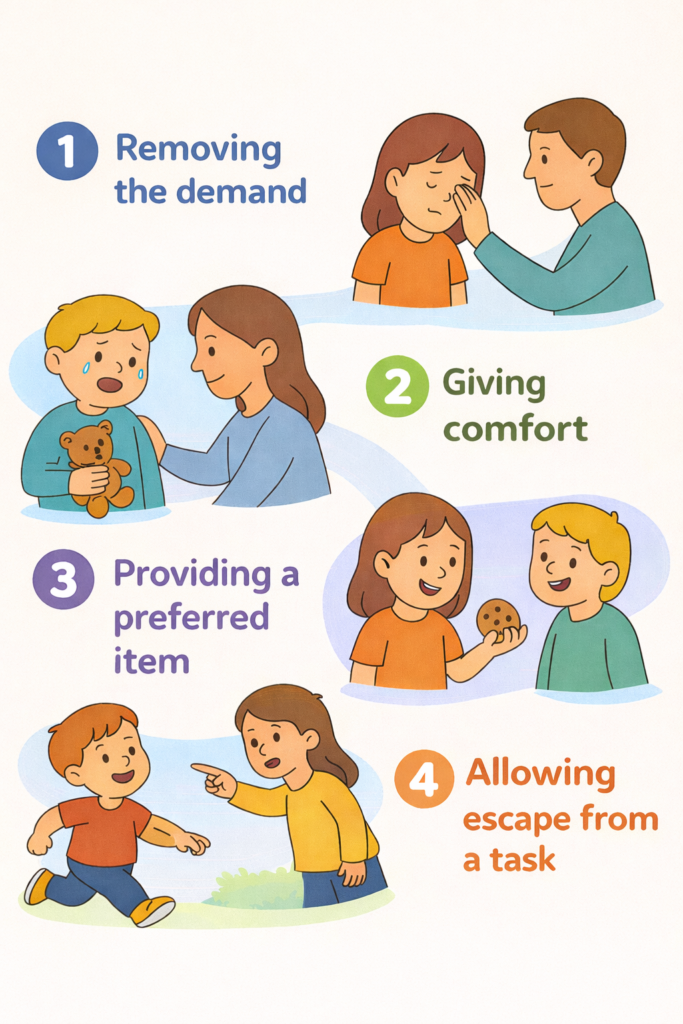
A consequence is not the same as punishment; it simply refers to whatever occurred next, even if it was unintentional.
Understanding this antecedent-behavior-consequence chain can help parents and other caregivers respond more intentionally and reduce confusion during challenging moments.
How the ABC model Helps Explain Why a Behavior Happens
Some of the most challenging behaviors involve a lack of communication. When families examine patterns using ABC behavior analysis, the answers to key questions often become clearer:
- Does the behavior happen before transitions?
- Does it escalate with sensory overload (including sensory seeking patterns)?
- Does it occur when the child wants something but cannot express themselves?
- Does the consequence accidentally reinforce the behavior?
When patterns are visible, meaningful change can begin. This is where ABC ABA therapy becomes a powerful tool for prevention and skill-building rather than reaction.
Why ABC ABA Therapy is Important for Understanding Autism-Related Behaviors
For children on the autistic spectrum, behaviors rarely occur for no reason or out of the blue. Usually, it’s the ABC model in ABA therapy that’s able to reveal the common underlying causes, including the following:
- Sensory Overload
- Predictability or routine disruptions
- Difficulty communicating needs
- Anxiety about transitions
- Wanting more time with a preferred item (i.e., toy or stuffed animal)
- Avoiding something overwhelming or unclear
This non-judgmental, observable approach differs from traditional explanations and is especially effective for understanding antecedent behavior and consequence autism patterns.
To learn more about how this fits into broader ABA therapy, contact Heartlinks to explore the field’s holistic approach to learning and behavior, including ABA programs for autism, ABA spectrum therapy, and guidance for autism communication challenges.
Schedule your ABA therapy consultation today and get support.
How Heartlinks Uses the ABC ABA Therapy Model to Support Children with Autism
Heartlinks BCBA therapists depend heavily on the ABC in ABA model to uncover the root causes of a child’s behavior, not just manage symptoms. Understanding a child’s behavioral patterns enables therapeutic teams to develop highly effective, personalized, and easy-to-integrate plans, including support for autism regulation strategies and ABA strategies.
How BCBAs Gather ABC Data During Sessions
Traditionally, a trained BCBA therapist spends time observing an autistic child’s naturally occurring behavior during play, instruction, transitions, mealtimes, and daily routines.
In the process of observing, they document the following:
- Antecedents: What triggered the behavior.
- Behaviors: What exactly occurred (objective, not emotional language)
- Consequences others responded and what the child gained or avoided
Together, this is known as ABC data collection, and it’s one of the most essential tools in ABA assessment. Communication challenges often contribute to behavioral patterns. Families can explore ways to strengthen communication through autism communication strategies, particularly for children with nonverbal autism or those requiring ABA therapy for speech delay.
Examples of what BCBAs may track include the following:
- Noise from a blender→child covers ears→caregiver turns blender off
- Asked to clean up toys→child screams→demand removed
- Sibling takes toy→child pushes→toy is returned to child
This objective ABC data ABA can paint a clear picture that helps eliminate any guesswork.
Turning Behavior Patterns into Personalized ABA Plans
After analyzing the data, the BCBA is then able to identify the patterns connected to some of the following:
- Sensory triggers
- Gaps in communication
- Struggles with transition
- Deficits in skills
- Environmental stressors
These patterns can help guide and be the foundation to build individualized plans connected to the following:
- Teaching communication skills
- Building emotional regulation tools
- Introducing visuals for transitions
- Reducing unsafe reactions
- Strengthening independence
If challenging behaviors are becoming overwhelming at home, see how Heartlinks uses behavior reduction ABA to build safer, more predictable routines for children.
Some children also benefit from models such as PRT ABA, which emphasize motivation and natural learning during play.
Coaching Parents on Using ABC Thinking at Home
Heartlinks is proud to offer coaching for parents on the different ways to use the same ABC approach outside traditional sessions. Families learn a variety of techniques, including the following:
- Spotting antecedents earlier
- Responding calmly and consistently
- Adjusting routines or environments
- Using ABA positive reinforcement more effectively
- Tracking small changes without judgement
Heartlinks can also offer simplified ABC templates that parents can fill in during stressful moments and refer to them later with the help of a BCBA.
Helping Children Build Safe and More Independent Skills
The goal is bigger than reducing behaviors; it’s to build:
- Clearer communication
- Emotional regulation
- Coping skills
- Transition independence
- Greater confidence
Families searching for support for their older children may also explore ABA therapy for older kids or ABA in-home therapy, which allows for real-world generalization of skills.
Schedule your ABA therapy consultation today and get support.
Breaking Down the ABC Model with Real Examples

The following are simplified ABC examples showing how behavior often reflects sensory needs, communication difficulties, or routine changes.
Sensory-Driven Behavior Example
- Blender turns on
- Child covers ears and cries
- Parents turn the blender off
This ABC chain is typical among children who experience sensory sensitivities, such as autism, to loud noises. To learn more about these patterns, check out our sensory seeking guide.
Communication-Related Behavior Example
- The parent takes the tablet away
- Child hits parent
- Tablet returned
Here, the consequence accidentally reinforces the act of hitting. ABA replaces hitting with clearer communication tools, which is particularly effective for kids with nonverbal autism challenges and those demonstrating autism defiance or HFA symptoms.
Transition-Based Behavior Example
- “Time to put on a coat.”
- Child refuses and drops to the floor
- Parents delay leaving
Visuals, countdowns, or small rewards can reshape this challenging pattern. For younger or older learners, targeted programs such as ABA techniques and task analysis ABA can reduce frustration.
When Parents Should Consider Additional Support
It’s only when parents understand the ABC model of ABA that they can see a clearer picture of why behaviors occur and how to support their child with greater confidence. By noting what comes before a specific behavior, how the child responds, and what happens afterward, parents can begin to identify patterns, reduce overwhelm, and teach safer, more effective skills.
Families may notice related behaviors such as autism hand flapping, autism spinning, finger flicking, or autism anxiety, all of which can be explored through specialized ABA frameworks such as ABA shaping.
If you’re ready to learn how the ABC in ABA therapy in Atlanta, GA, works, or through any of our other state providers, call Heartlinks ABA, GA at 410-517-3673 to start home, community, or school support. Our other state providers include:
ABA Charlotte, NC,
Schedule your ABA therapy consultation today and get support
Antecedent-Behavior-Consequence FAQs
- What is the ABC model in ABA?
The ABC model in ABA explains behavior by looking at what happens before (antecedent), what the child does (behavior), and what happens after (consequence). It helps caregivers understand why a behavior occurs.
- How does ABC help children with autism?
ABCs enable therapists and parents alike to identify triggers and patterns, helping prevent challenging moments and teach more effective, productive ways for children on the spectrum to cope.
- What is an example of antecedent, behavior, and consequence?
If a parent says “it’s time to clean up” (antecedent), the child cries (behavior), and the parent gives more playtime (consequence). Because the child’s crying leads to avoiding cleanup, the behavior is more likely to recur.
- How do we collect ABC data?
It’s actually fairly straightforward. You observe a real situation and record the antecedent, the behavior, and the consequence in simple terms.
- How does ABC in ABA therapy differ from other behavior models?
The focus of ABC in ABA therapy is only on what can be seen and measured. This makes it easier to identify patterns and to create compelling, practical ABA strategies.
- Can parents use ABC charts at home?
Absolutely! Simple ABC charts can help parents track patterns, improve their understanding of triggers, and support their child with greater confidence.