


Redirection is one of the most commonly used ABA strategies for helping autistic children move from unsafe, disruptive, or unhelpful behavior to safer, more appropriate behavior. Rather than punishing behaviors, including sensory seeking, autism hand flapping, autism spinning, or autism finger flicking, redirection is a gentle, structured way to guide children toward success during challenging moments. It’s a core part of teaching emotional flexibility, especially during moments when a child becomes overwhelmed or understimulated autism makes it difficult to remain engaged.
Often, within the initial few sessions of ABA therapy, redirection is paired with strategies such as positive reinforcement, error correction, or ABA shaping. These tools work together to build communication, attention, and emotional regulation skills, thereby creating calmer home routines and fewer power struggles.
What redirection ABA means in Therapy
Redirection ABA autism is the use of prompts, alternative activities, or cues to support children in situations where they become overwhelmed, overstimulated, or suddenly off-task. Instead of punishing their less desirable behavior, redirection gives the child something more productive and socially acceptable to do, something that meets the same need but in a safer, more socially appropriate way.
Redirection is particularly effective when a child becomes overstimulated, overwhelmed, or locked into repetitive patterns.
Need help learning these techniques at home? Contact Heartlinks to get started with in-home ABA support.
Why is redirection used during challenging moments?
One of the strongest reasons therapists use redirection in ABA is that it impedes escalation. When a child becomes overstimulated, frustrated, or locked into an undesired behavior, it’s redirection techniques that help interrupt the cycle rather than allowing it to intensify. This approach keeps interactions calm, reduces confrontations, and supports long-term autism regulation strategies and calming techniques for autism.
The Goals of Redirection in ABA Sessions
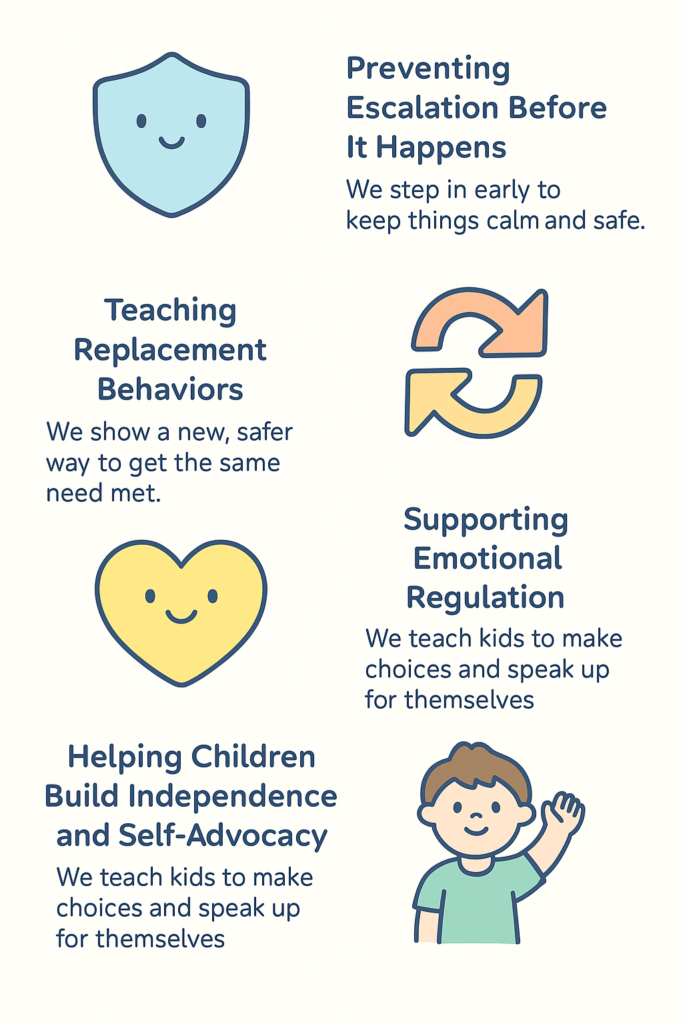
When used regularly, redirection helps children learn that they have choices other than frustration or avoidance.
A Heartlinks Parent’s Experience With Redirection and ABA
Many parents share that consistent ABA support has been life-changing for their child. One family described the transformation they witnessed after dedicated therapy at home:
“I have been with this company for almost 3 years now, and I love each member of their team. They have been working with my son, and I feel so grateful for all the progress that I see in my son, from non-verbal to talking all the time, and do not stop talking because this therapy center is the best. I feel so blessed to have a therapist at home every day, which is a lot of help.”
This is precisely the type of meaningful progress Heartlinks strives to make for every family.
How Heartlinks Uses ABA Redirection to Support Children with Autism
Individualized Behavior Plans that Include Redirection
Developed by a BCBA therapist, each child receives a customized plan. The redirection is tailored to the child’s sensory profile, communication needs, and behavior triggers to ensure that it can effectively work across home, school, and community settings.
How Heartlinks Therapists Model Redirection for Families
During sessions, therapists usually demonstrate redirection strategies. They also take the time to coach parents on how to use the same tools at home, at school, and in the community.
Tracking Behavior Patterns and Progress Over Time
As the child builds new skills, the Heartlinks team can collect ongoing data to understand how ABA redirection is working.
If you’re noticing new or increasing behaviors at home, Heartlinks can help you understand the patterns and create a plan.
Schedule your ABA therapy consultation today and get support
Proven Redirection Techniques Used in ABA Therapy
These redirection techniques often help therapists move a child’s attention smoothly during challenging times, all while teaching long-term coping and communication skills. ABA redirection is about more than merely distracting a child; it’s a purposeful strategy that guides them toward safer and more socially acceptable behaviors.
Offering Safe and Appealing Alternative Activities
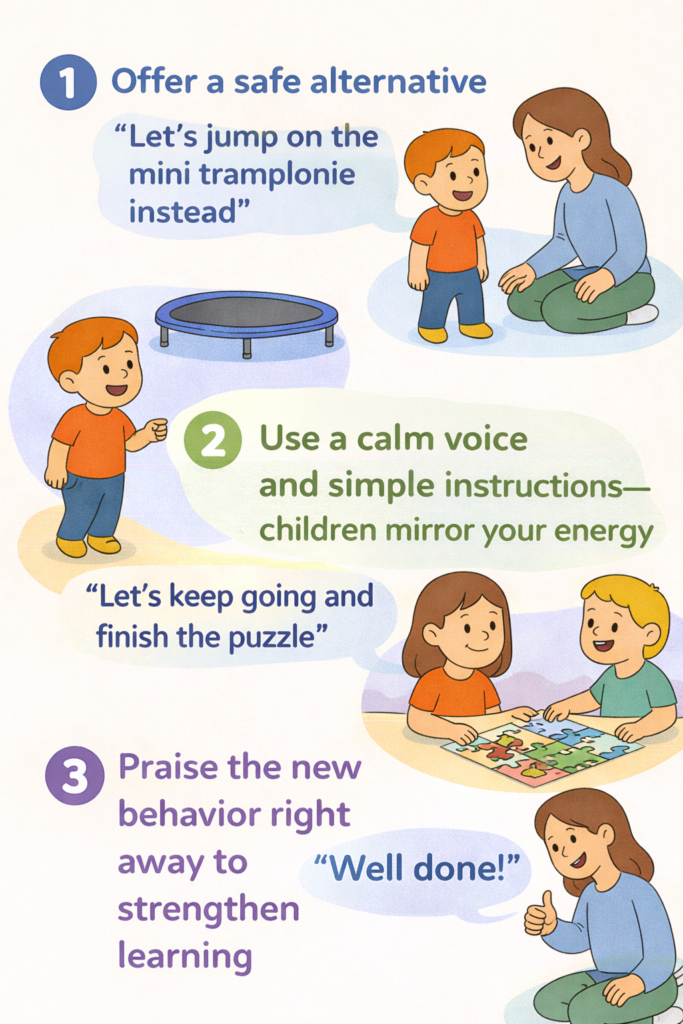
When a child’s behavior becomes overly repetitive, disruptive, or unsafe, a trained therapist can offer a preferred and structured alternative that meets the same need. As an example, if a child is banging objects to obtain sensory seeking input, a therapist may guide the child toward using a sensory ball or a drum. This approach helps avoid escalation while teaching the child healthier ways to meet their emotional or sensory needs. What’s critical is choosing alternatives that are both appealing to the child and in sync with their interests or sensory profile.
Using Clear Choices to Guide a Child’s Behavior
By offering choices, therapists can reduce power struggles and empower children to participate in decision-making. That means, rather than saying “stop doing that,” the therapist might say, “Do you want to color or play with Lego?”
By providing clear options, this reduced the child’s frustration level and shifted the focus to a more manageable action. Additionally, offering choices enables the child to develop independence and self-advocacy.
Using Verbal or Visual Cues to Shift Attention
Some children respond most effectively to visual cues, including pictures, first/then boards, and gestures, while others respond to short, simple language. Either way, these tools help prepare children for forthcoming transitions, reduce autism anxiety, and establish predictable expectations. Verbal cues, including “look over here’ or visual cues such as pointing to the upcoming activity, can safely and gently help shift an autistic child’s attention without creating additional stress.
Using Distraction to Interrupt Escalating Behavior
When an autistic child becomes overstimulated or fixated on something that’s either inappropriate or unavailable, a distraction can be particularly valuable. With a quick environmental shift, such as introducing a toy, pointing out something interesting, or changing locations, this can interrupt the child’s escalating behavior before it intensifies to the point of becoming uncontrolled. This ABA redirection technique is employed carefully to prevent emotional overload rather than to avoid teaching opportunities.
Gentle Physical Redirection for Safety Only When Needed
On occasion, a therapist may need to gently guide a child’s body or hands to prevent immediate danger. Examples of this might include touching a hot surface or sprinting towards a door. This approach is used as a last resort and ethically only to ensure a child’s safety. Physical redirection is paired with teaching moments so that the child can learn safer alternatives in the future.
This type of redirection becomes doubly effective when coupled with ABA positive reinforcement, which strengthens the appropriate behavior choices and helps children understand what to do, not simply what not to do.
How Parents Can Use Redirection ABA Techniques at Home
Simple Redirection Strategies for Parents
When to Reach out for ABA Support
If a parent’s attempts at redirection become too complex, repetitive, or if they aren’t preventing escalation, professional help may be required. Heartlinks ABA offers an array of in-home ABA strategies to help parents learn when and how to use redirection effectively. Therapists also have the expertise to identify patterns that may not be so obvious to caretakers, thereby making behavior support much more efficient.
Real Examples of Redirection ABA for Children with Autism
Redirecting Unsafe Sensory Behaviors
Suppose a child is sensory-seeking and chewing on non-food items. In that case, a therapist may suggest a chew-safe alternative, guide the child to a sensory station, or introduce a more appropriate oral-motor activity. It’s this type of redirection that keeps the child safe while continuing to address their sensory needs.
Redirecting During Transitions and Routines
One of the most challenging things for autistic children to manage is transitions. Often, ABA therapists use tools such as visual schedules, countdowns, timers, or first/then language to help autistic children transition more smoothly between tasks. By redirecting the child’s attention to the next activity, paired with clear instructions, this will reduce the frustration and support predictability.
Encouraging Communication Instead of Escalation
When a child is upset because they’re unable to participate in their favorite activity or access their preferred item, redirection is often used to teach a replacement communication skill. This may include signing “help,” requesting a break, or pointing to a picture card to express what they want. By redirecting the child toward communication, this helps build emotional regulation and reduces challenging behaviors.
If transitions, sensory needs, or communication challenges are becoming overwhelming, Heartlinks ABA is here to help.
Creating Safer, Calmer Behavior with Redirection: ABA-Heartlinks is Here to Support Your Family

Redirection ABA is a compassionate, effective strategy that helps children shift from unsafe or dysregulated behavior to calmer, more appropriate responses. Through individualized
ABA plans, parent coaching, and proven teaching methods, Heartlinks supports meaningful progress in communication, emotional regulation, and daily routines.
If you’re ready to learn how operant conditioning ABA therapy in Atlanta, GA, or through any of our other state providers, call 410-517-3673 to start home, community, or school support. Our other state providers include:
Redirection ABA FAQs
- What is redirection ABA?
Redirection ABA is a strategy that gently guides a child from unsafe or inappropriate behavior toward a more appropriate or socially acceptable action.
- Why do children with autism benefit from redirection?
Simply put, redirection supports emotional regulation and reduces feelings of overwhelm. This is done by providing clear guidance during challenging moments. It also allows children to learn safe, more effective ways to deal with frustration.
- What are examples of redirection ABA?
Examples include providing safe alternative activities, allowing choices, using visual cues, or redirecting the child’s attention to something more socially acceptable.
- Is redirection considered punishment?
Absolutely not! Redirection is not considered punishment. Instead, it’s viewed as a supportive teaching method that enables children on the spectrum to succeed.
- How can parents use redirection at home?
Parents can provide choices, offer safe alternatives, use calm cues, and praise the child when they follow the new direction.
- When should parents seek ABA support?
Parents should seek ABA support when their child’s challenging behavior becomes frequent, unsafe, or starts interrupting their normal day-to-day activities.